
 |
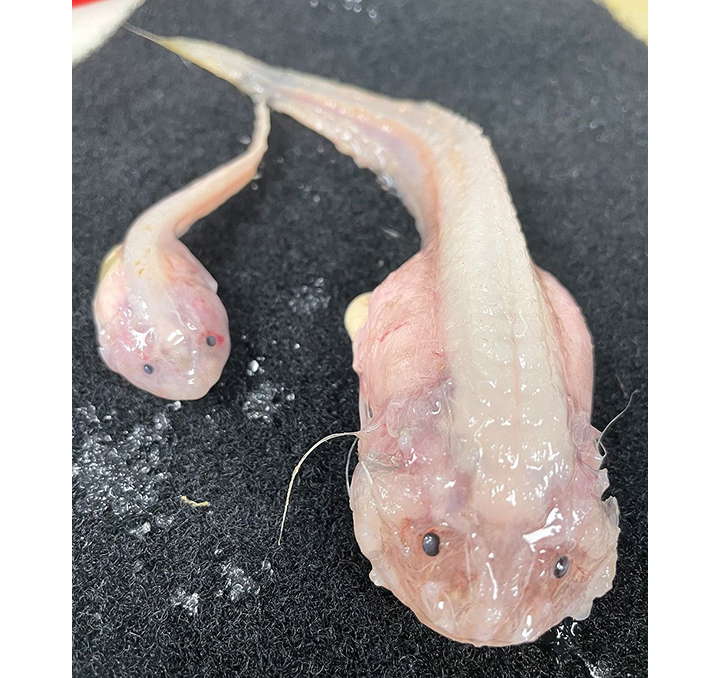
Alan Jamieson, a brainiac scientist, recently made a big splash with a 10-year study on deep sea fish. He and his Minderloo-University of Western Australia Research team discovered a new variety of snailfish about 5 miles beneath the Pacific Ocean’s surface. They found the species in the Hadal Zone, a forboding place considered the deepest known ecosystem on Earth.
Aside from years of preparation and study, their process involved dropping $20,000 baited cameras in the deepest part of the trench and monitoring the screens until they got lucky. It took about two months before the shy, nearly scale-less snailfish risked exposure to grab the bait.
The images are striking. It’s an ugly fish, as far as fish go – no fancy colors or fascinating appendages. You wouldn’t want this phlegm-colored, wrinkly fish in your home aquarium. But despite its used Band-Aid appearance, the photos are compelling.
It’s like looking at a secret. They lived their lives in the quiet, cold regions that, until now, remained beyond the interference of man. Scientists call the region “bone-crushing deep.”
The Australian researchers celebrated wildly when they reviewed the images. Their discovery broke the Guinness Book of World Records for Deepest Sea Creature in addition to expanding
scientific understanding of the mysteries of the ocean floor. But then they did something – I want to say stupid, but I don’t fully understand their motivation, so I’ll say odd.
I don’t know if it was a bravado thing or the researches were just all jazzed up from the paparazzi storming their boat. Maybe winning one Guinness award made them greedy for two. But these scientists, who dedicated their careers to the ocean and its living organisms, dropped traps to capture one or two of them.
The snailfish, already puzzled by the cameras and spotlights, bravely examined the traps. Once they were secured inside, the fish travelled through the heavy water for the longest 5-mile journey of their lives. And once they broke through the water’s surface, they were exposed to air, sun and, of course, death.
The scientists-turned-fishermen earned their second trophy for World’s Deepest Catch. They photographed the snailfish from all their unflattering angles, then left them to die.
This story pumped through my veins for several days. I was good and steamed at scientists for killing those snailfish. The team wasn’t marooned and starving, they were just off the coast of Japan where
they could probably order sushi with their morning coffee.
They didn’t need a corpse to further study the fish. If they had to tow them up to their lab, why didn’t they drop them back home after the testing? Even aliens return their test subjects back to Earth when they are finished probing.
It took me some time and a couple of gimlets to sort out why I felt so passionate about those fish. An autopsy of my heart would unveil a bone-crushing Hadal Zone, where my snailfish-thoughts swim around in the deep, silent dark. I know I have an insecurity snailfish down there, and it probably pals around with my unworthiness fish.
I’ll bet there’s a whole school of fish, one for each of the imaginary conversations I have where I make improvements to the original version darting around the zone. And alongside my regrets and humiliations, there are the unformed thoughts, flashes of cruelty fish and their cousins, selfishness and arrogance. My Hadal Zone is a robust ecosystem.
In other words, I have secrets never seen by the human eye, and nor should they be. The thought of them being lured to the surface, exposed to the air and the sun, then forced to pose for a mug shot just moments before their execution – well, it’s terrifying.
Maybe I identified with the fishermen-scientist. I’m a writer and, therefore, very nosy. I’m a voyeur and an eavesdropper. How many times have I discovered a snailfish in someone else’s Hadal Zone? Or, worse, deliberately fished around for their deep swimming secrets?
I want to behave better than the Minderloo team. I want to be kinder and more respectful of my own snailfish and those of others. Some things are just meant to swim in the dark beyond our reach.
The Human Hadal Zone should be a sacred and untouchable space. Let’s leave the bottom feeding snailfish to do their thing. They swim down there for a reason.
Abigail Blythe Batton is a staff correspondent for the Cherokee Scout. Her column runs every other week. Email her at ablythebatton@gmail.com or leave a message at 837-5122.