
 |
The 3rd Tennessee Mounted Infantry (also called the 1st TN National Guard) was a group of Union soldiers led by Capt. Goldman Bryson, comprised of a great many Cherokee County men, some former members of the Confederate 39th N.C. Infantry and 69th Thomas Legion.
Bryson was carrying in his pocket orders from Union Gen. Ambrose Burnside, who had come with the Army of the Ohio to occupy Knoxville, Tenn. His orders, “proceed with his command to N.C. and vicinity for the purpose of recruiting.”
Confederate Major Gen. Carter Stevenson wrote, “I was informed that the notorious bushwacker and robber Bryson had been sent with his command to get in my rear … I immediately gave Brigadier Gen. Vaughn a detachment of 100 men and directed him to intercept and if possible destroy the party.”
Vaughn’s command trailed Bryson through Tellico, Coker Creek and through Unicoi Gap into Cherokee County.
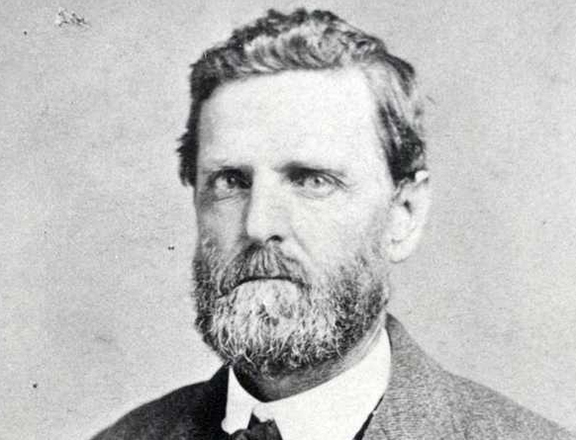
Vaughn was a combat general, born in Monroe County, Tenn., where he became sheriff. He served in the Mexican War and went to the California Gold Rush before returning home. His Civil War career saw him fighting at Manassas, surrendering at Vicksburg, before exchanged and returning to command.
Vaughn caught up with Bryson’s troops at Evan’s Mill on Beaverdam Creek, 10 miles from Murphy. Two were killed and 17 taken prisoner. Bryson escaped but was killed on Coker Creek days later.
One Murphy diarist described one Confederate wearing Bryson’s bloodstained uniform in Murphy.
A muster roll of the men in Bryson’s command found in his pocket was obtained by Thomas Boyd, Vaughn’s brother-in-law.
On the way back to Tellico, some of the captured men were murdered, their bodies left along the Unicoi Trail. Most of the rest were killed at the base of a mountain on the Tellico River.
At the war’s end, Boyd and Vaughn filed pension claims for the men listed on Bryson’s muster roll, stealing their identity, some of the very men Vaughn’s command murdered during the war. Their scheme netted more than $100,000 before being discovered. (That is $1.69 million in modern dollars.)
Vaughn and Boyd were arrested for the fraudulent claims in 1871, and Boyd was released on $40,000 bond, put up by Isaac Lenoir, founder of Sweetwater, Tenn.
In 1872, Boyd and two companions were going to Murphy via the Unicoi Trail supposedly to research Boyd’s defense. They claimed five armed Ku Klux Klan members confronted them and took Boyd off into the woods out of sight.
The supposed klansmen pretended to kill Boyd, bringing a body back to his companions that was immediately burned in the roaring campfire. The burned body was quickly interred in nearby Eleazar cemetery. Boyd escaped to Canada. A funeral was held for Boyd in Sweetwater.
The burned body was actually that of a 17-year-old African American who lived in the Boyd household.
Boyd would eventually be found out and returned to Knoxville, where he was convicted and served four years in prison. His partner in crime, Vaughn was fined $1,000 for his part in the fraud. He would later serve in the Tennessee House.
Upon his release from prison, Boyd returned to the area and was elected mayor of Sweetwater.
Boyd was murdered on the streets of Sweetwater by a family member Boyd had cheated. A neighbor was asked if he would be attending the funeral, and he replied, “No, I went to the first one.”
In the firefight with Vaughn’s troops, the 3rd Tennessee Mounted Infantry was not destroyed. The survivors remained a fighting unit until the war’s end. With Bryson’s death the remaining officers were raised in rank.
Hugh Rogers of Grape Creek become the first lieutenant, and the captain’s rank went to a soldier from Persimmon Creek named Pete Voyles.
Pete Voyles was my great-great-grandfather. His first lieutenant, Hugh Rogers, was my wife Debra’s great-great-grandfather.
We’ve often wondered if some night as these two survivors of the Vaughn fight were huddled around a Civil War campfire that they didn’t speculate that in the future their great-great-grandchildren would marry, or that they would share the same third-great-grand-children.
Bruce Voyles’ local history column runs every other week in the Cherokee Scout. You can email him at RoadsLessTraveled@cherokeescout.com.