
 |
In the days of the Cherokee, residents did not recognize state lines. Their boundaries instead were defined by geographic features like rivers and mountains.
Before the Tennessee Valley Authority and four-lane highways, the whites who occupied these lands after the Cherokee Removal often saw their nearest neighbors as living over the hill instead of being in another state.
Unaka and Violet residents’ expanding families often extended into Monroe and McMinn counties in Tennessee, those counties closer than Peachtree or Topton.
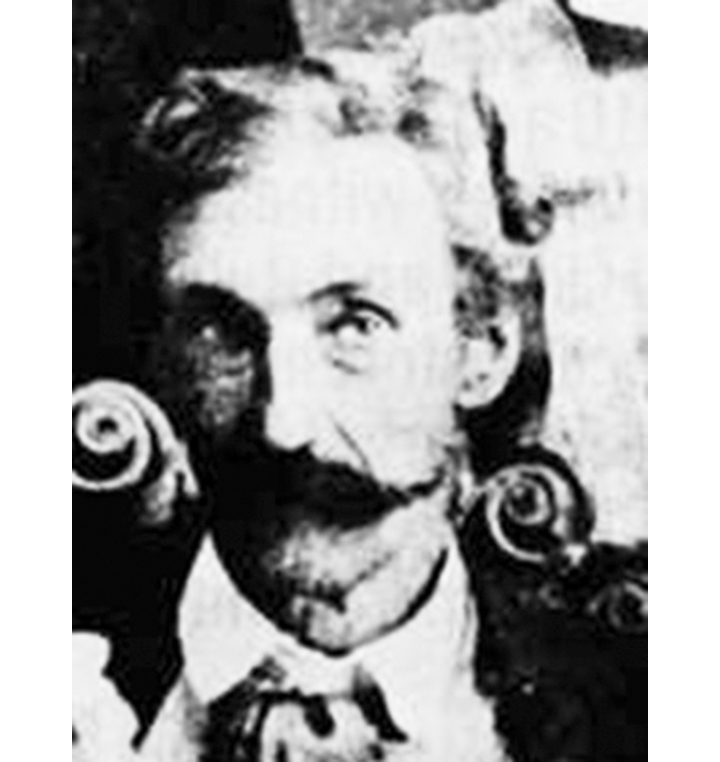
Unaka-born George Washington Rose became a tenant farmer in 1900 on the farm of J.L. Miller near Etowah, Tenn.
Miller was a successful farmer, a schoolteacher and had served two terms as the superintendent of schools in McMinn County. Rose farmed on the Miller property for 10 years until problems arose.
The 65-year-old Miller accused Rose of stealing corn and brought criminal charges against him for theft, resolved only when Rose pleaded guilty and agreed to reimburse Miller for the corn and additional incurred expenses. Rose continued to live on the Miller property, but never forgave Miller for the affront. He plotted his revenge.
Miller’s son, Bascom, had metal disabilities and fell under the influence of Rose’s revenge plot, along with Rose’s wife, Mary, and Roscoe Tom Senter, another tenant on the Miller property.
On Aug. 26, 1911, Senter and Bascom were tasked with digging a shallow grave in a thicket, and Mary Rose went to the pasture where Miller usually released his horses in the afternoon. She was soon joined by the others.
Mary engaged Miller in conversation, thanking him for how he had resolved the corn theft case, when the distracted Miller was grabbed by Senter and Bascom, his own son, each holding an arm, while Rose came up behind Miller and struck him in the head with what was initially reported as an ax, cleaving Miller’s head and killing him instantly. One report says Mary shouted, “Praise the Lord, now the old devil is dead and now things can get back to normal!” But that did not happen.
The group left Miller in the field unburied, where his body was discovered the next day, along with the unused poorly dug grave 300 yards away, considered conclusive proof that there was premeditation in the murder.
The group was quickly arrested, with everyone except G.W. Rose confessing. Mary Rose testified against her husband for a reduced sentence of one year, Bascom Miller was tried, but not convicted, and it is unknown of the final determination in Senter’s case.
It is known what happened to G.W. Rose. He was convicted of first-degree murder and sentenced to be hung Oct. 20, 1911. The case was appealed to the Tennessee Supreme Court, which affirmed the lower courts decision, resetting the date to Jan. 20, 1912.
That date was changed by Gov. Walter Hooper since trials of the accomplices were not finished and Rose might be needed to testify in those cases. The new date was slated for Aug. 26, 1912. The governor again delayed, he said, to give Rose time to “get right with God.”
Rose was transferred to the Nashville jail to await his execution, where a visit with his son, Hick Rose, was arranged. Hick was in the same prison served 15 years for a murder that he had committed. Mary Rose was allowed to visit, although Rose had denounced her as a “bad woman” who had always cheated on him. The husband and wife spoke with two rows of bars between them, a safety measure keeping his wife out of his reach. Rose claimed his wife had lied on the witness stand.
The day before his execution, Rose was taken from the jail to the Nashville prison where the sentence would be carried out. He was visited by Chaplain B.G. Regan and Pastor Rev. Author Foster. Rose gave them a basket of clothes to deliver to his daughter, Lizzie Nelson, in Tellico Plains, and sent his false teeth to his family, saying, “I won’t be needing those anymore.”
Rose made a profession of faith, withdrew the denunciation of his wife, and added that he asked that his son, Hick, be relieved of the promise he had made to his father to kill Sheriff Hart of McMinn County, who had been active in the prosecution of the Rose case.
After Rose’s death, Foster claimed Rose had confessed to the crime, saying he struck Miller with a bolt bin rather than an ax, and exonerated Senter and Bascom Miller of any involvement, despite Mary Rose’s testimony they had held the victim’s arms. Rose’s son, Hick, was visiting with his father moments before being taken to the gallows and claimed Rose had not confessed and in fact told Hick he was not guilty. Hick said the alleged confession was an effort by a bribed Foster to get the two younger men off the charge.
On Aug. 26, 1912, George W. Rose was hung in Nashville. He was the oldest man in the history of Tennessee to be hung. Rose was 68 at the time. His wife, Mary, and son, Hick, both in prison garb, were allowed to accompany Rose’s body to the prison cemetery where he was buried.
The hanging of George W. Rose the last time anyone was hung for murder in Tennessee. The state moved to what was considered a more humane method of execution, the electric chair.
The murdered Miller’s descendants were successful attorneys, with his grandson, Burkett Miller, becoming a noted philanthropist in Chattanooga, Tenn., supporting local colleges and civic projects.
He endowed several chairs and lectures at University of Tennessee at Chattanooga and the University of the South. The Miller Eye Clinic at Erlanger Hospital is named for his wife, and Miller Park in downtown Chattanooga is named for Burkett Miller.
Bruce Voyles’ local history column runs every other week in the Cherokee Scout. Email him at RoadsLessTraveled@cherokeescout.com.