
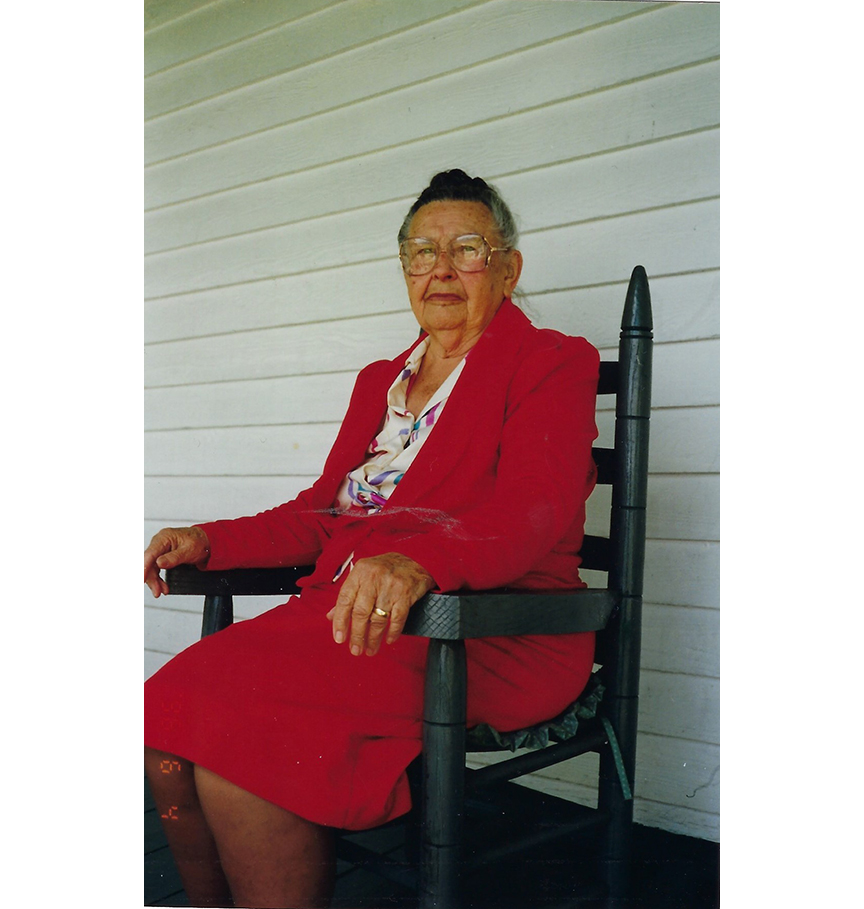
Editor’s note: This is the first in a series about Annie Mae Polly McGuire.
 |
Annie Mae (Polly) Stewart McGuire was a teacher in Andrews for 40 years, and she loved every minute of her time in the classroom.
She was born to Hugh Samuel (Sam) Stewart and Cynthia Blanton Stewart in November 1907. She was one of four children, and her siblings were James Walker, Bettie Kate and Hugh Samuel Jr. Polly loved to tell the history of her family and the fact that she still lived in the house her father built in 1912.
The original Stewart house was built in 1847 with logs that James Stewart, who was Polly’s grandfather, cut and sawed into planks, and was put together with pegs. It was said that the Stewart House was the first frame house in Cherokee County. The Stewarts moved to Cherokee County and settled on the property they purchased from a land grant in 1846 after the Cherokee Indian removal. The family first lived in the cabins that were vacated by the Cherokee.
James Stewart married Harriet K. Scot, and they had eight children: John Hannibal, Jane Elizabeth, Mary Ann, Edmond Joseph, Margaret Elvira, Hugh Samuel, James Allen and Martha Axy.
Harriet was a pioneer doctor who made her own medicines, and she concocted home remedies from her herb garden and plants she found in the woods.
James was a farmer who cleared new ground, and he also planted orchards and vineyards. He opened a Tannery in 1852 and began tanning hides, and in addition, he made boots, shoes and other leather products. In 1863, James died and Harriett was left with raising six children on her own. The two older sons, John and Joseph, were serving in the Civil War, while their mother, Harriett, cared for wounded soldiers who were brought to her.
Before Harriett married, she went to visit her brothers who lived on Hanging Dog. While there she stayed three months to teach school, which many claimed was the first school in Cherokee County.
Harriett was one of four ladies to start a combination school and Sunday school in a log building close to the Valleytown Cemetery.
Harriett was instrumental in starting the Methodist Church in Andrews, and after it was completed, her Uncle John helped to finance the church until it could support itself.
Harriett died in 1895 and though she had doctored many people in this remote area, she had never been to a doctor until the illness that ended her life.
There was a story that Polly used to tell to friends and family members who visited the home. It was printed in an article that ran in the Andrews Journal about 30 years ago: “During the war, Grandfather had already died in 1863, a neighbor sent word that the Bushwhackers were on their way into this territory and to hide the horses, so she sent the younger boys up there on the mountain but they had one poor old mare they could not get up there, so left her down near the house.
The land had a rail fence and a garden, so the dishes got buried just inside the rail fence. The old mare got spooked, came running back, jumped the fence and landed on the set of dishes, buried so shallow when the boys had to do it in such a hurry. When she landed on the dishes, they all broke except one, and the bushwhackers never did come. Those gold rim plates were what Grandmother Scott’s wedding dinner was served on. Seven generations had eaten from them.”
To be continued …
Kandy Barnard is a columnist for the Cherokee Scout. To talk about the Andrews Valley, call her at 361-3268 or email kandybarnard@gmail.com.