
By George Kester, Guest Columnist
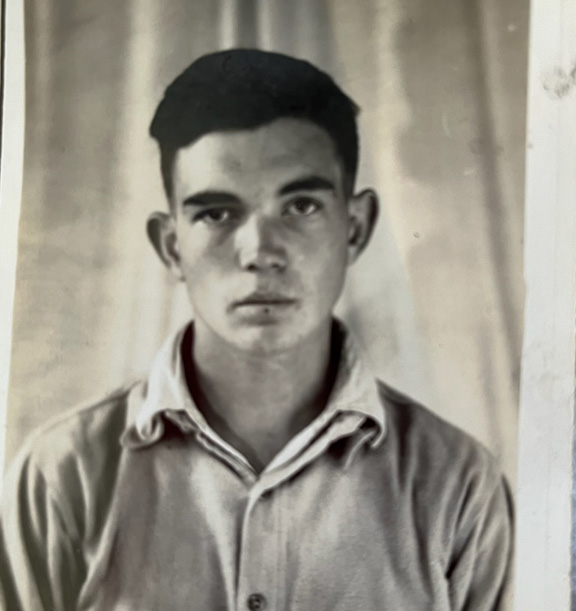
As Memorial Day approaches, I think of the “Greatest Generation” and am reminded of a poem written by my mother-in-law, Doris Chambers of Ogreeta, when she was 14 years old. The subject of her poem was her young and handsome Uncle Horace of Murphy, who lost his life during the Italian campaign in 1944.
 |
On May 19, Doris and her family celebrated her 94th birthday.
I am sure readers of the Cherokee Scout, many of whom may know members of the Chambers family, will find her sad and heartfelt poem to be touching tribute to one of Murphy’s “Greatest Generation.”
PFC Cecil Horace Crain from Murphy enlisted in the U.S. Army in October
1943 and served in the 34th Infantry Division until he was killed in action on Sept. 12, 1944, during the Italian campaign.
After news of his death reached his family, his 14-year-old niece, Doris Chambers of Ogreeta, now 94-year-old Doris Chambers Woody, who has resided in Charlotte since 1952, wrote a heartfelt poem reflecting on the life and death of her young and handsome Uncle Horace, who she never saw again.
Cecil Horace Crain is buried in the Bates Creek Baptist Church cemetery along with his father, Jefferson Crain, Doris’ grandfather. The inscription on his tombstone at Bates Creek cemetery reads, “He gave his today for our Tomorrow” – very poignant and moving.
‘Uncle Horace’
By Doris Chambers
When he came to say goodbye, he leaned upon his rifle.
Boyish hunter that he was, woodsman, nature-lover
In love with life; now he would be a hunter man.
But I never saw him again …
Not even his dead body.
Handsome he was, like a young god,
Straight and tall, leaning on his rifle.
Dark-eyes full of life, lights dancing there.
Lover of nature, mountain boy,
Eager to know the secrets of life.
But I never saw him again; not even his dead body.
Off to war was he, this young god,
Still in his teens, naive and brave.
He had hardly been out of his own county.
Now they rushed him through basic
And sent him traveling – on a troop train.
But I never saw him again; not even his dead body.
Then on a ship – he was traveling now.
Across the deep to a beach named Anzio
But I never saw him again, not even his dead body.
Mud and mire did muddy him, and the bullets bloody him.
In the mud at Anzio.
They put him in a box and sealed it.
They should have given him his rifle.
A young brave man needs a weapon, when he
Goes to the happy hunting ground.
The young god was only human after all,
His human blood did drain away.
And I never saw him again; not even his dead body.
The writer lives in Lexington, Va.