
 |
Once upon a time two decades ago, there existed a faith-based youth center for teenagers called The Rock in downtown Andrews, a great place for kids to gather and have fun, while staying out of trouble and learning about God. How I wish it was still open.
On many weekends, The Rock’s founders – the wonderful Andrew and Andrea Stewart – would bring in contemporary Christian musical acts that were touring the country. From singer-songwriters playing an acoustic show to full bands thrashing in heavy metal glory, something for everyone’s tastes eventually came to town. One of my daughters even met her future husband while he was playing a gig there, proving that you can marry a rock star and live happily ever after.
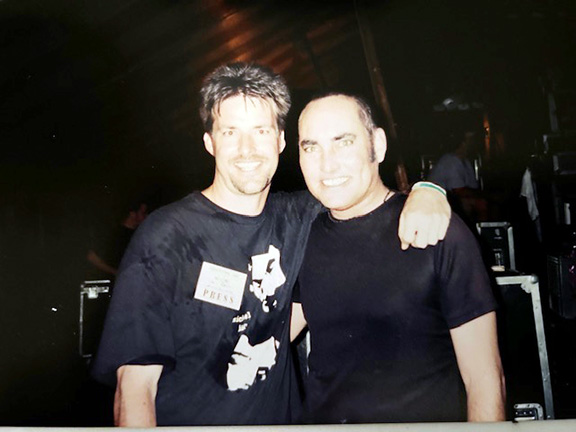
In May 2003, much to my happy surprise, The Rock brought Michael Knott to town. That name won’t register with almost everyone reading this, but his music has meant the world to me for four decades.
Knott is credited with being the godfather of alternative faith-based music, with his extensive discography running the gamut from acoustic stylings to surf music to goth. He released thousands of songs under his name solo as well as with bands like Bomb Bay Babies, Cush, Lifesavers, Lifesavers Underground (or LSU), Strung Gurus (their song “Sun-Eyed Girl” should have been a No. 1 hit) and even The Rovers Three, playing Irish folk songs with his Dad.
His big shot on a secular label, the Aunt Bettys self-titled album in 1996, remains one of the best rock ’n’ roll records of all time, a worthy successor to music made when guys wore leather, girls wore skirts, cars had fins and people fought the law – even though the law won. (While those CDs sold out years ago, you can still listen to the Aunt Bettys on Spotify.)
Knott, 61, of southern California, died on March 12. While the cause of death is unknown, he publicly struggled with alcoholism. I learned that firsthand when I was his tour manager in spring 2001.
At the time, Knott was touring as a solo artist, even borrowing an acoustic guitar for each show. His actual manager would arrange to have folks like me pick him up at the airport, get him to his shows on time for a week, then turn him over to the next volunteer tour manager.
And what a week it was. It started with multiple shows at a huge Christian music festival near Orlando, Fla., continued at a blues club in downtown West Palm Beach, Fla., and ended north of Atlanta. I located a guitar during the day, introduced him on stage at night, sold CDs and shirts and whatnot while he was playing, and recorded each show with my trusty HandyCam. Good times all.
As we were on the road, we were happily able to make a dinner stop at my house in Lake City, Fla. Knott jammed with my son’s band, Steadfast, and took some pics. He ate my wife’s killer lasagna. He even threatened to steal a mix tape I made because it was so good. Those memories are priceless today.
While he could be a larger-than-life showman, at times pouring cans of beans and corn over his head in concert, Knott also had a vulnerable side. Songs like “See Me Fall,” “Grace” and “Christ Saves” showed his personal faith, but songs like “Shaded Pain,” “Double” and “Denial” revealed personal challenges. I always appreciated his honesty and transparency, even if it cost him some fans.
When I was with him that week, we couldn’t travel more than a few hours between drinks, yet he never complained and was always full of charisma, charm, good humor, intelligent wit and the kind of musical knowledge I could only dream about. I hate that he couldn’t defeat his demon. This world is a lesser place without Michael Knott as part of it.
David Brown is publisher of the Cherokee Scout. You can reach him by phone, 828-837-5122; email, dbrown@cherokeescout.com; or on X @daviddBstroh.