
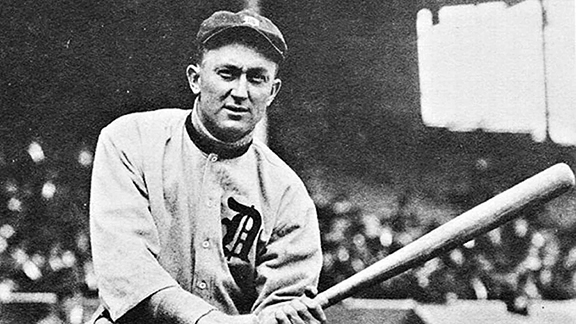
Ty Cobb was a rock star in early Major League Baseball for his performances for with the Detroit Tigers.
An aggressive base runner, he was also a great hitter, able to hit the ball arriving from the pitcher into any area of the field he desired.
Originally from Royston, Ga., he learned his basic baseball skills playing for local teams in Murphy and Andrews.
Here’s the story … and the story behind the story.
From the beginnings
Unverified reports from the 1861-65 Civil War indicated that baseball was a popular game from the start. Both Rebels and Yankees would sometimes lay down their guns and have a game between battles.
After the war, cities and towns soon had their own teams.
My maternal grandfather, a Hogan from Canton, Ga., ran away from home several times about 1900, feeling his sisters were being treated better than he was.
Once he wound up as catcher for the main team in Chattanooga, Tenn., where the Lookouts still play today. Strong and chunky, they said he was the only man who could catch their fireball pitcher at the time.
Still lots of people at the time considered the new entertainment not suitable for decent people, played and enjoyed only by ruffians.
So young Ty Cobb, born in 1886, was discouraged from playing ball at Royston.
First assignment for editor
I came to Murphy in the fall of 1969, and Publisher Jack Owens gave me a warm welcome and my first orders.
There’s an old man named Peck Hyatt who lives beside me, Jack said. Long time ago, he played baseball right here in Murphy with Ty Cobb. We’ll go see him tomorrow night, and I want you to write a story about it for Sports Illustrated.
They called him Uncle Peck, and he and Owens lived in the old part of Murphy, sometimes called “between the rivers.”
Uncle Peck had operated a small store near Murphy Elementary School in his later years, selling snacks and drinks to school kids, and everyone knew him from that.
Ty Cobb had relatives who had a farm in the Bellview section near Nottley River, he said, and would spend summers here. They didn’t mind him playing ball, and an aunt would bring him to town in a buggy. Time period was probably 1900-10.
“He played with us on a team at Murphy and then later he also played some at Andrews,” Uncle Peck said. “No, he didn’t try to deliberately spike opposing players like they said he did later. He was just a youngster playing with grown men, he minded his manners.”
Good pay for driver
Uncle Peck said railroads and nice hotels in Murphy brought in salesmen, who were called “drummers.” They would stay in local hotels, later motels, and go out during the day to call on their regular accounts.
“They would come into Murphy on the train with a big steamer trunk full of samples. A salesman would rent a horse and buggy, and hire me to drive for him. We’d go out to stores maybe miles away, I’d wrestle the trunk out, and he’d open it.
“The drummer always had a supply of new jokes. The store owner would order goods, to be shipped to him later, and we’d go on to the next one. When I drove him back to Murphy, I got paid $1, which was good pay for a day’s work back then.”
Sports Illustrated turned down our story pitch, and Uncle Peck passed away soon after our interview.
Wally Avett first wrote for the Cherokee Scout as editor in 1969. His books are available as signed copies at the Scout office in Murphy. Call him at 837-5531 or email wallyavett@gmail.com.