
 |
About 20 miles due West from downtown Knoxville, Tenn., is the city of Oak Ridge, where history was made during World War II.
Enriched uranium was processed here, the main ingredient in the early so-called atomic bombs.
Called the “Secret City,” Oak Ridge had armed guards on the entry gates, and all employes were sworn to secrecy. It soon grew to a population of 75,000, fifth-largest city in the state.
For the Manhattan Project was top-secret government effort to produce the first nuclear bomb. Other nations were making efforts, too, including Nazi Germany, with an Oak Ridge-type research center in Norway that was destroyed by the local resistance forces.
Old friend grew up as a child at Oak Ridge, told me stories about it.
Fatal accident
His father worked in a laboratory there, he told me, with about five or six other men. They experimented with the lethal materials, risking death from radiation if the wrong stuff combined.
“One of them, not my father, let two substances come too close to each other and the alarm system – something attached to a Geiger counter – started ringing real loud.
“They couldn’t see it but radiation was burning them up, close range. My dad jumped up and ran out of the lab but went back in to try and help his friends.
“Some of them died in their chairs right there in the lab, some lasted a few days. My dad lived the longest, a week or two. Our family doctor said Dad turned yellow as a pumpkin before he passed away.”
Truman’s decision
It was summer of 1945, President Franklin Roosevelt had died back in April and Harry Truman, vice president, assumed the presidency.
Germany was defeated but not the Japanese fanatics. U.S. military leaders were horrified by thoughts of American lives to be lost in an invasion of mainland Japan, one island at a time.
The entire Japanese population will fight us to the death, some said, Amerian dead could reach a million. Not all of the generals knew of the A-bomb, or believed its potential.
Truman was a poker player from Kansas City and won his biggest bluff in late July when he gave the order to go ahead. There were two bombs ready to be used, didn’t even look like each other. Photos show one really big one, the other smaller.
They had enough material to make a third bomb but it would have taken months to do it.
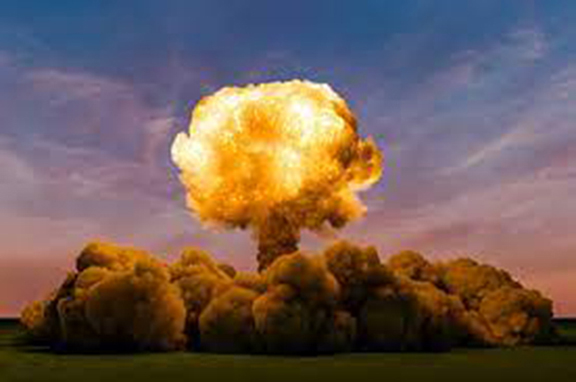
So on Aug. 6, an American bomber dropped the first A-bomb on Hiroshima, devastation on a scale the world had never seen.
Second ace
Three days later, Truman played his second ace when Nagasaki was bombed, too. Panicked Japanese figured America obviously had a warehouse full of A-bombs and promptly surrendered.
In a letter to his sister later, Truman said he probably saved 250,000 American soldiers’ lives. Not even counting Japanese lives that would have been lost in the invasion.
Had a newspapering friend here in N.C. named Tex in the late 1960s, a U.S. Navy veteran from World War II in the Pacific.
Tex said his ship sailed into the harbor at Hiroshima a week or so after the A-bomb hit.
Said there was a stench in the air from thousands of burned bodies that got in your nostrils, got on your hair, no escape from it.
Tourists go there today, including one of our sons, to see the memorial and ruined buildings.
Wally Avett first wrote for the Cherokee Scout as editor in 1969. His books are available as signed copies at the Scout office in Murphy. Call him at 837-5531 or email wallyavett@gmail.com.