
Part one in a series.
 |
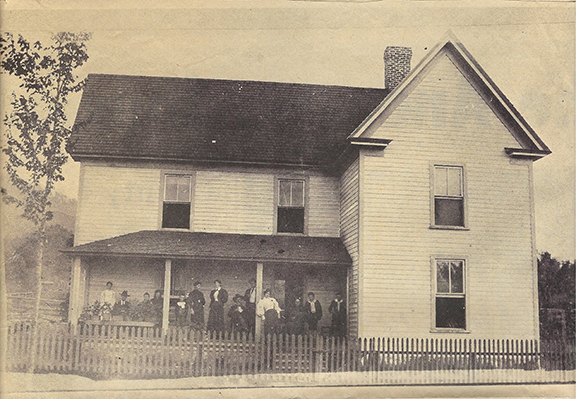
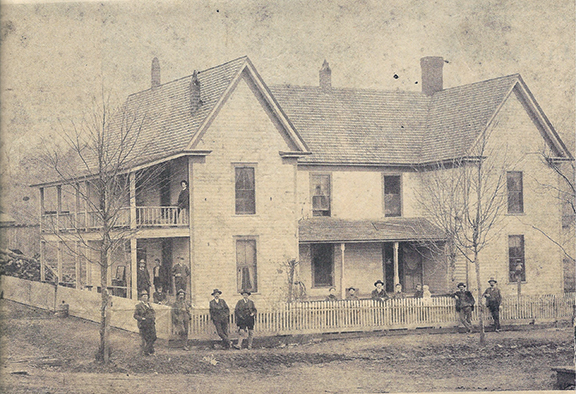
I have always been intrigued by the Porter House Hotel because it was a beautiful structure for that time period, and it was the first hotel in Andrews.
Capt. Stephen Porter built the hotel around 1895 on land in town. It was such a popular destination for those traveling by train that he had to build another wing for the addition of six more rooms in 1902.
Here is a brief history of the man who made a difference in Andrews.
Porter was a captain in the Confederate Army. He and his father, Andrew, joined the Confederacy in the war between the states and enlisted in Company K, 5th Tennessee Calvary. During the Battle of Maryville, Andrew was captured in January 1863, and he died in a prison camp in Morton, Indiana, in 1864 from exposure and the hardships of being imprisoned.
In the same battle, Porter was wounded from a saber cut to his head and was shot through both hands. He was wounded so badly they thought he could not return to the battlefield.
However, he was determined and after six months he returned to the war. On April 9, 1865, Gen. Robert E. Lee surrendered to Gen. Ulysses S. Grant, and the remaining Confederate armies completely collapsed.
Porter was ordered to Franklin when the war ended. It was reported that he “surrender and secured parole of his command with side arms and horses.”
He met and married a Macon County girl, Lucilla Moore, and they had seven children. In 1877, Lucilla died when their youngest child was 2 months old, and Porter was left with seven small children to raise by himself.
He had moved his family to Andrews in 1875, and they lived on the Sharp Farm for about a year and returned to Franklin. Later in 1878, a year after his wife died, Porter married again, this time to Tallulah Falls Adams, and they had four children.
Times were hard after the war and money was scarce, but Porter had a wife and 11 children to feed. He made a living farming and was successful in trading horses and mules.
His sons were now old enough to do the farming, which allowed Porter to travel to surrounding counties and buy horses and mules and drive them to markets in the South, where plantation owners who grew cotton paid a high price for the animals.
However, it was said that Porter liked to partake of the spirits, and seldom got home with all the money he made at the sale. In an article written by Mrs. Eleanor White, she tells a story about a trip across the mountain to Franklin, where Porter met a bootlegger and asked him to sell him a gallon of moonshine on credit. It is a life-changing story that will be continued in part two.
Kandy Barnard is a columnist for the Cherokee Scout. To talk about the Andrews Valley, call her at 828-361-3268 or email kandybarnard@gmail.com.