
 |
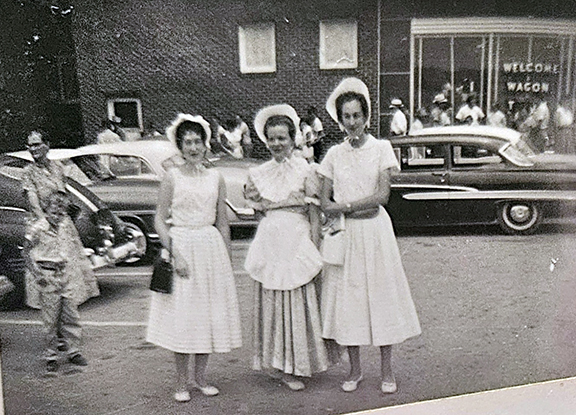
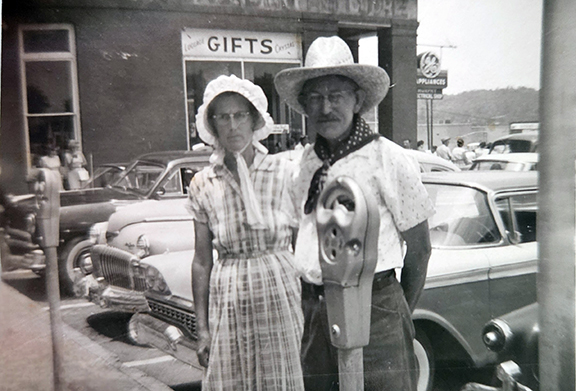
Last week, I was looking through some old family photos from the days when my grandmother was a teenager, and found some photos of my family in downtown Murphy for the Wagon Train passing through on its way to Tellico Plains, Tenn.
My Granny and her sisters were all dressed in bonnets and flowing skirts, just like the pioneer days, when wagons would roll through town instead of the cars they drove in the 1950s. They were standing in front of landmarks that no longer exist, like the Regal Hotel, Carringer’s Store and Mauney’s Drugstore.
I posted the photo on social media, then watched as people who were neighbors and friends from that time commented about these people I wish I had known or knew better.
As the photo gained views online, I was finding cousins and other family members who seemed to come out of the woodwork, many who I have never met or even knew about. I enjoyed reading the stories about my family, how my great-grandfather was a song leader at Little Glade Baptist Church and how they were just good people.
My aunt Cleo loved to take photos, and I cherish the small collection of her photos I have. They show views of Murphy and their home in Martins Creek, with buildings and landmarks that no longer exist.
As I look through the photos, I realize more has been lost than just the people’s names – but where they are, what was happening in the world at that time and the stories that went with them.
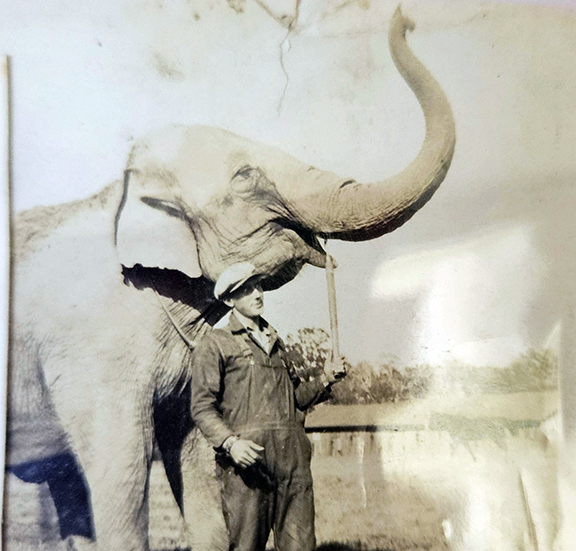
There’s a photo in this collection of a man with an elephant. There’s speculation that the man is my great-grandmother’s brother, but there’s no true way to know without anything written on the back and no one around who was there when the photo was taken.
One thing I always try to do is write on the back of photos who is in them and a date. That bare minimum information is useful for the future, when my children look back on their own childhood memories.
If I don’t know something, I always try to track down the answer, whether that’s going online to sites like ancestry.com or social media, where people may know the answer I seek. In the digital age we live in, try to back up images on a storage device.
A family historian is someone who preserves family memories and stories for future generations. As I’ve grown older, I have learned to embrace my family history and capture all of the stories that I can not only for myself, but my own children.
My kids, 8 and twins 9, ask all the time about our family. I have been teaching them about the relatives they never met, like my great aunt Ruth, who I named my daughter after, and my grandfather who passed away when I was 17. They look at old photos and wonder if they are like those people.
I hate to get rid of anything that didn’t originally belong to me, like my great-grandmother’s quilts or an old gravy boat that’s been in the family for years. While many might sing their praises about a young woman holding on to family history, I can attest that it is not viewed that way when you’re the family historian.
I am viewed as the paparazzi because when a family event is happening I hear, “Oh no, there’s Stacy with her camera.” I like to take pictures to remember the small moments, but I also like to preserve the moments from when I wasn’t around.
More families need someone to compile their history and teach the younger generations. It’s good to have a family historian and for the younger generations to take an interest in preserving history. Eventually, someone will come looking for that information and wonder how it has been lost to time.
Stacy Van Buskirk is a staff correspondent for the Cherokee Scout. Email her at segv2014@gmail.com.