
 |
On Feb. 10, 1976, Black History Month was officially recognized by President Gerald Ford as he urged Americans to “seize the opportunity to honor the too-often neglected accomplishments of Black Americans in every area of endeavor throughout our history.” The month long celebration has much earlier roots, though. In 1915, historian Carter Woodson and minister Jesse Moorland founded what became the Association for the Study of African American Life & History.
As more and more states included the recognition of the achievements of African Americans, the recognition of Black History Month, though long in coming, was a naturally evolving result as the country learned to honor the contributions of all citizens to the culture, faith, and industry that make our nation’s diversity a major part of the nation’s strength.
In Cherokee County, we have one of the most significant resources for understanding how the art and culture of African Americans have shaped their communities, even and, especially, right here at home.
After several years of research, Andrews resident Ann Miller Woodford published her book When All God’s Children Get Together. Even the title suggests an immediate bridge – to finding common beliefs, hopes for life, shared ways of joy – between citizens of diverse race, social and economic status, or political beliefs.
Strength of faith is one of the cultural examples we have from African Americans, but as Woodford’s book demonstrates, black citizens here in southwest Appalachia have also provided great examples of work ethics, of patriotism, of yearning for better education, and certainly music!
While black performers’ connection to the rise and popularity of jazz is perhaps widely understood, one of my favorite music examples is the great number of folk songs and hymns that were modified with memorable choruses or refrains, thanks to the songs of hope from African Americans, coming especially during the time of slavery. “Poor Wayfaring Pilgrim” comes to mind, or the entire verse and chorus of “Let Us Break Bread Together.”
Let’s think about some local artists – African Americans who have made contributions to the arts and culture of Cherokee County.
First, the late deacon Rosco Hall. He was a U.S. Army veteran, career worker at the former Levi Strass plant, a community volunteer (Reach and the Texana Community Club) but also a most excellent musician, who sang as an angel might and could burn up a set of guitar strings.
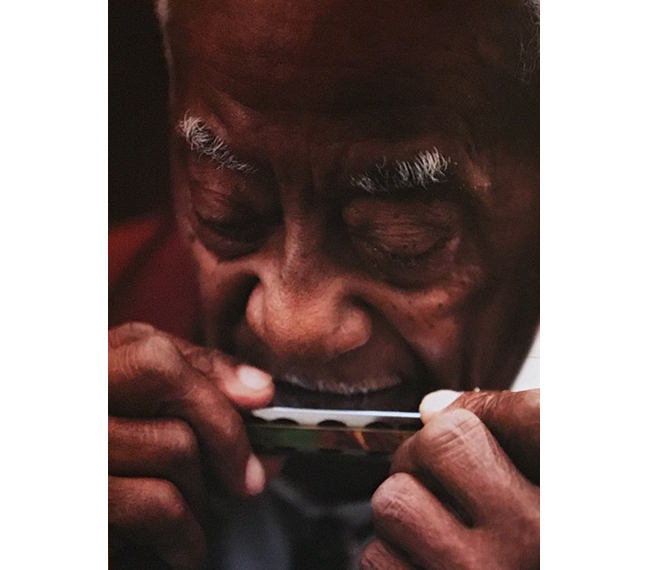
Then there is Ronda Birtha, a most talented videographer and photographer, and a former instructor for the Community Folklife Documentation Institute of the N.C. Arts Council. She joined sculptor Viola Spells and painter Ann Woodford in the moving exhibit “Black in Black on Black” at the Center for Craft in Asheville in September through December 2021.
One of Birtha’s photographs from that exhibit, a portrait of Woodford’s father, Purel Miller, can be seen in the entrance to the Cherokee County Arts Council facilities on Valley River Avenue in Murphy.
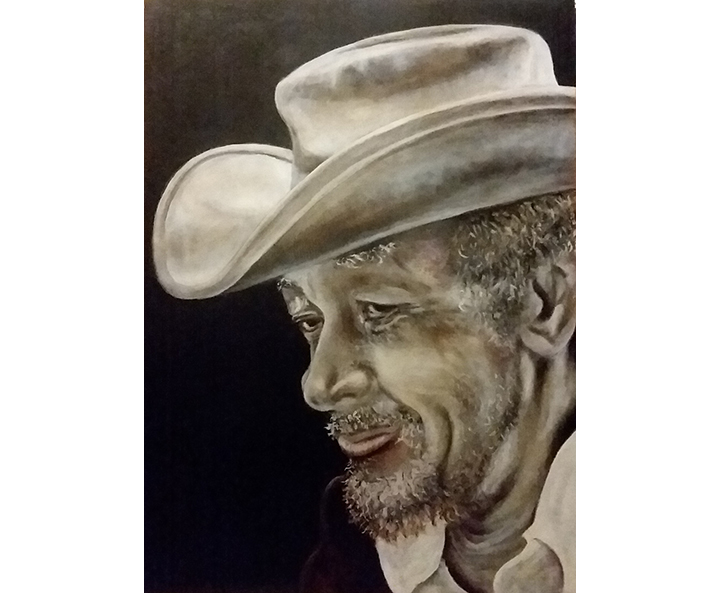
And that brings me back to Woodford – painter, historian, author and one of the founders of One Dozen Who Care. If you want to know how black citizens contributed to the Appalachian way of life (that’s where we all live) then get a copy of When All God’s Children Get Together. For it’s literature, you see, more than any other of the arts, that help us understand our world and the people in it who surround us.
David Vowell is director of visual and literary arts with the Cherokee County Arts Council. Email him at david4thearts@gmail.com.