
Murphy – A coalition of local entities have teamed up to install electric vehicle fast-charging stations in Murphy.
“We could be one of the first in western North Carolina to have those stations,” Mayor Rick Ramsey said at the Sept. 7 council meeting. “Electric cars are here and [more] are coming.”
Today, there are more than 20 “destination chargers” at Harrah's Cherokee Valley River Casino & Hotel. However, those units only charge electric vehicles manufactured by Tesla. Moreover, if a car’s battery charge is low, it could take several hours for a destination charger to completely recharge the vehicle.
The fast-charging stations local leaders want to install in Murphy could be used on all electric vehicles, regardless of the manufacturer, and will recharge a car in less than an hour. Officials expect such stations to attract a steady flow of travelers who may spend money on dining and attractions while they wait for their vehicle to charge.
“It would be good for business,” Councilman Frank Dickey said.
Researchers estimate about 14,000 electric vehicles are being operated in the Tennessee Valley, and area leaders want to expand that number to more than 200,000 by 2028. Officials say a network of public fast-charging stations will spur growth in the electric vehicle industry by giving drivers more confidence in the ability to recharge while away from home, eliminating so-called “range anxiety.”
To that end, the Tennessee Valley Authority has partnered with the Tennessee Department of Environment & Conservation to develop a fast-charging network. The two agencies have agreed to install fast-charging stations every 50 miles throughout Tennessee’s interstates and major highways. The project is expected to cost $20 million.
“TVA’s upcoming Fast Charge Network program will be applicable in every state within TVA's service territory, including North Carolina,” TVA spokesperson Scott Fiedler said via email when asked if the agency plans to help fund superchargers in bordering states.
“TVA will be installing over 300 EV charging stations across TVA facilities to support the electrification of our own vehicle fleet by 2030. … TVA will also explore additional partnerships with local power companies, state agencies, automakers, private businesses and the federal government as opportunities arise.”
The closest fast-charging station to Murphy is more than 50 miles away, according to a Tesla map showing such locations are available in Georgia and South Carolina as well. Larry Kernea, general manager of Murphy Electric Power Board, said the agency is open to electric vehicle expansion partnerships.
“There’s a myriad of technologies being developed for charging cars, and at some point, we will have to dip our toes into it and learn about it,” Kernea said. “It would be good for Murphy to get in the ballgame early, be progressive and have sites that tourists or travelers could find on an app. Maybe they’ll spend some time downtown while they're charging.”
It can be a challenge to find a parking space in downtown Murphy during peak hours, so town officials are discussing how to establish fast-charging stations without negatively impacting businesses. Officials are also discussing ways to ensure electric vehicle parking spaces are not occupied longer than needed to recharge a car.
“[Perhaps] if they tie up a charger so no one else can use it, they'd have to pay to park in front of it,” Kernea said.
The push for electric vehicle expansion is happening at the federal level as well. In July, the U.S. Department of Energy announced that $60 million will be used to fund 24 research and development projects aimed at reducing carbon dioxide emissions from passenger cars and light- and heavy-duty trucks. Of that money, $28 million will be used to accelerate innovation in electric vehicle batteries and electric drive systems to increase the useful life of electric cars and enable more affordable, better performing vehicles.
Officials say electric vehicle adoption will spur jobs and economic investment in the region, keep refueling dollars in the local economy and reduce carbon emissions. Moreover, proponents of electric vehicles say they save money.
The cost to fully charge an electric vehicle varies across regions, depending on rates set by power companies. However, researchers say it typically costs less than $10 to fully recharge an electric vehicle that is nearly out of power.
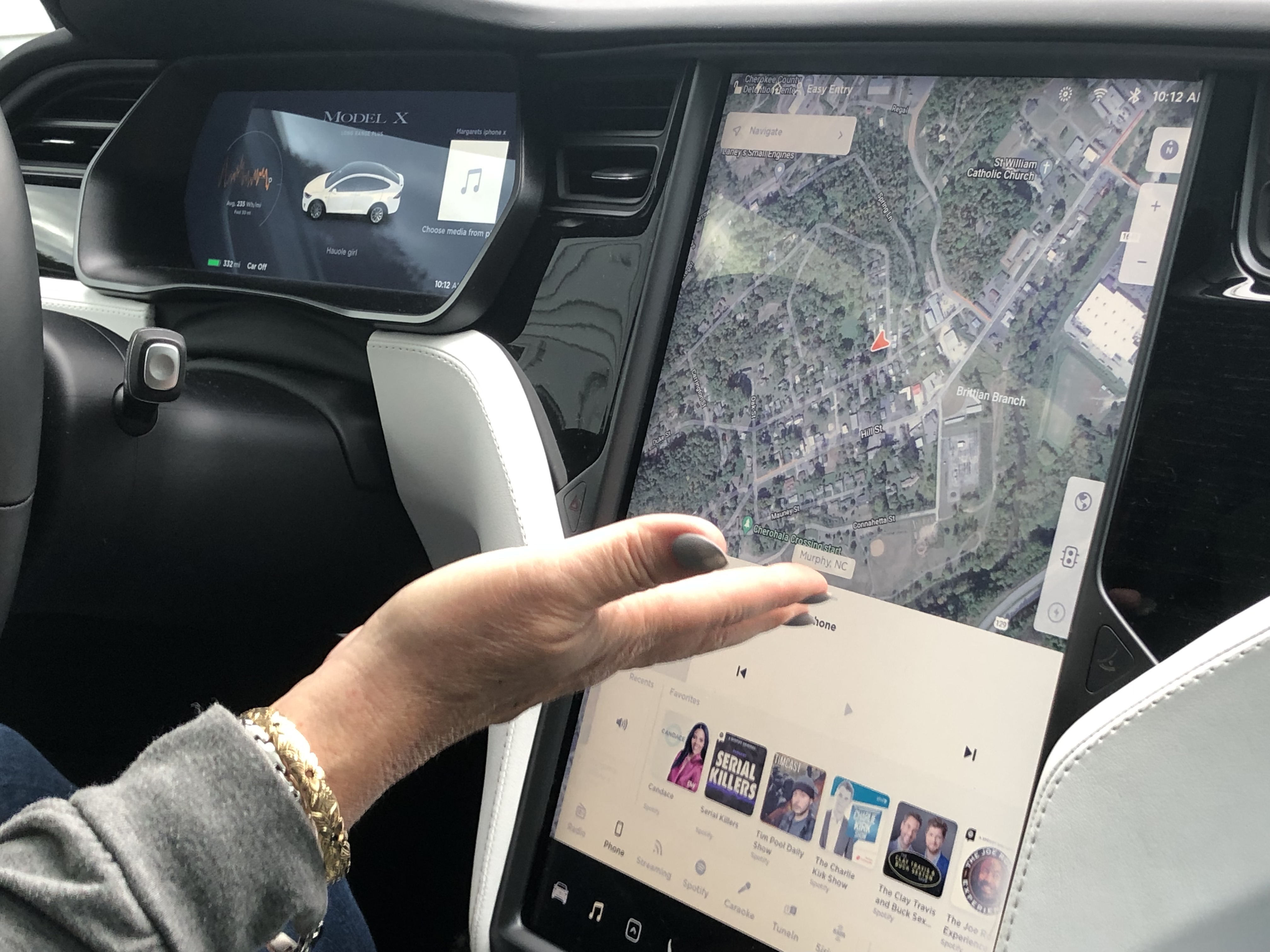
“When you charge your car at night, it takes less electricity because there's not as much usage as there is during the daytime,” local Tesla owner Margaret Keenum-Ackiss said, adding that she hopes Murphy Electric Power Board establishes a discounted rate to recharge vehicles. “I have a 400-mile range on this car, and if I charge it to the fullest, it costs about $6 [to recharge from nearly empty].”
Keenum-Ackiss has owned two electric vehicles, which she raves about whenever given the chance.
“This car is basically an iPhone on a souped-up golf cart,” she said.