
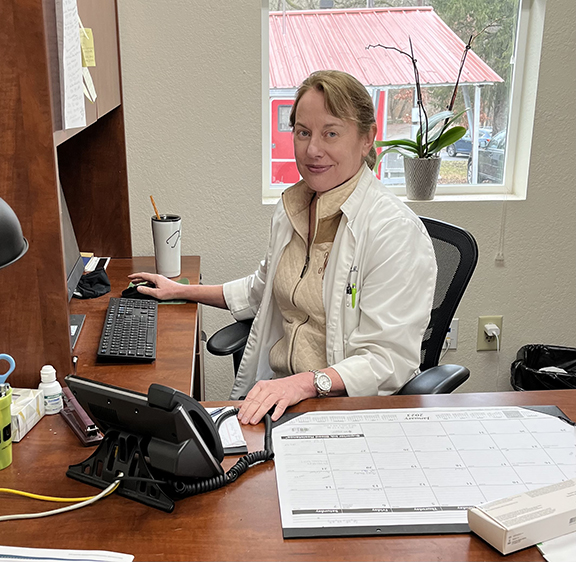
Murphy – When it was first discovered, the new virus was called 9A9B. Dr. Mary Lane with the Cherokee County Health Department said with a laugh that they eventually “came up with the imaginative name of hepatitis C.”
Up until recently, the bulk of hepatitis C infections belonged to Baby Boomers, those born from 1945-65. In fact, 75 percent of all hepatitis C infections belong to this population.
Lane attributes these infections, in part, to substandard sanitary procedures.
“Until the early ’80s and HIV,” she said, “instruments weren’t sterilized; things weren’t cleaned as well.” The HCV virus, much like HIV, is contracted through exposure to infectious body fluids, including semen, saliva and blood.
It’s the blood exposure that has caused a shift in hepatitis C statistics. Partly due to the opioid addiction crisis, the U.S. Centers for Disease Control & Prevention reported an 817 percent increase in hepatitis C infections in drug users ages 18-29 due to using a shared or unsterile needle.
This trend is worrying. Worldwide, 58 million people have the virus, with North Carolina reporting about 200,000 cases in 2020.
In Cherokee County, 339 people were diagnosed with chronic hepatitis C, according to the 2019 N.C. Hepatitis B/C Surveillance Report. That’s far above neighboring Clay County with 73 and Graham County with 106, and even higher than much larger Macon County with 277. Local officials say Cherokee County’s ranking is among the highest in the state per capita.
The virus is sneaky, with few symptoms until the internal damage is too great to control. The CDC estimates 4 in 10 people are infected but don’t know it.
Lane said that, untreated, hepatitis C will attack the liver. “The virus can lie dormant for decades,” she added.
When symptoms do appear, they are ambiguous and easy to misdiagnosed or miss all together. Frequent bruising, bleeding or fatigue top the symptoms’ list, but as the virus continues to destroy the liver, more sever symptoms, like jaundice, dark urine, itchy skin and abdominal fluid build-up become more difficult to dismiss.
The World Health Organization reported just fewer than 300,000 hepatitis C deaths in 2019. However, the good news is the virus is curable.
“In Cherokee County, we have treated and cured 100 patients since 2018,” Lane said.
If the diagnosis, secured through a blood test, occurs before the liver has been deeply damaged, the patient is put on a simple regiment of a two- to three-month course of medication.
“The medications, Epclusa and Mavyret, are combined into one pill,” Lane added. “After the course is complete, they are tested once more.”
Many people ousted the virus through spontaneous cure. This is most commonly seen in infants who contract the virus through an infected mother.
“It’s called perinatal transmission,” Lane said. “If the mother is positive, there is a high rate of spontaneous cure in the baby through baby’s own immune system.”
She added that health-care professionals don’t even test the infected hepatitis C infant until age 3 because the virus normally cures itself during that time. But it’s not just infants whose bodies reject the virus. According to Lane, “25 percent [of those infected] experience a spontaneous cure.”
“It’s important to understand people can have HCV without any risk factors” like unclean needle injections, unsterilized tattoo equipment or sharing utensils or razors with an infected housemate, Lane said.
The U.S. Preventative Services Task Force encourages all adults to be screened for hepatitis C. The Cherokee County Health Department makes that easy.
“When you come in, a nurse will talk to you to determine risk factors, draw your blood and you get an answer within two weeks,” Lane said. And the screening is free of charge.