
.
Boiling Springs
Two Crows Farm has been a staple of the community since 2010. This year, it’s celebrating year 15 on the farm.
Woody Ham previously worked in agriculture on the food side of the business, but when she and her husband, Mike Ham, were looking to start something of their own, they wanted to find something more sustainable for their entire life. The couple learned about alpacas in a Tractor Supply magazine, and how sustainable and environmentally friendly the animals were.
“Alpacas provide their fleece as a renewable resource, are sustainable through the care we give them, and are environmentally friendly,” Woody said. “They only have teeth on the bottom row, so they cut grass similar to a lawn mower, and they have padded feet like a dog that doesn’t tear up the land like hooves will.”
This left them needing to find a small farm to call their own.
During a trip to Asheville, they passed through Murphy, picked up a copy of a real estate magazine and saw the property the farm is on.
“Mike was worried about being late to meet our friends, but this was something the universe dropped into our laps,” Woody Ham said.
At the time, the only thing on the property was the 1893 farmhouse, but they have expanded the farm over the years. They began the farm with three alpacas that they purchased from other farmers.
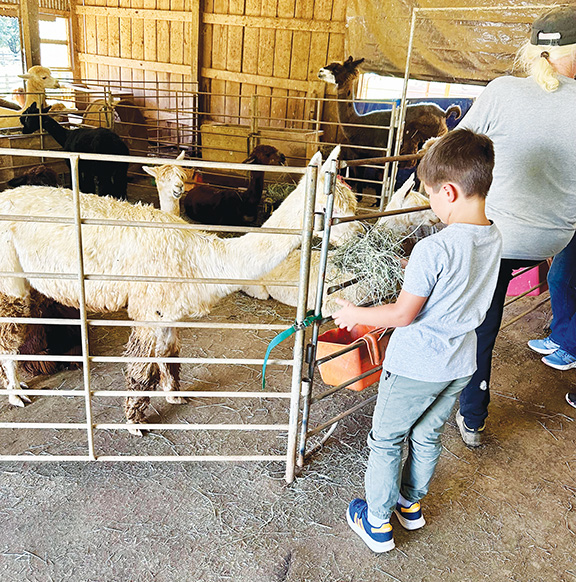
Today, Two Crows Farm hosts 66 alpacas, four llamas, six working dogs and some barn cats.
The camelids range in age from 5-22. They initially thought they would be more involved with breeding and showing the alpacas.
“I traveled a lot and even competed in a national championship, but eventually the travel became too stressful on me, Mike, and especially on the animals,” Woody Ham said.
They then moved to doing fleece exhibitions, which were able to be shipped to various shows.
“These shows required entry and shipping fees, and I began to feel like I was just adding cost to the farm,” Woody Ham said. “We wanted to be more self-sufficient, so we began working to develop lines of merchandise made from our alpaca fleece.”
Alpacas come in two varieties that are determined by their fiber type: huacaya, which have dense, crimpy fiber; and suri, which have long, silky fiber.
Two Crows Farm harvests fleece once per year, around April or May, using professionals who are able
to complete shearing for the entire farm in a little over two days. Each animal has three quality levels
of fleece that are used to make different types of products.
“Items to wear are made with the top-quality fleece, while items for home or felting projects are made with the second- and third-quality fleece,” Woody Ham said.
When working with alpaca fleece, there is no commercial development, so they work with other farmers who have set up mills to clean, wash, dry, card, draft, dye and spin the fiber into yarn.
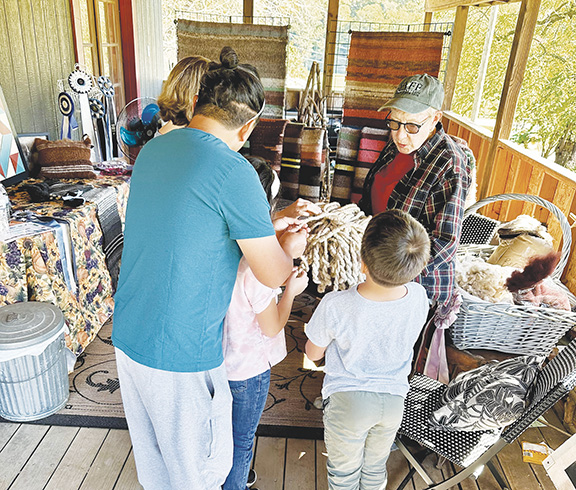
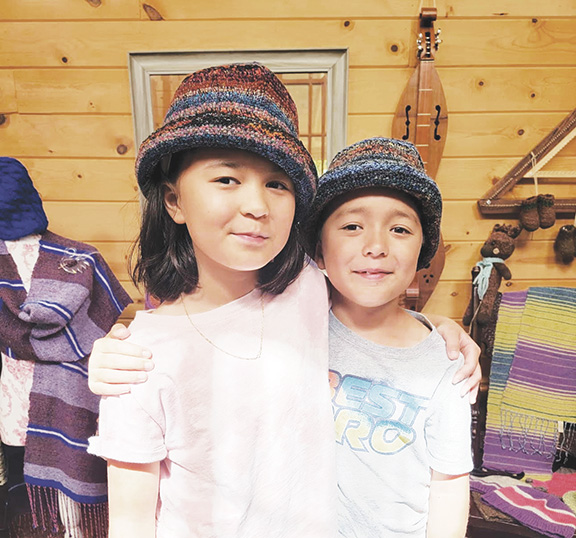
“We give the yarn to 15-18 local artists, and they turn it into everything in our gallery that shows what you can do with their fleece. They really elevate the product our animals produce, and we pay them for their artistic contribution,” Woody Ham said.
The gallery also features three items from Peru that help to support education for children in the region. Along with these items,
custom orders can be made and allowing customers to work directly with the artists. “Our top-selling item is definitely socks. You
can’t beat the natural wicking ability that alpaca fleece provides. It’s also allergen-free because it doesn’t contain the lanolin that sheep’s wool does,” Woody Ham said.
“Other best sellers are our dryer balls and fingerless gloves, but we have a wide variety of alpaca-made products for everyone, from babies to adults.”
Anyone can tour the farm free of charge.
“We want people to learn about the animals, the farm, and the process that the fleece goes through,” Woody Ham said. “We don’t want to charge for knowledge and can sustain the farm by selling merchandise here in our gallery, at the Union County Farmers Market and with John C. Campbell Folk School.”
During the tours, guests spend half an hour with Mike Ham learning about the difference between alpacas and llamas, what the dogs do, what goes into taking care of the animals, how they eat and how they are sustainable. The tour ends with Woody teaching guests all about alpaca fleece, how it’s turned into products and showcasing their gallery of artisan products.
From June through October, tours are available three times a day Sunday through Friday, while from November through May, tours are seven days per week, three times a day. Tours require a reservation to be made and are private for each booking.
At the end of each year, farmers and gardeners collect the compost that has been made from the alpacas to replenish nutrients in the soil for the next growing season.
“Their manure doesn’t contain nitrates, so it isn’t good for fertilizing like cow manure, but this also reduces the odor entirely. Instead, their manure is nutrient-dense, which makes it extremely beneficial for preparing soil after a long season of growing crops, so that the land will be ready for the next season,” Mike Ham said.
“We love that we can use everything they provide throughout their entire life. They never outlive their usefulness on the farm. They’ve opened up a whole new world for us that doesn’t involve the terminal market,” Woody Ham added.
Details: Visit Two Crows Farms on Facebook or call 828-837-1678.