
 |
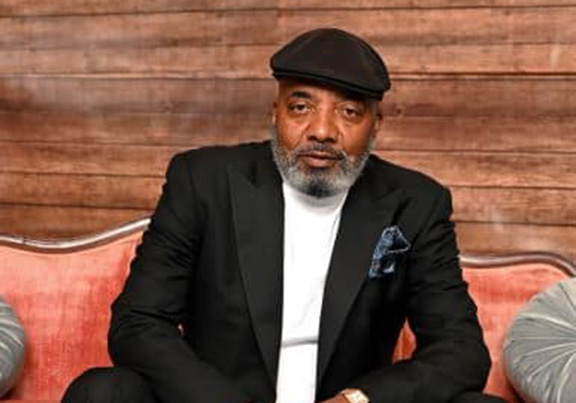
A piece of Cherokee County history that has had worldwide impact began in the basement of Murphy First Methodist Church, and I was a witness. The church decided to turn that space into a teen club called Magoos. Some teenagers from Murphy invited a couple of boys from Hiwassee Dam to form a band, and the rehearsal would be in the off-hours at Magoos.
I was one of those Hiwassee Dam boys.
“We have a guy coming to be a singer who isn’t here,” we were told. First song was “Midnight Hour” and the lead guitar player stepped out of the room with the mic on a long cord – and into the room stepped Michael Mauldin and Chris Smith. On key. Perfect. Voices like angels. And black.
Hiwassee Dam had never had an African-American student enrolled. The Civil Rights Act was only a few years old. I knew no black people. My mother set the tone for the rest of my life that evening when I told her I was in a band and two of the members were African-American. She said one word: “So?”
Thus the integrated band The Other Side was born. When the band split, as was common, we went in different directions. Mauldin, however, would go on to change the world of music.
Despite success of which most only dream, Michael has never forgotten where he came from. Every biographical entry on the internet begins with “He is from Murphy, North Carolina.” At his 50th birthday party, I introduced myself to a major executive at Columbia Records and told him I was from Murphy. He told me, “Everyone knows Michael is from Murphy – he is very proud of that.”
After high school, Michael lived in Asheville before moving to Atlanta, where he stayed close to music. A friend played in the group Brick, and their car broke down on the way to a gig. Michael was asked to rescue them since he owned a van. When loaded, the band realized a van could carry more, and they asked Michael to drive their gear to Savannah, Ga., for a gig – offering to buy gas, a hamburger and $15. He took it.
Having played in a band himself, once there he joined in setting up the stage, and when Brick realized his driven work ethic, he was soon stage manager and later production manager. Things improved even more with Brick’s first hit.
Michael expanded his production talents to other acts and developed a touring company, MTM Roadworks (Making Tours Move). He worked with the Bar Kays, Sister Sledge, Earth, Wind & Fire and Cameo, among others.
Assisting in the career of his son, Jermaine Dupri – who was making his own mark as a force in hip hop music and eventually a Songwriters Hall of Fame member. Michael also produced the New York City Fresh Festival that opened with Jermaine, and included Run-DMC and the Fat Boys.
As he moved more into more management opportunities, Michael was soon working with Luther Vandross and Anita Baker, and promoting Arrested Development, Kris Kross, Da Brat and Xcape.
He is a big part of his son Jermaine’s music label, So So Def, a familiar name to many thanks to a massive billboard along Interstates 75/85 in the near center of Atlanta.
His successes and business savvy attracted the attention of Columbia Records, where he would become president of the Black Music Division and the first African-American senior vice president of Columbia Records Group.
Columbia Records has recorded some of the biggest names in music. Among them Johnny Cash, Bob Dylan, Miles Davis, Louis Armstrong, Bruce Springsteen, Billy Joel and Adele. Michael added to that string of legends with the discovery of a talented young piano playing artist named Alicia Cross – but, at Michael’s suggestion, she changed that last name – to Alicia Keys. When she accepted her first Grammy, she thanked Michael in her acceptance speech.
A similar name change was given to a group of three singers from Houston, who added the name of Destiny to Destiny’s Child, and oversaw multi-platinum releases from The Fugees, Lauryn Hill, Nas and Wyclef Jean.
After leaving Columbia Records in 1999, Michael returned to Atlanta to work with his son at So So Def Recording, and on a motorsports inspired clothing line, “The Fast Life.”
Michael’s expertise has him involved in other endeavors. One American Airlines commercial featured Michael looking at the camera and proclaiming, “I’m Michael Mauldin, and American is my airline.”
Michael’s father, W.T. Mauldin, was better known as “Lightning,” who turned his truck driving career into competitive auto racing at local tracks like Tri-County and Cleveland. Adding to the name – and the legend – was Lightning allegedly ran moonshine from time to time – as did many of the most famous names in Nascar. That familiarity with racing and Nascar led to Michael working with Nascar to attract a younger audience,
His management duties, event promotion and charities are too many to list here. They continue today. In 2018, he formed the Black American Music Association, of which he is president.
The organization’s goals, as Michael describes it, “To preserve, protect and promote the legacy and the future of authentic Black American music, its community, its culture and its creatives. We want to make sure that people understand black American music, how it started and where it came from. When you talk about black music, it’s not completely about race or creed or the color of your skin, it’s about an art form. There’s got to be an opportunity to get our kids back into entertainment that is not always so profane or always so left of center that it can’t be embraced by everybody. That’s important to us.”
Michael and his son, Jermaine, were inducted into the N.C. Music Hall of Fame in 2020.
Murphy was a one red-light town when Michael left – and even with international fame and impact, Michael has never hesitated to show his pride in his hometown – a hometown that today is very proud of him.
Bruce Voyles’ local history column runs every other week in the Cherokee Scout. Email him at RoadsLessTraveled@cherokeescout.com.