
 |
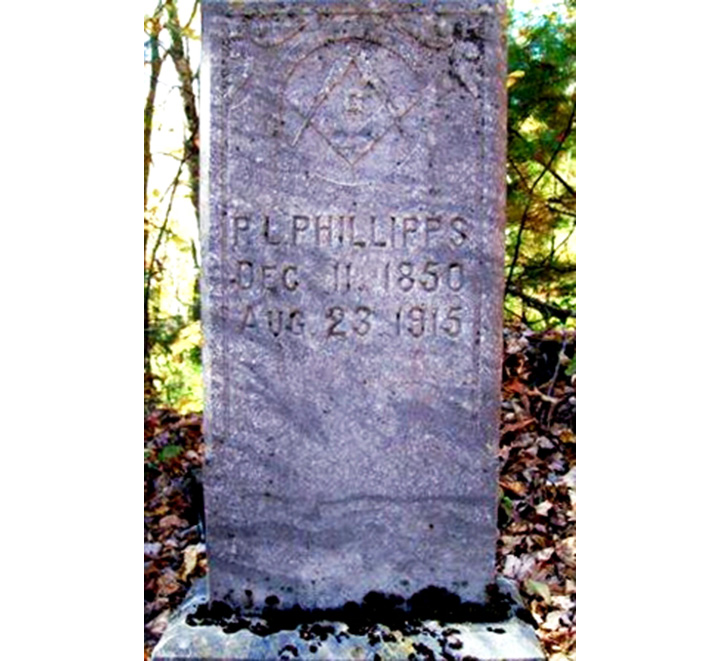
Phil Phillips was successful. At 65, he had a farm and grist mill along Tallulah Creek, was well liked in the community, had grown children, grandchildren and was a member of the Masonic Lodge. But he would have been happier had his son-in-law Ed Williams chosen a different career.
Williams was a moonshiner. Since his daughter Laura’s marriage 13 years earlier, he had unsuccessfully tried to convince Williams to find another line of work.
The discontent between Phillips and Williams was not helped with the apparent stealing of corn and corn meal from Phillips utilized by Williams in making his corn liquor. Other family members talked openly about William’s moonshining and suspected thieving, and when some of William’s stills were raided, he became convinced the authorities has been assisted by his in-laws. He was infuriated.
On May 1, 1915, in a drunken rage, armed with a revolver, Williams stormed the Phillips home, where he shot his brother-in-law Charlie, 28, through the heart, then turning the gun on his sister-in-law Mary, 33, and killing her instantly. He shot his 67-year-old mother-in-law, Nancy, who hung on for another day before she, too, passed. Phil Phillips and other members of the family were spared only because they were not home. Williams fled to the hills.
The funeral was a combined service for the three, and they were buried in Phillips-Sherrill Cemetery in Robbinsville.
The governor offered a $300 reward and Phillips added $200 to the sum (that reward would be $15,000 in 2024 dollars). Phillips also initiated a manhunt and printed reward posters that he posted and mailed to surrounding towns and communities.
Laura, Williams’ wife, had a nervous breakdown when told her husband had murdered three members of her family – spending 14 days in the Andrews hospital before passing on June 30, 1915.
The tragedies of the Phillips family were not yet over. On Aug. 23, 1915, Phillips left his home 5 miles from Topton at 7:30 in the morning for a trip to Robbinsville. One of his surviving children was in the yard going to feed the stock when they heard a loud, “Oh, Lordy” followed by gunshots. Phillips had been ambushed.
Phillips managed to get three-fourths of a mile further down the road from where he was shot, and was found seated on the ground, bleeding, his mule tied to a bush. He told those who found him there was no need to call the doctor, he knew he would die from his wounds.
As they transported Phillips back to his house, he was coherent and pointed out the spot where he said two men had been concealed behind a log and shot him at 35 feet. He said the men were Hardy Wiggins and Merrit Miller.
Miller was brought before the dying Phillips, who said, “You are the man who shot me.” Miller swore Phillips was mistaken and was not arrested. Phillips died soon thereafter, joining his wife and two children buried in Phillips-Sherrill Cemetery.
Miller and Wiggins moonshined with Wiggins. Wiggins was the half-brother of Tennessee bad man Buster Duggan, while Wiggins had been acquitted of murder in 1901, and in 1915 had outstanding charges of moonshining pending.
Outside help was solicited. Tennessee-based Deputy Sheriff John Brown and his son, J.C., brought their bloodhounds on a special train accompanied by Southern Railway officials from Chattanooga, Tenn., to aid in the search. They were paid $100 per day for use of the dogs and took up the 32-hour old trail from the spot Phillips was shot.
The trail split in two directions a half mile from the scene of the murder. The trail wound for 10 miles before culminating at Hardy Wiggins’ home. The other trail led to Merritt Miller, standing in a group of men when the dogs approached.
One bloodhound jumped up on Miller before sitting down, further identifying him as one of the killers.
Local residents were so impressed with the bloodhounds that they decorated the dogs in blue ribbons from head to tail.
The two men were arrested and charged with murder, retaining attorney Jack Dillard in their defense. Both claimed their innocence, but Wiggins did admit he had been giving food to the hiding Williams for months.
In an effort to show Wiggins in a favorable light, his brother, Bill, turned in Ed Williams, who was arrested near Newport, Tenn., and was briefly held in the same Asheville cells as Wiggins and Miller.
Williams would be sentenced to 80 years in prison for the three murders.
Wiggins and Miller were found guilty on Sept. 19, 1915, in an Asheville court and were sentenced to die in the electric chair.
What followed was a series of scheduled execution dates with last-minute reprieves from the governor. In one instance, their heads were shaved and prepped for the electric chair before the stay of execution was received. That incident prompted the title for a book describing the trail and sentencing later written by Miller’s daughter, Louise Hale, titled 13 Minutes to Live.
In August 1916, Wiggins professed a conversion experience of faith, and enlisted a number of churches and pastors assisting in his campaign to dismiss his execution.
Wiggins and Miller were still awaiting execution when Williams died in prison in 1917. But before dying, Williams dictated a letter to the governor proclaiming that Miller and Wiggins were innocent, and he (Williams) had been the murderer of Phil Phillips. Williams left behind six children.
In April 1925, the governor commuted the sentences of Miller and Wiggins, citing Williams’ letter and questions about the trial specifics, plus taking into consideration that Miller and Wiggins had been “model prisoners.”
Merritt Miller moved to upper east Tennessee, where he died in 1955.
Hardy Wiggins would return to his home, dying in Bryson City in 1973. He was 94 years old.
Bruce Voyles’ local history column runs every other week in the Cherokee Scout. Email him at RoadsLessTraveled@cherokeescout.com.