
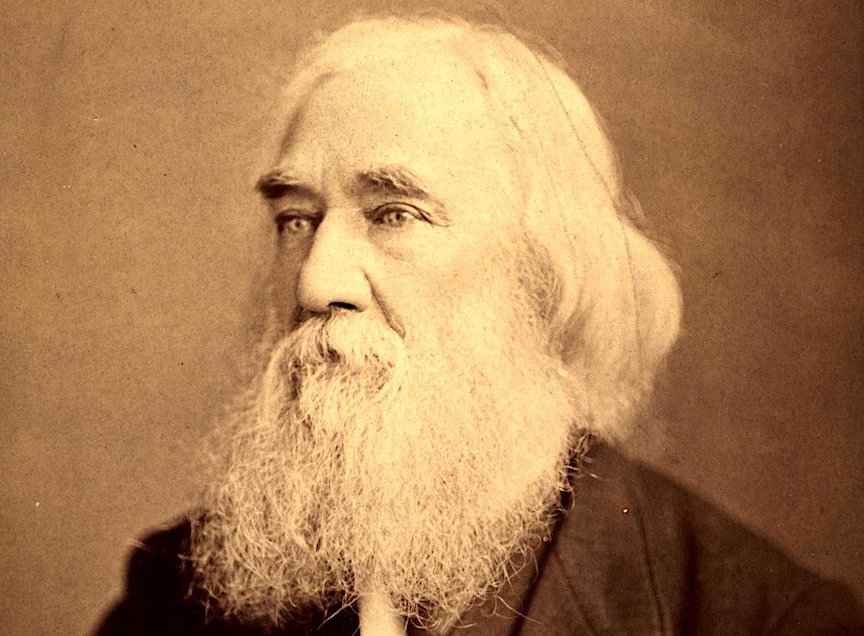

Bruce Voyles
When I moved home to Cherokee County after decades away, I had questions about local and family history, and occasional stories from the old folks about which I wanted to know more.
As I delved deeper, I discovered contradictions. Much of our local history is misconstrued, and what is accepted as accurate history is sometimes simply a good story that has gone awry. I researched stories often at odds with the fog of myths, legends, misquotes and assumptions.
So, after 80-plus columns on these opinions pages, I want to list the top things I learned that opposed assumed local history.
First on the list is the Cherokee Removal. It was inhumane, forcing Native Americans from the Cherokee, Seminole, Creek, Chickasaw and Choctaw tribes to move to Oklahoma. For the Cherokee governmental guilt was rationalized by giving them land in Oklahoma – and paying 60 cents an acre for the land in North Carolina. The following year, the government sold the best of that land for up to $5 an acre, with poor land still selling for $1 an acre. Not a bad profit margin for the U.S. government.
One cannot talk about the Cherokee without looking at the Trail of Tears. Yes, there were deaths. Nothing near the numbers quoted in documentaries, which claim 1 out 4 (4,000 deaths). Some died of disease, which can be expected in those days with large concentrations of people compressed into a small area, as was done when assembling the detachments of around 1,000 people for the trip.
When the Cherokee left here, a tally was made by a military officer. When they arrived in Oklahoma, a military officer did the count. The death toll was close to 7% – compared with a 10% death rate for Oregon Trail travelers a few years later. The incorrect assumed figures come from Baptist missionary Elizur Butler traveling with one of the detachments. His inaccurate estimate was one out of four would die.
He put that in a report to his mission board before he even arrived in Oklahoma. The letter remained in Harvard archives is the source for all inaccurate numbers since. Butler wrote the letter with no knowledge or facts about the other detachments of travelers.
The Trail of Tears name does not come from a Cherokee, but was so named by a Creek Chief on an earlier forced migration of his tribe.
After all legal attempts to stop the removal failed, the U.S. government gave the Cherokee two years to get their affairs together and self-migrate to Oklahoma. Many did.
However, Principal Chief John Ross kept reassuring the remaining Cherokee that he had it handled, and they would not have to move – until they did.
At the request of John Ross, the Cherokee were paid to remove themselves, roughly 13,000 people, around 1,000 per group in 13 groups called detachments. Any issues with the time of travel, the routes, the number of wagons and the supplies can be laid at the feet of the Cherokee leaders themselves who organized the wagons and supplies.
Soldiers with the groups were sent to protect the Cherokee from white settlers and avoid conflicts. No soldiers were prodding old ladies along with bayonets.
Frontier Murphy was not isolated. Our local beauty was often noted in the writings of visitors, and visitors were always passing through. John Muir noted Murphy when he walked through. William Bartram and Hernando DeSoto all noted our beautiful area.
Another misconception is The Tsali legend. It is just that, legend. The myth comes from an outdoor play written in the 1950s Unto the Hills. The drama proports to claim that Tsali defended his family, killing the soldier offenders – and then surrendered to be executed in exchange for letting the Cherokee still hiding in the hills remain. There is no historical documentation to back up that.
The Qualla Cherokee had purchased their own land through the 1819 Treaty with the U.S. already and had the legal right to stay. Historical facts do state that Tsali and members of his family did attack and kill two of the soldiers taking them in for removal. They were tracked down and captured by members of the Nantahala Cherokee. After helping capture Tsali, the Nantahala’s executed him, and by that assistance the Nantahala Cherokee were allowed to stay with the Qualla Cherokee.
Unto this Hills is an enjoyable drama –but not historically accurate.
And during the Civil War, we were not all Rebels here. The population of Cherokee County, and most mountain counties was split 50-50 Union versus Confederate. There were few slave owners and little here worth occupying militarily. Conflicts were skirmishes, or pre-war disagreements being settled, and raiding parties from both sides crossing the same ground.
It was indeed war – but being in the South, and in North Carolina, does not make every resident an heir to the Stars and Bars. In climbing back up the family tree a lot of local families (including your author’s) find local ancestors who wore Union blue – and a few who in fact started out as Confederates and switched sides later in the war.
Despite this area being Cherokee controlled, it was never quite untamed wilderness. There were always a few whites here, first as traders, and in 1819 came the Unicoi Turnpike, running along much of what is Joe Brown Highway today.
Every 10 miles was a stand with corrals and lodging – managed by white people – the turnpike connecting Vonore, Tenn., to Augusta, Ga. The equivalent of such a turnpike today would be a six-lane interstate – which is why A.R.S. Hunter started the trading post and ferries here that would eventually become Murphy.
Perhaps the biggest misconception of all? How to spell Murphy. The town was named for Archibald Murphey, but the town was mistakenly recorded by an inefficient clerk as Murphy without the “E”. That incorrect spelling remains.
The state government screw up is yet another proof of Murphy’s Law: “Anything that can go wrong will – at the worst possible moment.”
Living in Murphy, N.C., it is always good to keep Murphy’s Law in mind. Remember where we live.
Bruce Voyles’ local history column runs every other week in the Cherokee Scout. Email him at RoadsLessTraveled@cherokeescout.com.