

David Brown
A lifetime ago, I enjoyed swimming and surfing in south Florida without a care in the world. Alas, the 1975 movie Jaws gave me some cares, and the sequel gave me more, so I wasn’t too bummed out to leave that salt life behind. In the decades since, we’ve had a rather symbiotic relationship – sharks have stayed out of my way, and I’ve tried to stay out of theirs.
Turns out maybe sharks got a bad rap. The latest evidence comes from Cal State Long Beach’s Shark Lab, which released a study in June 2023 showing great white sharks – considered the deadliest of the species – are near surfers 97% of the time in California waters. (This knowledge alone confirms my choice to live in the mountains was a good one.)
The lab’s two-year study used drones from above (can drones even go below?) to examine 26 locations on the California coast. The researchers made it clear that those “often observed within 50 yards of where the waves break” were “juvenile great white sharks between the ages of 1 and 5 years,” but I’ve seen more than enough in the animal kingdom to not wait around to find out if mom and dad – and rows of teeth – are nearby.
The good news is despite those daily near encounters, there were no shark attacks reported during the study. (So that’s what those “coexist” bumper stickers were all about.) The “mind your own business” rule seems to be working out pretty well in the ocean.
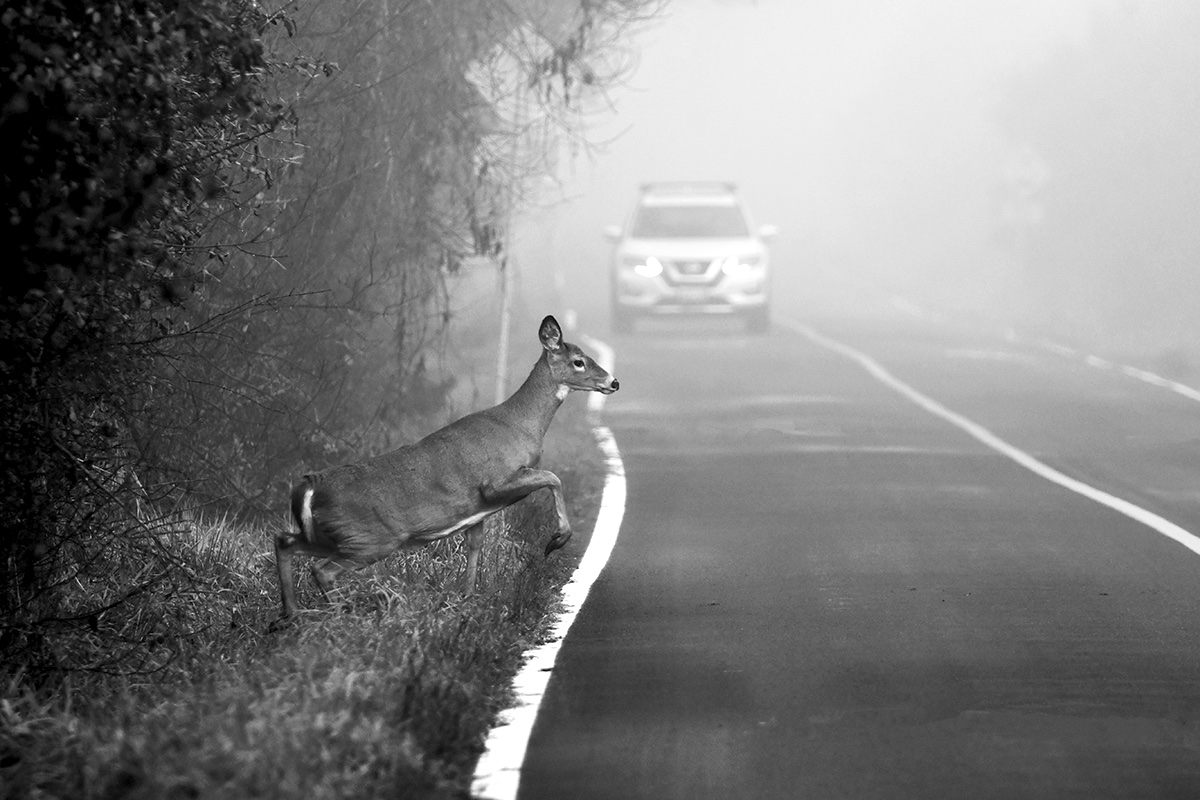
Not so for the real enemy of getting in our way. While there were only 69 incidents recorded by the International Shark Attack File in 2023, there are about 2.1 million accidents involving vehicles – and deer.
That’s right, it’s a sweet little Bambi – not a baby shark (can’t stop singing that now, can you?) – that causes more than $10 billion in economic losses annually. Those same deer we lure to our back yards, with a block and feed and seed we lovingly put out for them, account for more than 59,000 human injuries every year in the United States.
How much more deadlier are deer than other species that human beings share the planet with, you ask? Deer are responsible for the deaths of about 440 of the estimated 458 Americans killed in physical confrontations with wildlife in an average year, according to a CNN report. (Note: Only two folks died from shark attacks in 2023.)
Several years back, the wife and I found out firsthand how one deer can turn a heavenly evening drive into a highway to hell. We were traveling the backroads home after enjoying a delectable meal in Brasstown when, despite the all-encompassing darkness, I caught something out of the corner of my right eye.
Next thing we felt was something akin to getting a good smack on the bumper cars when you don’t expect it. That’s because a deer on the run had rammed into the right side of our truck, the bed thankfully absorbing the animal’s blow without blood or break, while also keeping us safely on Brasstown Road.
Was the deer blind? In need of mental health services? Playing chicken? Or, like trolls under bridges in days past, do they intentionally do things like this from time to time to remind us who’s really in control behind the trees?
The study shows most deer-related accidents happen between October and December, when deer are mating and migrating. So let’s all be extra careful out there, especially when the sun goes down.
David Brown is publisher of the Cherokee Scout. You can reach him by phone, 828-837-5122; email, dbrown@cherokeescout.com; or on X @daviddBstroh.