
 |
We once had a tree in these mountains that positively affected our world in dozens of ways, but in the span of a few years these magnificent trees seemed to vanish before our eyes.
Still today, we have no tree to compare to the American Chestnut. The loss of the chestnut tree to a fungus/blight was a catastrophe to mountain people.
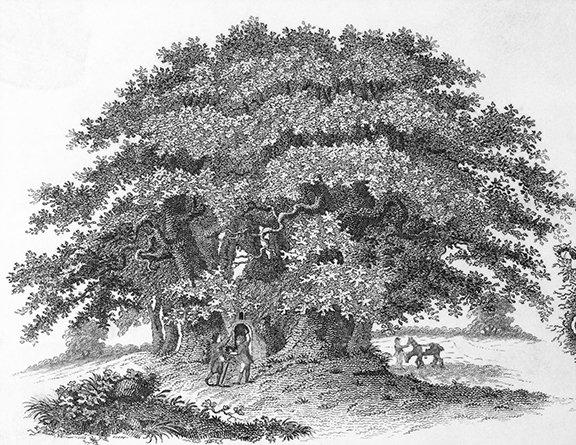
These majestic trees could grow up to 100 feet high, with a 13-foot circumference, with some reported to be as much as 17 feet. In the Appalachians, 25-30 percent of the hardwood trees were American Chestnut. It was the most common tree from Maine to Mississippi, especially in the Appalachians. It was said a squirrel could walk limbs from New England to Georgia and never get off a chestnut tree.
The wood of the chestnut was straight grained, strong, easy to saw and split, and rich in tannins, giving the wood a decay resistance comparable to redwood. The chestnut wood proved superior for fence posts and fence rails and became the primary wood for shingles.
Chestnut was popular for railroad ties, telegraph poles, paneling, and musical instruments. It grew faster than oaks, and due to its tannins the bark was used in tanning leather.
Bloom forges producing wrought iron and demanding massive amounts of charcoal for their forges used the chestnut as their primary wood.
One reason for the chestnut’s fast growth was thanks to a burr that would burst on the tree and usually contained three chestnuts per burr. An average tree could produce 10 bushels of nuts, which were harvested in the early fall. Many mountain kids would gather chestnuts for what they called “shoe money,” selling them at the local grocery store who in turn would sell to larger buyers for shipment to urban cities, who bought chestnuts by the trainload.
Roasted chestnuts would be sold on Northern city streets and have been called America’s first fast food. One Virginia county recorded shipping 160,000 pounds of chestnuts in one season. Typical price for a bushel of chestnuts was $1.25.
The Cherokee would grind chestnuts, combine with corn and bake chestnut bread. They also used chestnuts for treatment of whooping cough and chafed skin, and ground chestnut bark was used to stop bleeding.
The chestnut was ideal food for livestock, and so plentiful farmers would let their pigs run free knowing they would not be wandering for lack of food. Some have described the ground under an American Chestnut tree as 4 inches deep in chestnuts. It was a favorite food for bear and turkey.
My great uncle Felix Voyles described how the family would leave Sandy Gap and drive to Robbinsville each fall, looking for steep narrow hollows where a tree would have fallen. This would dam the fallen chestnuts into a single location, and they could load a truckload of chestnuts in one trip, enough to provide them with chestnuts throughout the winter.
Unfortunately even as they were doing this, the destruction of the American Chestnut had already begun.
In 1904, the New York Zoological Garden noticed a fungus killing their chestnut trees, and despite all efforts the fungus, known as the Chestnut Blight, would spread 50 miles a year. By the 1920s the blight reached the Smokies, where 31 percent of the trees there were chestnut.
The devastation would eventually cover 200 million acres and kill nearly four billion trees.
The American Chestnut is not totally extinct. A few were planted here and there outside the traditional range of the American Chestnut, and since the blight could not reach them, they survived.
However, in the traditional ground of the chestnut, the fungus remains in old chestnut roots, quickly killing any chestnut sprouts that may appear. The fungus also remains in oak bark. It does not harm the oak but remains death to any chestnut nearby.
The leather tanning industry was able to transition to other chemical substitutes for the natural tannins they had once obtained from chestnut bark. One family owned large tracts of land to harvest chestnut bark for their tanning operations, but with the coming of the blight and discovering the substitutes, they no longer needed their Georgia woodland.
They donated their land to the State of Georgia for a park. The state named the park after that family, the Vogels. We know it today as Vogel Lake State Park.
The American Chestnut Foundation and a variety of universities, including a program at the University of Tennessee, have not yet discovered a hybrid the attributes of the old American chestnut that can survive more than a year or two before the blight takes it.
That leaves us mountaineers who never knew the American Chestnut with only photos, the stories of our elders, maybe some items of wormy chestnut wood, and the hope that someday the fight to defeat chestnut blight will be won – and the American Chestnut might again return and thrive in these mountains.
Bruce Voyles’ local history column runs every other week in the Cherokee Scout. Email him at RoadsLessTraveled@cherokeescout.com.