

.
Murphy – Several organizations recently gathered at Murphy First Baptist Church to offer expertise on preventing scams.
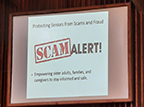
About 33 people attended a Scam Jam on April 29, including seven guest speakers. Among them were members of the Cherokee County Sheriff’s Office, Michael Hawkins of the N.C. Department of Justice and cybersecurity expert Janice Pryor.
There were several vendors set up in the lobby, offering printed information and free items. Door prizes added a bit of excitement among ticket holders.
The class offered a wide variety of information on scams – and the scammers who facilitate the fraud – as well as tips on preventing such troubles if they come your way. PNC Bank recommended using a credit monitoring service as well as using fraud alerts.
 |
Some of the subjects included common identity theft scams, email scams and some red flags of identity theft. Also discussed were protecting against scams, monitoring services and how to report identity theft.
Each of the speakers suggested protecting against scams and fraud with strong passwords, verifying sources of any unexpected emails or messages and never sharing sensitive information via email or text.
Scams can happen to anyone, anywhere and with scammers utilizing advanced technology, protecting oneself is key toward helping to prevent becoming a victim. Many folks, especially seniors, fall victim to scams because they are trusting and don’t want to appear impolite.
Seniors are vulnerable because they didn’t grow up with the technology and therefore are less likely to be able to differentiate a scam from the real thing. Seniors also tend to have money, so scammers find them to be easy targets.
Remember that the Internal Revenue Service will not threaten someone via text or email, and if something sounds too good to be true it probably is. If you’re urgent respond quickly, it’s likely to be a scam. Don’t click on suspicious links or respond to unusual messages.
If you are a victim of a scam, call the sheriff’s office or police department. Other important numbers:
- Federal Trade Commission: Visit consumer.ftc.gov.
- Report Fraud: Visit reportfraud.ftc.gov.
- Cybersecurity and Infrastructure Security Agency: Visit cisa.gov.
- AARP Fraud Watch Network: Visit aarp.org/money/scams-fraud.
- National Cyber Security Alliance: Visit staysafeonline.org.
- Local CyberSecurity support: Call 703- 963-1821.
Contact your local N.C. Extension office for classes and additional support. The Murphy office can be reached at 828-837-2210 or visit cherokee.ces.ncsu.edu.