
Here is what the River Seine in Paris, France and the Ocoee river in eastern Tennessee have in common: pollutants.
The Seine river has been closed to swimming for more than 100 years and, after a lengthy and expensive cleaning process, will be opened for the 2024 Summer Olympics, which kick off this week.
Paris Mayor Anne Hidalgo and French sports minister Amelie Oudea-Castera even took a swim in the river to prove its cleanliness. The Seine has been full of various pollutants for a long time, which made it unsafe for humans to swim in.
One of the main ways it has pollutants is in its construction. When the sewers in Paris were constructed in the 14th century, the wastewater from homes and shops near the river ended up eventually back into the river itself.
Since then, modernization has taken place, but there are still issues. Since the sewer system is so old, it was built so that it carried sewage away and is also used for storm-water.
After heavy rain, there is excess that floods the sewage system with only one place for the water to go: the Seine river. This results in feces flowing down the river that will be used for the Olympics this week.
France ended up spending $1.5 million on the clean up efforts to get it swim ready by the time the games start. After a frustrating cycle of them cleaning the water, then it raining and reseting the process, the Seine seems to be primed and ready to go based on latest tests.
The marathon swim and swimming portion of the triathlon will be held in the Seine river. The marathon swim, an event that always takes place in open waters, will be on Aug. 8 and Aug. 9, with the women competing in the 10-kilometer swim on Aug. 8 and the men will swim on Aug. 9.
The men’s triathlon is on July 30, while the women will compete on July 31. The mixed relay triathlon is on Aug. 5.
Ocoee River
While the Ocoee was not polluted leading up to the 1996 Summer Olympic Games in Atlanta, the structural changes they made to the section of the Ocoee used in the Olympics could have led to added pollution flowing downstream.
KnoxViews reported on Jan. 8, 2009, that “sludge-like material” was released into the Ocoee after the Tennessee Valley Authority released one of their dams without alerting anyone. KnoxViews later reported that a black sludge filled a section of the Ocoee while people were kayaking down the famous river.
Copper, iron and zinc were the top pollutants in the river at the time, according to an U.S. Environmental Protection Agency report. A 2008 EPA report said TVA Dam 3 on the Ocoee is “almost filled” with sediment and various solids.
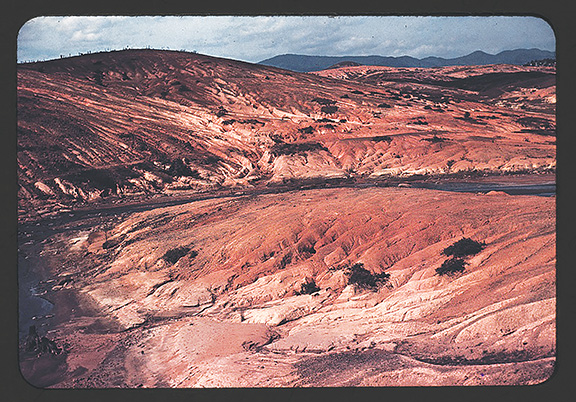
A long time before the 1996 Atlanta Games, mining in the Cooper Basin Mining District in eastern Tennessee polluted the water just down the river from the future site of Olympic kayak and canoe slalom.
Located between Ducktown, Tenn., and Copperhill, Tenn., is the Copper Basin Mining District. A 26-mile section of the Ocoee was affected by the mining done in the area.
The Ocoee Whitewater Center, which was built for the Olympics in 1996 and burnt down in 2022, is roughly 10 miles from Copperhill, Tenn., where more pollutants have entered the river.
The area also includes the North Potato Creek and Davis Mill watersheds. Beginning in the late 1800s, mining, processing, chemical manufacturing and waste disposal contributed to the pollution of the world-renowned river. Mining ended in 1987 and chemical production ended in 2000.
Historic mining and processing of minerals led to erosion, as well as transportation of tens of millions of cubic yard of soil and waste to the Ocoee River Gorge, leaving the area totally barren, according to the Tennessee Department of Environment & Conservation.
The Ocoee is listed on the TDEC’s 2022 list as impaired with copper, iron, flow regime modification, sedimentation, zinc, siltation from the mining and contaminated sediment also from the mining. The source of the minerals in the river have been addressed through remedial action and continues to be addressed.
In 2010, Copperhill Industries LLC began recycling iron rich minerals from remnants of the mining that were left behind at the David Mill watershed. Since 2010, they have removed 1.8 million tons of metals from the watershed and they are being shipped off-site and used in a variety of industries.
Copperhill Industries LLC is working to revegetate the land after it was left barren from the mining. They said revegetation was challenging because of the low soil pH and lack of organic matter. The EPA suggested using biosolids to combat their challenges in bringing the land back to life.
As of March 25, 2024, biosolids are not being processed at the Davis Mill watershed, according to the TDEC. They have also said the Ocoee’s water is not a risk for humans rafting on the river.