
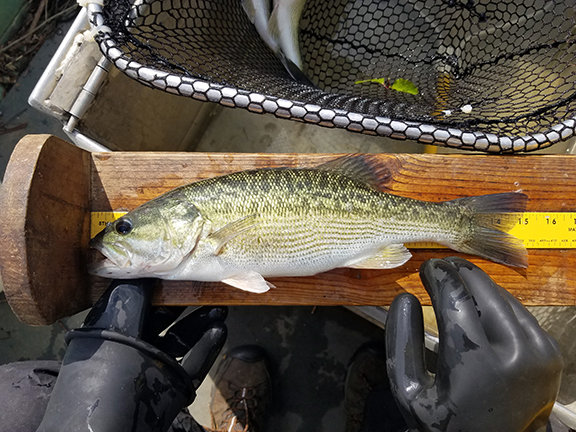
Raleigh – An invasive bass species, Alabama bass, are in more rivers and lakes than ever before, leading them to compete with native fish and aquatic organisms.
Biologists at the N.C. Wildlife Resources Commission are seeking help from the public to help reduce the Alabama bass population to help protect native largemouth, smallmouth and spotted bass.
Alabama bass can be mistaken for spotted bass or largemouth bass because of their similar appearance. They often cause the bass population of a body of water to be dominated by their high numbers and push out other bass.
They also interbreed with smallmouth and spotted bass and with time, the hybridization can eliminate smallmouth and spotted bass populations from bodies of water.
“They’re being stocked and moved to new locations by anglers who need to understand that impact it’s having to our native black bass family of largemouth, smallmouth and spotted bass,” district biologist Kim Hodges said.
“Populations of largemouth bass are being dramatically reduced, while North Carolina could potentially lose smallmouth and spotted bass.”
Alabama bass have existed in the state since the 1980s, but only sparsely. They existed first in Lake Chatuge and Lake Norman.
Routine fisheries surveys over the last 20 years in the state’s reservoirs and rivers have documented the spread of the Alabama bass. The distribution of them has rapidly grown and spread to other bodies of water and are now being identified in coastal areas of the state.
“When we heard Alabama bass were being caught in reservoirs upstream of our coastal rivers in 2020, we anticipated we would start seeing them downstream,” Coastal Region fisheries research coordinator Kevin Dockendorf said.
“In October 2024, our fisheries biologists collected Alabama bass I the Roanoke and Tar rivers with boat electrofishing. This expansion of Alabama bass is of concern given the similarities of North Carolina’s coastal rivers to the habitats found in Alabama bass’ natural range.”
NCWRC staff said that many anglers may not be aware of the threats posed by Alabama bass and that they are continuing to move the species into new waters.
“They are being illegally spread across the state by misguided anglers who think that they will make the fishing better,” Hodges said. “The only tools we have to minimize the damage caused by Alabama bass are to encourage anglers not to spread them to new waters, and to harvest as many as possible in waters where they have already been introduced to minimize their damage.”
NCWRC have signs posted at popular public fishing and boating access points to help with identification and education about the impact of Alabama bass.
The NCWRC said that it is illegal to move or stock fish into public waters without a stocking permit obtained from them and this includes live well released into waters different from where the fish were caught.
Anyone who observes or has knowledge of illegal Alabama bass stocking is asked to report it by calling 800-662-7137.