
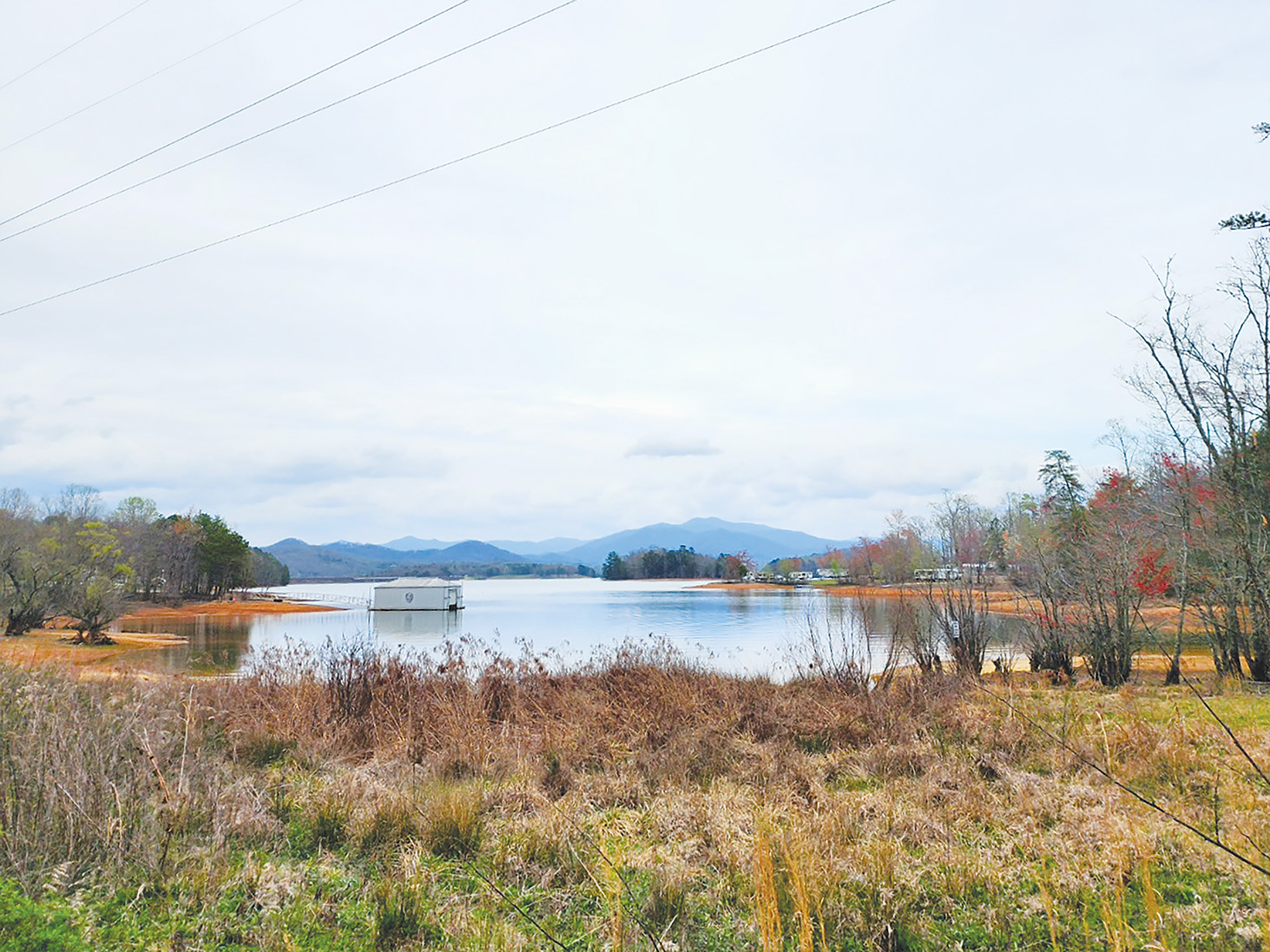
One of the reasons people come here to Cherokee County is for outdoor sports, with fishing being a popular choice.
There are many options for fishing in and around the area. Whether you’re spinning, casting or fly fishing from the bank or a boat, there many great spots.
Where to fish
For general fishing, mostly for bass, there are a plethora of options for fishers. There are also options for those looking to catch stream dwelling rainbow, brown and brook trout.
In Cherokee County, anglers can fish in the Hiwassee Lake, which is maintained by the Tennessee Valley Authority. They can access the lake at the Bealtown Ramp for boat or canoe access in Murphy.
You can also access Hiwassee Lake at the Ramsey Bluff boat ramp, Grape Creek boat ramp, or in Hanging Dog where there is a boat ramp, canoe access, fishing pier access and is handicap accessible. There is also boat and canoe access at Mickens Branch, which is maintained by the TVA.
The lake access at Ramsey Bluff, Grape Creek and Hanging Dog is on Nantahala Game Land and managed by N.C. Wildlife Resources Commission.
Anglers can access Cherokee Lake, where there is canoe and bank fishing access as well as a fishing pier. It is also handicap accessible. Cherokee Lake, which is on Nantahala Game Land, is managed by the U.S. Forest Service.
In Clay County, the most notable fishing spot is Lake Chatuge, which is in both North Carolina and Georgia. Lake Chatuge has multiple access points in Hayesville.
Clay County Park, which is manages by the county, has boat and canoe access as well as a fishing pier. There are two access points at Jackrabbit, which is on Nantahala Game Land, which offer boat and canoe access, a fishing pier and is handicap accessible.
At Ledfords Chapel, there are multiple access points with boat, canoe and fishing pier access, plus it’s handicap accessible. Ledfords Chapel Boat Ramp is a popular spot for fishing tournaments.
In Shooting Creek, there is fishing pier and bank fishing access, which is handicap accessible. Bodie Bass, which is a striped bass hybrid, is stocked at Shooting Creek.
The Jackrabbit, Ledfords Chapel and Shooting Creek access points to Lake Chatuge are managed by the Wildlife Resources Commission.
In Macon County, Nantahala Lake has two main access points, both of which are managed by the Wildlife Resources Commission. Choga Road, which is on Nantahala Game Land, has boat and canoe access and is also handicap accessible. Just across the lake is the Rocky Branch access point, which is not on Nantahala Game Land. It has a boat ramp, canoe access and is handicap accessible.
For trout fishing in and around Cherokee County, there are different classifications of bodies of water. Delayed Harvest trout waters have lure and harvest regulations that vary during the year and are marked with black-and-white signs, according to the Wildlife Resources Commission.
Delayed Harvest waters opened for the season on June 1. There are no Delayed Harvest trout waters in Cherokee County, but in Graham County there is the Snowbird Creek, in Clay County there is Fires Creek and in Macon County there is the Nantahala River.
In Hatchery Supported trout waters, there is no size limit or bait restrictions, with the creel limit being seven trout per day. These are marked with green and white signs.
Hatchery Supported trout waters are Davis, Hyatt, Junaluska and Shuler creeks as well as the Valley River in Cherokee County; Buck, Fires and Tusquitee creeks in Clay County; Snowbird, Panther, Santeetlah, Stecoah, Tulula, West Buffalo and Yellow creeks, as well as Calderwood and Cheoah reservoirs in Graham County; in Macon County, Burningtown and Cartoogechaye creeks, Cliffside and Queens Creek Lakes, and Cullasaja and the Nantahala rivers in Macon County.
Wild Trout Waters are where the minimum length is seven inches and the creel limit is four trout per day. Only artificial lures with a single hook can be used.
Wild Trout Waters are marked with blue and gold signs. All public mountain trout waters on game lands are Wild Trout Waters. There are bodies of water classified as Wild Trout Waters within the Nantahala National Forest Game Land in Cherokee, Clay, Graham, Jackson, Macon, Swain and Transylvania counties where you can fish.
Wild Trout/Natural Bait Waters are water and their tributaries, except as noted, may be fished with artificial lures or natural bait, except live bait. Lures and natural baits are restricted to one single hook. The minimum length limit is seven inches, and the daily creel limit is four trout.
These streams are marked with brown and gold signs. Waters classified as Wild Trout/Natural Bait Waters include Bald and Dockery creeks in Cherokee County, Long Creek in Graham County, and Kimsey and Park creeks and the Chattanooga River in Macon County.
The Apalachia Reservoir in Cherokee County is classified as Special Regulations Trout Waters, which means that these portions of Public Mountain Trout Waters, excluding tributaries except as noted, are subject to watercourse-specific, special regulations and are marked with white and red signs.
What you can catch
In North Carolina, there
is a wide variety of fish you can catch. There are 234 freshwater fish species, with 57 state or federally listed as endangered, threatened or special concern, according to the Wildlife Resources Commission. Some of the common fish found in Cherokee and surrounding counties are bass, catfish, crappie, perch, sunfishes, trout and other sport-
fishes, such as bowfin and walleye.
Some of the endangered fish species that can be found in the state are Atlantic sturgeon, cape fear shiner, Roanoke logperch and shortnose sturgeon, all of which are listed as federally endangered. Fish species – such as spotting chub and waccamaw silverside – found in the state are listed as federally threatened.
Licenses
Anyone ages 16 and
older needs a fishing license to fish public waters statewide. The license requirement does not apply to private ponds.
For fishing in and around Cherokee County, anglers will want an Inland Fishing License, unless they plan on doing coastal fishing in eastern North Carolina. A 10-day inland fishing license is $9 for residents and $23 for nonresidents.
An annual inland fishing license is $25 for residents or $45 for nonresidents. Annual licenses are valid 12 months after the date
of purchase, unless otherwise specified. A lifetime inland fishing license is $265
and is only available to residents.
To purchase a fishing license, visit gooutdoorsnorthcarolina.com. To learn more about the different types of licenses and eligibility, visit eregulations.com/northcarolina/fishing/fishing-licenses.