
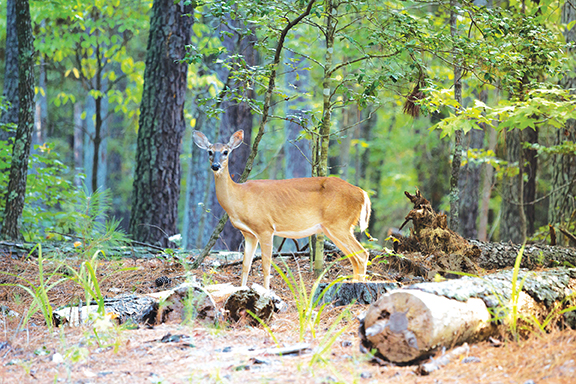
The N.C. Wildlife Resources Commission has announced proposed regulation changes for 2026-27.
The public comment period is open until Monday, Sept. 15.
The public can also provide comments during virtual public hearings scheduled Tuesday, Aug. 5, and Thursday, Aug. 7.
The Wildlife Resources Commission has the authority to create regulations, which although not state law do still have the have force of law, as granted by the N.C. General Assembly.
The NCWRC goes through a nine step process from regulation to rule.
The first step is proposing rules from the public, staff and others to create new or amend current rules.
The second step is the commission considers proposals from conservation, enforcement and management perspectives.
The third step is the proposal are presented to the commission’s executive director for consideration.
Proposals are then reviewed by NCWRC committees, which voted on the proposals to present at public hearings in the fourth step. The public then comments on proposals both online and in-person in the fifth step.
The sixth step is the NCWRC reviewing public comments on their proposals. They also vote to reject, adopt as presented or adopt in a modified form the rules reviewed. The seventh step is adopted rules are filed with the Rules Review Commission for approval.
Step eight is the Rules Review Commission approves or disapproves the rules. Rules that receive 10 or more letters requesting legislative review are delayed pending legislative review.
The ninth and final step is the approved rules are entered into the Administrative Code and written into the NCWRC’s Regulations Digest magazine for the year.
For 2026-27, the commission proposed rule changes to those affecting inland fishing, land and water access and wildlife management, as well as rules regarding captivity licenses.
Fishing
The NCWRC has proposed changes to rules for public mountain trout waters. They have proposed to modify boundaries at rivers in Buncombe and Madison counties.
They are also proposing to change boundaries of West Buffalo Creek in Graham County, with the new reach being from Squally Creek and Little Buffalo Creek to Lake Santeetlah. They propose to change select rivers in western North Carolina from Hatchery Supported Trout Waters to Wild Trout Waters, including Rich Branch in Buncombe County on Pisgah Game Land.
With mountain trout fishing, they are proposing to “allow year-round fishing with no closed season on Hatchery Supported Trout Waters impoundments regardless of whether they are used for hydropower production or municipal water supply,” the NCWRC said in section F5 of their inland fishing rule change summary.
They also want to add Cullowhee Dam Impoundment in Jackson County to the list of Hatchery Supported Trout Waters.
With bass, they want to remove the minimum size limit of 14 inches for white bass, but the creel limit of 10 fish per day will remain.
Asian pond mussel and golden mussels are proposed to be added to the list of species that is it unlawful to transport, purchase, possess, sell or stock in public or private waters in the state.
Land and water access
For general regulations regarding the use of game lands, they propose an adjustment to allowable camping days on game lands with designated camping areas to align with the newly adopted wild turkey season.
Traditionally, camping areas are open until May 14, but with the new wild turkey season framework change, the season could end after May 14. Camping areas are proposed to remain open until May 31 to allow for hunters to camp on game lands.
The NCWRC is also proposing a modification to the current use of weapons rule on game lands tat restricts the use of a weapon within 150 yards of a residence on or near game lands. The rule would also allow archery equipment within 150 yards.
Residential development is happening closer and closer to game lands and this rule adjustment allows for there to still be a safe and reasonable buffer from potentially sensitive areas.
There is one proposed change to mountain biking in the state. On Butner-Falls Game Land in Granville County, cycling is only permitted on their New Light Mountain Bike Trail during certain times. They have established dates that do not conflict with the dates of the newly adopted wild turkey framework.
For horseback riding, they proposed a rule that prohibits riding on Buxton Woods Game Land in the Southern Outer Banks except for on the Piney Ridge Trail.
On Pisgah Game Land, the only proposed rule is to “prohibit activities other than hunting, fishing, trapping and authorized use of posted trails and parking areas on the Lutz Tract of the land,” according to section G7 of the Land & Water Access rule change summary.
Wildlife Management
Chronic wasting disease is an issue with deer that hunters never want in their area. The NCWRC has proposed a rules change to establish CWD Management Area counties in Cumberland, Forsyth, Stokes, Surry, Wilkes and Yadkin counties. They will also adjust the hunting season in some of those counties to help cut down on CWD transmission.
Under section H1 of the Wildlife Management rule change summary, the Wildlife Management Division’s goal for chronic wasting disease herd management of 70% or more of buck harvesting should occur before the peak breeding time. They shifted the blackpowder and gun hunting seasons up one week to hope to get ahead of adult bucks making long-distance trips.
They also proposed a change to disposal of deer with chronic wasting disease. The NCWRC said the current rules are complex and not being followed by hunters.
Under the proposed rule change, they would change the “carcass transportation rules to emphasize disposal, requiring non-edible portions to be disposed of in a lined landfill, buried under specific conditions, or left on the ground within the county of origin,” they said in section H3 of the Wildlife Management rule change summary.
They also proposed to remove CWD Management Area counties in the six western season counties of Avery, Burke, Caldwell, Madison, Mitchell and Yancey counties. This increases either-sex season on private lands in those counties, as well as in Cleveland, Polk and Rutherford counties.
With squirrel hunting, they proposed an adjustment to the opening of spring gray squirrel season so that it does not overlap with turkey season and expand the season to game lands.
The NCWRC said for the justification of the rule change in section H5, “this rule change is necessary to avoid overlap of the spring gray squirrel season with the last week of turkey season and will extend hunting opportunities over Memorial Day weekend. The shift would have no biological impact on gray squirrel populations.”
Captivity Licenses
The NCWRC also proposed multiple rule changes for captivity licenses. A major proposed change is to prohibit captivity license holders with convictions for violations of the wildlife captivity and rehabilitation rules in the previous three years from receiving a license.
For rehabilitation rule change proposals, they would allow nine-banded armadillo rehabilitation, but prohibit elk calve rehab. They would also allow apprentices to posses chipmunks for rehabilitation purposes.
For rabid animals, they would require individuals to post at their facility proof of immunization or titer checks, as well as a written protocol for euthanasia. They would also require positive rabies test results to be reported to the NCWRC within five business days of a receipt from the health department.
They also defined the information required for various forms under the umbrella of captivity licenses, such as the Wildlife Rehabilitation Mentor-Apprentice Agreement Form and the Wildlife Rehabilitation Apprentice Upgrade Form.