
By Glenn Harbison
glenn@thenewsobserver.com
Hayesville – The likelihood of a deep draw down of Lake Chatuge to accompany extensive repairs to its spillway has raised local concerns over a similar possibility at Blue Ridge Lake in Georgia.
Alternatives for the Chatuge work were introduced by a Tennessee Valley Authority official at a March 28 stakeholder/media meeting. Those plans resulted from an ongoing dam safety study scheduled to be completed in 2026. A similar safety study is underway on Blue Ridge Dam, and is also scheduled to be finished sometime in 2026.
TVA says in both studies, “Given the scale of many dam safety remediation projects, concurrent work on both dams is a possibility. However, we (TVA) do not know how likely it is that projects could be underway simultaneously at these two dams since the studies to define the remediations to be built at each dam have not been completed.”
A comparison of the individual dam studies published by TVA shows several similarities. For instance:
u Both refer to lessons learned from damage to the Oroville Dam spillway in California. Both the Blue Ridge and Lake Chatuge spillways exhibit “some vulnerability to this potential failure;”
u There is a “very high likelihood” for damage at both if used for an extended period;
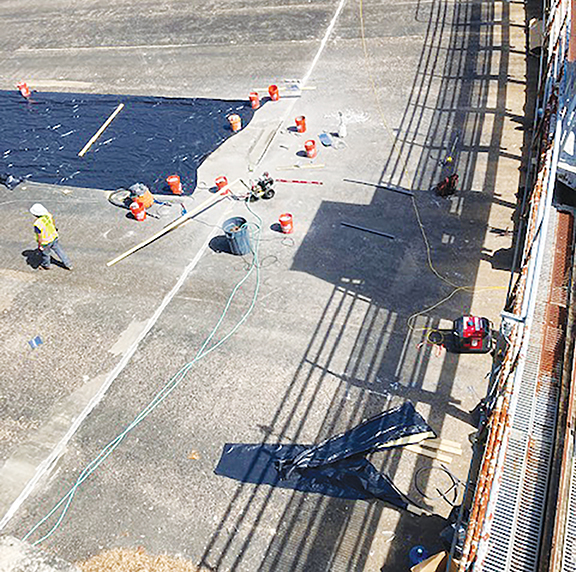
u Deterioration is mentioned at both; to the concrete at Blue Ridge and the concrete joints and under-drain system at Chatuge;
u Both present a very low likelihood of an uncontrolled release of water;
u Both are judged safe for operation.
While the Chatuge dam safety report concentrates on the spillway, TVA’s report for Blue Ridge targets the fact the dam was built in a way “which makes it vulnerable to a strong earthquake.
The report says, “In the event of an extreme earthquake, the dam could develop significant cracks. If in the rare chance cracks form and there is seepage that continues through the cracks, the cracks could open and lead to an uncontrolled release of the reservoir.”
TVA stresses several times “the dam is safe,” but goes on to add that despite the rare occurrence of earthquakes in the area, “the potential consequences of a dam failure are important, as significant losses of human life and extensive property damage could result.” TVA is committed to “protecting the public against a worst-case scenario.”
Chris Saucier, TVA senior project manager for special projects, presented alternatives being considered for the Lake Chatuge work at the March 28 meeting. These were what would be considered worst-case as he described them as “upper bounds of the duration of construction.”
For the four alternatives being considered, construction periods last six, seven and eight years. For each, Lake Chatuge would be drawn down to 10 feet below winter pool, an elevation of 1908 feet. That draw down would last a minimum of four years and a maximum of eight.
Saucier added that it would be between two years and nine months and three to three-and-a-half years before the community would actually see something on site “that looks like mobilization for construction.”
The public comment period for the Chatuge work will begin April 22 and continue until May 28.
During that time, TVA has scheduled two meetings to gather public input, one May 8 in Hayesville and a second May 13 in Hiawassee, Ga. There will also be a virtual meeting May 15.
In the event a Blue Ridge project were to be announced, the TVA dam safety report promises TVA will “actively engage” the community, seeking comments.
TVA spokesman Adam May wrote in an email Friday, “TVA is currently evaluating the extent of any future modifications to the dam and/or spillway at Blue Ridge. TVA will communicate the extent of any potential plans when they are more clearly defined.”