
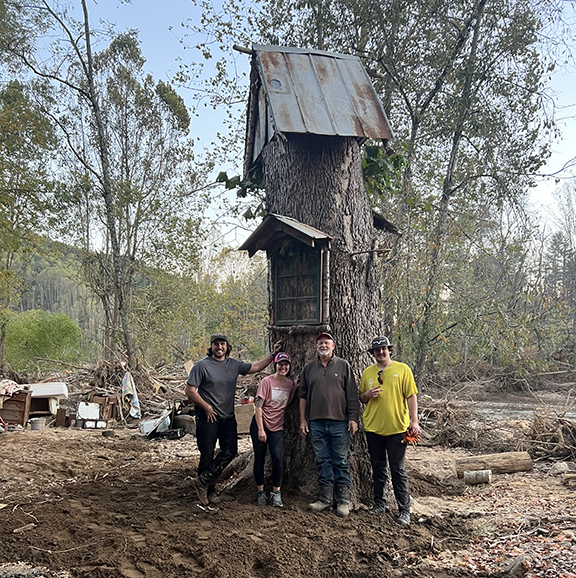
The experience of being a volunteer in areas hardest hit by storm, part 1: Owen Alexander
Nantahala – Owen Alexander, a sophomore at Western Carolina University and an employee at Nantahala Outdoor Center, has been volunteering in some of the hardest-hit areas of western North Carolina in the aftermath of Hurricane Helene.
The Cherokee Clay Food Alliance met with Alexander at Walmart one day when he purchased gasoline and propane tanks to take back to Black Mountain. He has helped in Canton, Candler, Clyde, East Asheville, Black Mountain, Swannanoa, Bat Cave, Old Fort, Marion, Spruce Pine, Bakersville, Burnsville, Pensacola, Green Mountain, Red Hill, Baily, Poplar, Yancey County, Mitchell County, Marshall and Hot Springs.
“Moving between so many communities gave me a clear sense of just how widespread and severe the storm’s impact has been,” Alexander said.
He has been providing aid to these areas since Helene hit, with the needs changing almost daily. Right after the storm, into the first week of October, Alexander was part of search-and-rescue efforts.
Alexander helped locate people and hiked critical supplies – such as water, food, medical kits and blankets – to communities completely cut off due to landslides or road closures. He also performed wellness checks for residents who had been out of contact.
“It was heartbreaking to see families unsure if their loved ones were safe or not,” Alexander said.
During the second week of October, he worked to clear mud and trees from people’s homes and property and helped clear debris to open more roads. While some in the communities had heavy equipment that could be used to clear debris, they found themselves without the fuel needed to operate the machines, so Alexander hiked the off-road diesel into the communities to help speed up the process of clearing the road.
These road closures were blocking the ability to deliver desperately needed supplies to these communities. Alexander coordinated to bring in nurses via four-wheeler so they could deliver life-saving medications to areas unreachable by regular vehicles. This was around the time temperatures began dropping in western North Carolina, so he was also delivering warm clothing and blankets to people who lost their homes and were at high risk.
By mid-October, Alexander was continuing to help clear roadways, which enabled him and other volunteers to deliver larger loads of supplies. On Oct. 15, he was able to deliver 25 heaters to the Bradshaw Fire Department in north Mitchell County; later that day, he aided locals in Barnardsville by hauling two 275-gallon tanks of potable water to an apartment in West Asheville.
“With so many residents still without running water, this was essential,” Alexander said. He made this same delivery the next day.
Most of his work has been solo and alongside groups of friends from Western or co-workers from NOC. He has worked with local fire departments to ensure needed supplies were delivered to the right areas and get information about the areas most in need at the time.
The fire departments have also helped him when it came to planning the routes he would take. This was especially important when Alexander was helping bring nurses into remote areas.
He echoed the advice of many larger volunteer groups to avoid sending items and supplies unless individuals are working directly with someone who knows those items are needed. Alexander mentioned that many areas are still without power and with the temperatures dropping generators and heaters are supplies that are still in high demand.
Housing is another major issue he said is ongoing, as “many people’s homes were destroyed or severely damaged.” The donation of old campers or recreational vehicles for temporary housing could make a major difference to people without a home. In some areas, families are sleeping in tents or large groups in disaster shelters.
Alexander added that the upcoming holiday season, “it’s important to remember that many families in western North Carolina won’t have the resources to celebrate in the ways they’re used to. Financial contributions are still very much needed, especially for home repairs.”
He urged those looking to contribute financially to donate to reliable organizations such as Samaritan’s Purse, BeLoved Asheville and the Cherokee Clay Food Alliance. These organizations have contacts and boots on the ground that can ensure donations are being used in the best ways possible.
This experience has changed Alexander’s perspective on life, “seeing firsthand the losses these communities have suffered has made me more grateful for my own family and friends. I’ve witnessed the resilience and strength of people in these mountains – they’re determined to rebuild, even though they’ve lost so much.”
He has been able to hear the stories from residents in these communities, “it’s one thing to see the damage and another to hear someone’s story, to understand they’ve lost loved ones, their home, and maybe their only source of income because tourism – their economic backbone – has come to a halt.”
As Alexander has returned to school, it has been difficult to leave areas he knows are still struggling, “knowing there are still people missing, likely buried under the mud, is something that weighs heavily on me. Knowing there’s so much left to do and so many people struggling.”
Not all relief efforts have been heavy, as Alexander pointed out when he received a thank-you letter from Yancey County kids.
“I’ve been carrying small toys with me to give kids I meet along the way,” he said, “anything that might bring them a bit of joy during such a difficult time.”
Alexander urges everyone to continue to remember and support those affected.
“Recovery will take years, not months, so patience and continued support are essential,” he said. “One of the best ways to help is by visiting these communities and supporting local businesses once they’re ready.”
Alexander added that volunteers are still needed for tasks like distributing supplies, sorting donations and helping with clean-up. Samaritan’s Purse and BeLoved Asheville are working directly in the affected communities. Volunteer needs change daily, so it’s important to be flexible when looking to volunteer.
“As the immediate crisis fades from the news, I hope people will still remember and support these communities,” he said. “They’re going to need help and compassion for a very long time.”
Next week: Part 2 with Noah Lescalleet.