
Editor's note: This article was revised since first posted to correct the SWAT agency.
Bryson City – His arrest over the summer on second-degree rape and other sexual assault charges led to then-Swain County sheriff Curtis Cochran retiring from office rather than face a judge removing him from the job.
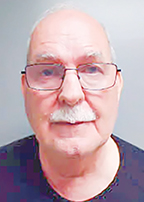 |
Cochran is free after posting $50,000 bond and faces numerous charges including felonies. However, for trout farmer Gerry Laschober of Ela, Cochran giving up his badge was long overdue.
Over the last decade, Laschober alleged numerous red flags over Cochran’s conduct in office but found no help from the criminal justice system nor federal civil court.
A federal civil lawsuit Laschober filed against Cochran and Bryson City Police Chief Charlie Robinson (a former Swain County sheriff’s lieutenant) was dismissed with prejudice – meaning it can never be brought back before a court – a ruling that left Laschober wondering about his safety. Cochran’s arrest on sex crime allegations doesn’t specifically address Laschober’s concerns, but if nothing else it removed him from office.
“It’s a tremendous weight lifted,” said Laschober, who runs Cooper Creek Trout Farm at the end of Cooper Creek Road. “I feel a lot safer.”
Years of conflict
Cochran’s career as sheriff was marked by 20 years of oppression, controversy and intimidation in Swain County, Laschober alleges.
Laschober’s problems started a decade ago over whether Cooper Creek Road continued through his property onto Great Smoky Mountains National Park, which borders his land. He contended that the public road stopped at his gate and eventually prevailed, but not before run-ins with the Swain County Sheriff’s Office, N.C. Department of Transportation and N.C. Highway Patrol.
As a result, Laschober began supporting Cochran’s political opponents.
Jerry Lowery
In 2018, Jerry Lowery, a 68-year-old Swain County resident, filed a complaint with the Swain County Board of Elections alleging that Cochran shouldn’t be allowed to run for sheriff because of a dishonorable discharge from the U.S. Marines. The complaint was dismissed at the county and state levels, but Cochran never proved – nor was he asked to prove – that Lowery’s allegation was false.
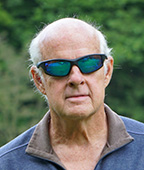 |
However, while in the midst of the controversy, Lowery was arrested on a decade-old John Doe warrant for obtaining property under false pretenses – a warrant for which Lowery did not fit the description.
The arrest was made while Lowery was at the Swain County elections office. Someone alerted a television station, and a crew was at the scene to film Lowery’s arrest. Charges against Lowery were later dropped.
Laschober alleges that Cochran and Robinson cooked up the arrest and alerted the TV station to discredit Lowery, adding that it’s not the only time Cochran used the media to taint a political opponent.
Mutual aid
In 2017, Cochran cancelled his office’s mutual aid agreement with the Town of Bryson City because Rocky Sampson was a member of the department at the time and had been friends with Laschober, Laschober and Sampson allege.
Mutual aid agreements are common among law enforcement and allow agencies to work seamlessly with other nearby agencies. In rural western North Carolina, mutual aid agreements mean the difference between one law enforcement officer showing up to a dangerous scene, or many.
Cochran’s letter cancelling the agreement made vague allegations about something occurring in Clay County involving a Bryson City police officer, presumably Sampson. Although canceling the mutual aid agreement, which he claimed were for safety reasons, Cochran left the door open and said his deputies would still respond to Bryson City if called – which is essentially what a mutual agreement does.
SWAT raid
Laschober believes Cochran retaliated against him in 2018 by sending a SWAT team that swarmed his trout farm looking for C-4 explosives and illegal weapons a search warrant affidavit alleged amid allegations – from an informant – that Laschober was cooking up plans to assassinate senior law enforcement officers in Swain County.
In early 2018, a habitual offender named Kyle Huskey was arrested when he was found with three of Cochran’s campaign signs in the back of his truck. On Facebook, Cochran alleged that Huskey’s arrest led law officials to a larger, more sinister purpose for the stolen campaign signs, but didn’t go into details.
Huskey was later recorded saying that he was merely pulling a prank and planned to put Cochran’s campaign signs on his boss’ front yard, when he was pulled over by law officials. In the audio file, Huskey said he was taken to a remote location, beaten by Cochran and accused of stealing the signs at the bidding of Sampson, who was running for sheriff.
The Huskey audio file about that arrest was recorded on the front porch of Laschober’s house at Cooper Creek Trout Farm around late November 2018. A reporter contacted Laschober, asking for help contacting Huskey. Huskey had helped Laschober one time at the trout farm, and Laschober knew Huskey’s father and uncle, so he was able to arrange the meeting.
With Laschober, Sampson, Lowery and Huskey all gathered on the porch, the reporter never showed up. Still, the group started talking about their experiences with Swain County law enforcement officials.
By that time, Huskey had a long rap sheet and was on probation for prior offenses, while also waiting for other charges to wind their way through courts. Huskey was already known then as being a police informant.
In December 2018, just over a month after Cochran was re-elected sheriff of Swain County – and just weeks after sitting on Laschober’s front porch – Huskey was again arrested.
On Dec. 15, 2018, Robinson and Deputy A.R. Holland arrested Huskey on charges of possession of a firearm by a felon, felonious restraint, assault on a female, resisting a public officer, possession of marijuana paraphernalia and possession of marijuana. A sworn statement from SBI Special Agent S.R. Ashe to obtain search warrants for phone records – and, later, Laschober’s home – was based on information provided to him by the two arresting officers.
Ashe said the officers told him they were escorting Huskey to the patrol vehicle when he told Holland some “bad (expletive)” was going to happen. Huskey reportedly said he would provide information, but only if it was not recorded.
Safely away from recording devices, Huskey allegedly said “he knew a guy who wanted to pay him $10,000 to $15,000 and the guy had a hundred pounds of explosives and that Doug Woodard, Aaron Ammons, Curtis Cochran and Charlie Robinson was on the list.”
Huskey said the “guy” was “Cooper’s Creek Gerry” – Gerry Laschober, on whose porch Huskey, Sampson and Lowery sat just a few weeks earlier, and during which Huskey described “how dirty” Cochran and Swain County law enforcement were.
‘100 pounds’
Based on Huskey’s information, law enforcement obtained warrants for Laschober’s cell phone and two cell phones belonging to Huskey. There, they found a single text: “100lbs is possible within 2 weeks time.”
The “100lbs” mentioned in the search warrant affidavits referred to fish. Huskey’s father and uncle often fished on Cooper Creek at Laschober’s trout farm, with his blessing.
According to Laschober, he offered to let Huskey’s father fish in his ponds, but he needed to wait a couple of weeks for the fish to grow, at which time he could get 100 pounds of fish if he wanted.
Based on what Huskey allegedly told them, Robinson drew the conclusion that “100lbs” referred to C-4, a chemical compound used to blow things up. The alleged crimes prompting the search warrants were:
- conspiracy to commit the felony of first-degree murder;
- solicitation to commit the felony of first-degree murder;
- solicitation to malicious use of explosive or incendiary.
As agents from the SBI, U.S. Bureau of Alcohol, Tobacco & Firearms and the Jackson County Sheriff's Office SWAT team descended on Cooper Creek Trout Farm, Ashe called Laschober and asked to meet him at the Microtel Inn & Suites near Bryson City.
From there, they went to the Swain County Courthouse, where Ashe interviewed Laschober as his residence was being searched. Later that evening, Ashe released Laschober without charging him with any crime.
Authorities seized firearms and an over-the-counter incendiary used in target practice, but found no C-4 or anything that would support the allegation that Laschober planned to bomb or kill anyone.
On Oct. 31, 2019, District Attorney Ashley Welch wrote Laschober a letter telling him that she had reviewed the file and determined that “sufficient evidence does not exist to prosecute you for any alleged conspiracy … I sent the SBI a letter requesting they close the case.”
Huskey, meanwhile, has since been arrested on charges of murder, first-degree murder, armed robbery, possession of a firearm by a felon, conspiracy to traffick methamphetamine by possession and transportation, trafficking fentanyl and trafficking methamphetamine in relation to a Dec. 14, 2023, shooting in Swain County.
Nothing was found during the raid, and charges were never filed. Laschober said he believed Cochran was trying to kill him by “swatting,” a scenario where law enforcement SWAT teams are alerted to fake alerts of extreme threats or danger.
Laschober found no help from local or state law enforcement or prosecutors and wound up suing Cochran in federal court. He lost, and since then he has endured post-traumatic stress disorder, sleepless nights and worries over what Cochran would do next.
Cochran’s effects on Laschober’s life continued to show up at unexpected times. A recent trip to Hungary with his brother got him caught up with Homeland Security in Atlanta at the end of his return flight.
Laschober had applied for a permit to replace a broken suppressor for his rifle, but the permit was denied by Cochran. That denial was a red flag on his record when he returned from his European trip, with TSA detaining him aside and questioning him.
Laschober had links on his phone for a five-part series of articles published by The Graham Star that went into detail about his problems with Curtis Cochran. Laschober said the TSA agents released him after seeing the articles.
Laschober continued to worry what steps Cochran would take to ruin his life.
“It’s was the first thing I thought about in the morning and it kept me awake at night,” he said. “Now I don’t have to do that. You don’t realize how much energy is spent worrying.”
Upon news of Cochran’s arrest, Laschober’s phone rang constantly – some 40 calls from county people and Cherokee people sharing the news.
“It’s steadily getting better,” he said. “I’m safer, but how about those women, the victims, all the victims?”
Lawsuit dismissed
In September 2024, U.S. Magistrate Judge W. Carleton Metcalf threw out Laschober’s claims against the office, which asserted a litany of offenses.
Laschober approached The Graham Star newspaper in Robbinsville shortly after filing the Dec. 13, 2021, lawsuit, hoping to bring a spotlight to the case. The Star reported on the facts – as presented at the time – spanning February and March 2022.
The case was moved to U.S. District Court in Asheville on Jan. 12, 2022, with the court dismissing Laschober’s claims against Cochran and Bryson City Police Chief Charlie Robinson – in their official capacities – on May 11, 2022.
Laschober’s case relied heavily on three different surveillance videos that were captured on his farm on Dec. 16, 2018, showing a Jackson County SWAT raid serving a search warrant, as well as two audio recordings of Huskey. In one recording, Huskey was conversing with Cochran. In the other, he was conversing with Laschober and Sampson.
“In short, while plaintiff (Laschober) asks the court to disregard all the statements attributed to Huskey regarding plaintiff, plaintiff has not pointed to evidence that would allow the court to do so,” Metcalf ruled.