
 |
I am your sickness. You know me, you’ve called me your comrade and friend. Desolation and sorrow
are my gifts to you, I want only to see you and your loved ones suffer and ache in pain,
I’m the demon growing inside you – I am your disease. I have invaded your body and brain. I’ll take your family prisoner and rule your soul. I am now your new master. I am in total control.
Addiction manifests in various forms, too many to address here. One in three people have some form of addiction affecting both mind and behavior. Over time, addictions can seriously interfere with the daily life of the user, family and community.
People experiencing addiction are also prone to cycles of relapse and remission. This means they may cycle between intense and mild use. Despite these cycles, addiction will typically worsen over time, it never gets better.
Addiction can lead to permanent health complications and serious consequences – bankruptcy, divorce, prison and death not only for the user, but also for community and family members. Over time, people develop a tolerance, meaning it takes more of something to achieve those same initial effects.
Many factors contribute to addiction. It is unlikely that a person will become addicted after using a substance once, although it is possible to develop a mental health problem or to die of an overdose or another complication after one use of some substances.
No one factor can predict if a person will become addicted to drugs or alcohol. A combination of factors influences the risk for addiction. The more risk factors a person has, the greater the chance that taking drugs or drinking can lead them to addiction.
Since 2011, the public understanding and acceptance of addiction as a chronic brain disease and the possibility of remission and recovery have increased. Although many are still held hostage, thus co-depend, meaning a relationship when each person involved is mentally, emotionally, physically and/or spiritually dependent on the other due to addiction.
Many times, wives and children develop behaviors to survive within the family of someone who is an addict. Unfortunately, these behaviors become ingrained and continue into adulthood. Make no mistake these behaviors are extremely dysfunctional, addiction has a long-lasting effect on everyone.
Those who choose to jeopardize themselves and others by resorting to illegal activities such as theft, fraud or drug trafficking to fund their drug use or stealing to support their addiction, have a direct effect on our community and families. In the end, they will face swift legal consequences.
There are proven successful treatments for addiction. Unfortunately, those who develop dysfunctional behaviors within the family have a more difficult time, and some never fully recover.
Nothing can bring back the countless lives lost due to addictive behavior. Family is the front line in this battle. It’s not betrayal to seek help for someone suffering – the betrayal lies in not getting help for someone who suffers.
To get help, talk to someone now at 828-837-4440.
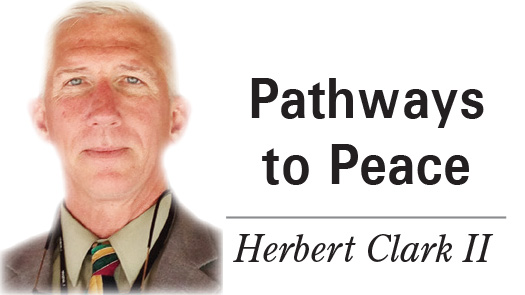
Dr. Herb Clark of Murphy is an expert in the field of addiction with 33 years of experience. He served on the N.C. Professional Practice board, adjunct professor for two universities and was a U.S. Marine serving 25 years, through two wars and three conflicts traveling the world, seeing the effects of addiction firsthand worldwide. Send questions or comments to him at hypno321@hotmail.com.