
 |
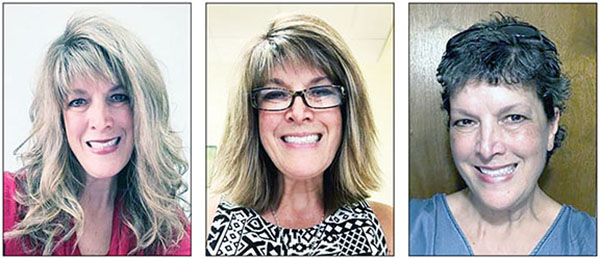
Murphy – Local native Robin Hardin’s glimmering brown eyes radiate positivity, reminiscent of a popular Van Morrison song, but things turn to a more serious note as she relates her battle with invasive ductal carcinoma, HER2 Positive Breast Cancer.
While it’s not necessarily the response you’d expect, she wanted to share her survivor’s story in order to let women and men both know “cancer isn’t a death sentence.”
Since October is Breast Cancer Awareness Month, she was even more than eager to share her experiences to let others know about how early detection and yearly checkups can help prevent unnecessary deaths.
According to the American Cancer Society’s website, nearly 75 percent of all breast cancer is invasive ductal carcinoma, with an over five-year survival rate for the disease with early detection. Hardin’s detection began in August 2022 with a routine mammogram.
“Oh, this is OK,” Hardin said of having the mammogram that led to her diagnosis. “They called me back for a second time, and I thought it was OK because I’d had issues before, but they called me back with the diagnosis, and well, I didn’t know what that meant.
“I mean, I knew breast cancer was breast cancer – but not anything like this.”
IDC with a HER2 positive diagnosis is classified as an instance of cancer with the HER2 protein or hormone in the ductal portion of the breast, near the nipple, that invades the entire breast. That makes cancer cells grow aggressively and mutate throughout the breast and other tissues; therefore, an immediate action plan of treatment should follow that diagnosis.
In Hardin’s case, the plan was begun on Sept. 8, 2022, with an initial round of six chemotherapy treatments.
Because Hardin survived Hodgkin’s lymphoma through treatment 16 years ago, she already had an oncologist in the area and was able to quickly gain access to the Georgia Cancer Center in Blairsville, Ga.. However, she was unable to also undergo further rounds of radiation, which is a commensurate therapy.
“You can only undergo one course of radiation in your lifetime,” she said. “So I knew that next round was out for me.”
Donated sick time
Because of her former relationship with the Cancer Center, though, Hardin was able to quickly receive treatment. However, it came at a price, personal and professional.
Considering she’d only worked with the Cherokee County Department of Social Services for only four months, it was with much trepidation she approached her superiors with her diagnosis.
“When I was diagnosed, I went to our human resources director, because I’d only been working there for four months, and, you know, I didn’t have enough time [built up yet]. And, I’m thinking, you know, this is major,” Hardin said.
“I was thinking, what is this now? I mean, I have support from my parents, who are still majorly involved in my life, but I love my job, so how do I tell them.”
That question got solved by Hardin’s co-workers rallying to donate enough paid sick time that she even “had time left over after all the treatments and my reconstructive surgery, which was nine weeks in total.”
Hardin shared that afterward in a lengthy and personal Facebook post, where she said thanks to everyone who helped her.
‘Get rid of ‘em’
When faced with the initial diagnosis and prognosis, Hardin had no qualms about it. She said it loud and proud: “Get rid of ’em.”
While most women, when faced with a choice of double-mastectomy, would flinch within an inch of vanity and identity, Hardin said, “Get rid of ’em, because then there’s no chance.”
“Well, you know, if you’re rid of them, because it came in one side, and so it was the question of do we take both of them, and I said, ‘Both of them’, ” she said.
Hardin quickly added that “breasts aren’t the one thing that makes me a woman.” She knew they could do excellent reconstructive surgery based upon her initial consultations.
With a sly grin, she added, “Those scars will fade, and if a man isn’t in it for all of it, he gets none of it.”
Faith in all things
Hardin is also quick to give thanks to God. “I said, God, you’ve got to get me through this,” I said at first.
“Everybody prayed for me. I prayed every day. And, I just knew that that’s what would get me through.”
“My faith has helped lead me through this. I don’t know any other way to be than positive. I mean, sometimes, it’s like ‘Whoa! Hold up with all this [positivity]! I get that from my father, of course.”
Hardin also relates a story about a nurse who was in charge of her therapies who’d given her a necklace that included a vial with “tiny mustard seeds” and “Yes, I wore that until it wore out. But, I knew it never really wore out.”
Healthy lifestyle, attitude
After this last year of chemotherapy and infusion treatments, Robin Hardin impresses the fact that she’s focusing upon living out a more healthy lifestyle, through exercise, diet and attitude: “After the mastectomy and reconstructive surgery, I may have scars, but those will fade. There’s men out there who will get it and who won’t. And if they don’t, then I’m sorry for them. Too bad, you know.”
“But, you know, I want to focus on getting out more and participating in more breast cancer awareness events and opportunities, more, different things in the community.”
Hardin leaves the community with this edict: “I just want to focus on being the best person I can be. At my job, with my family, in this community, because they’ve all been the best they could to me.”
That brown-eyed girl with the glittering look wants always to impart that she is seeking to help those who are newly diagnosed or those who are trying to find their way through a new diagnosis. She has a wealth of resources through “Dr. Google and then some,” if you need them or just a compassionate ear.
If you’re interested in contacting Robin Hardin for more community outreach, email rhardinga@gmail.com. If you’re interested in finding out more statistics and how survivors beat them, visit cancer.org.