
Ever since the 2022-23 fiscal year millage rate increase of 11 cents went into effect on July 1, many local residents have been seeking relief for next year’s property taxes.
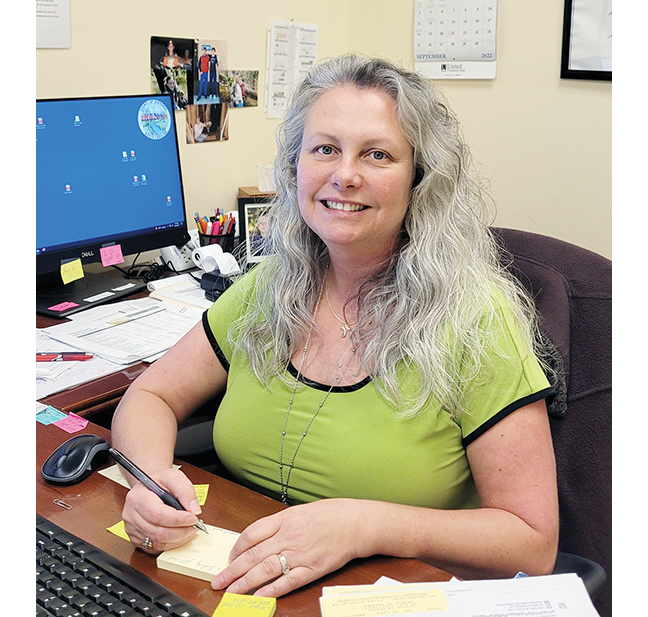
This often brings them to Cherokee County Tax Assessor’s Office, where they find an overworked but friendly Teresa Ricks.
“Since the huge tax increase, I have met with more than a multitude of taxpayers seeking to appeal their house appraisal in an effort to lower their tax rate,” Ricks said.
She has given them all the same bad news.
“You can’t appeal,” she added. “The value of your house didn’t change. The rate has changed, not the value of their home.”
Ricks has taken a lot of heat since the county increased the millage rate to mitigate the costs of a $48.5 million lawsuit settlement stemming from past practices by the Cherokee County Department of Social Services.
“I found out [about the increase] on Facebook, and my phone immediately started blowing up,” she said. “There are a lot of misconceptions about property taxes. Many people are not happy when they come in here, but I try to give them each a different outlook.”
Without a specific place to vent their frustrations, many county residents seek out Ricks due to her position as the tax assessor. And many of them are not feeling friendly.
“We’re not horrible people,” she said with a laugh, referring to her staff. “We will pay the same increase as everybody else.”
Ricks said her position requires her to play the role of teacher and counselor.
“Part of my job is to be a sounding board, she said, “especially for the 11-cent tax hike.”
Some private citizens have attempted to post information online to educate and arm county taxpayers with tips and tools to abate the pressure from this year’s hike. John Midkiff of Hiwassee Dam is one such poster.
“Up here, we’ve just gone through an increase in our property tax,” Midkiff said. “Here in Cherokee County, with the older population, it’s a little easier to get relief over age 65. They can file for reduction in their rate; that covers a lot of people. Some people don’t have knowledge or are unaware, so I put information on internet.”
Among Midkiff’s tips, he advises residents ages 65 and older, as well as disabled veterans, to claim exemptions on their taxes. He recommends contacting the tax assessor’s office to help walk them through their entitlements.
“They will work with them on what they can claim,” he said, “and there is no charge for the service.”
Midkiff’s online advice isn’t limited to property tax.
“There are a lot of exemptions for income tax,” he said, “A lot of people can get reductions for qualifying for EBT or if they work from home.”
He added some words of caution for home workers.
“It’s a slippery slope because they have the right to file as a home office, but that may open them up to an audit,” he said.
There are some pragmatic home improvements that can be deducted from their tax bills as well.
“You can get tax credits, called energy credits, if you improve your home,” Midkiff said. “Maybe you have single-pane, leaking windows. If you replace them with insulated ones, or anything that increases the energy efficiency of the house, you can get credits.”
However, like claiming a home office, there is a risk.
“You may make your house more valuable,” Midkiff said, “which would increase your property tax.”
If it all feels like a dizzying gamble with the taxman winning every hand, Ricks wants to help.
“I try to listen to concerns and address anything that’s valid,” she said. “People are never happy about their taxes. I did the water bills for the Town of Andrews, and no one was happy, period. I learned pretty quickly to get a thick skin and realize right off, it’s not about me.”
Ricks said she got into the career because she is a public servant at heart.
“I’m the face of the place you can come to complain. I will always try to help and share what information I can,” she said, adding that her goals for the office center on customer service, transparency, fairness and equity.
Ricks fully understands the pith of her position.
“My job,” she said, “is to listen to you complaints and find a solution.”
To that end, she offered some useful information to county taxpayers.
Listing period
Jan. 1-31 is the time to check tax statements to ensure the tax office got it right.
This is especially true for personal property (unregistered motor vehicles/boats and motors/utility trailers) as this are required to be listed as well as removed by the owner each year.
Appeals
Real property appeals run from Jan. 1 to April 30. Things get can get complicated.
The first appeal is an informal one requiring a visit to the tax office to fill out a form. The tax assessor has authority to make decisions at this level.
If an agreement can’t be reached, the taxpayer can file a formal appeal with the Cherokee County Board of Commissioners. If the complaint is not resolved, the taxpayer may appeal to the Property Tax Commission at the N.C. State Board of Equalization & Review.
Value
Property value is a complicated issue. The recent tax rate increase, for example, is not related to the value of the property. Cherokee County operates on an eight-year revaluation cycle, with the next reappraisal due in 2028.
“This subject has been batted back and forth before, because eight years between valuations does create a ‘shock’ as values can change drastically,” Hicks said. “Our values are set by fair market value, but only during the revaluation period. We cannot and do not change value according to market trends.”
Exemptions & exclusions
The State of North Carolina does offer some property tax relief, as Midkiff pointed out. The most common used in our area are specific to elderly (more 65 years old), permanent 100 percent disabled and veteran’s exclusion if they have a 100 percent service related disability.
Citizens must apply for Elderly/Disabled/Veterans Exclusions from Jan. 1 to June 1 each year. Ricks cautioned, “There is a total household income limit of $33,800 for 2022. This does include all sources of income from all occupants of the home.”
Payment options
On everybody’s least-favorite tax topic, Ricks said, “Taxes are due payable on Sept. 1 each year,” but citizens have until Jan. 5 to pay them without penalty. They add interest every month the bill remains unpaid starting Jan. 6.
She said the office takes payments year round with options to pay monthly, quarterly or annually. If a taxpayer falls behind on his tax bill, Ricks suggested contacting the collections office to make arrangements.