
When Hurricane Katrina rammed into New Orleans in the summer of 2005, it caused catastrophic damage costing nearly $125 billion. The storm raged with unprecedented longevity, leaving more than 1,300 people dead and hundreds more injured or stranded.
When the federal government sent in highly esteemed Lt. Gen. Russell Honorè to organize a relief effort, New Orleans was desperate; its inhabitants were in danger, and its infrastructures was in chaos. Out of the despair and disorder, an unusual group of about 150 men organized to form the United Cajun Navy, becoming an essential part of that relief effort and more.
“We had boats that they did not have, so we worked side by side with the National Guard, including local officials,” Cajun Navy founder and president Todd Terrell said, adding that the two groups needed each other.
“The general needed us for our boats, and we needed them for protection,” he said, adding that civil unrest was causing looting and shootings. But within 24 hours, the United Cajun Navy secured more than 100 boats, allowing the authorities to bring supplies to the stranded and rescue those with emergent needs.
The United Cajun Navy built up enough of a reputation that when Kentucky was devastated with flooding in 2016, local authorities requested help from them. While Terrell is gifted with many skills, his understanding of logistics and organization is among his most useful.
The United Cajun Navy was able to organize food and toiletry drives to assist those impaired by the floods, primarily using social media. From their efforts at that event, they earned a national reputation for natural disaster response and assistance.
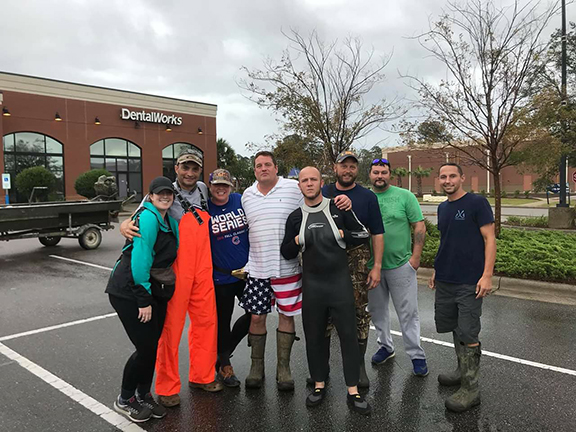
North Carolina hit their radar in the fall of 2018, when Hurricane Florence hovered over the eastern seaboard region of Cape Fear. Like Katrina before it, Florence pelted the area with more than 30 inches of rain.
This type of disaster was well within The Cajun Navy’s wheelhouse. They packed up supplies and drove to flooded zones.
Terrell remembers a firefighter running up to him, crying, “Sir, ya’ll are the experts at this, tell us what to do.” Terrell and his team, under extraordinary conditions with a tropical storm raging, set up base camp in a church building that already had a leaky roof.
Within hours, about 15 college kids were recruited to “run dispatch.” The 200 or so displaced neighbors were transported out of the church to a safer location on military busses, all under the authority of the United Cajun Navy.
Still, it wasn’t until the Kentucky tornadoes in 2021 that the course of the Cajun Navy changed in ways that would later affect Cherokee County. Local churches in Bowling Green contacted Terrell needing supplies. With his typical exuberance, Terrell and his Navy loaded an 18-wheeler full of provisions bound for the Bluegrass State.
However, Terrell said, “The truck was full of supplies they didn’t need. We sent bug spray, hand sanitizer, blankets and cleaning supplies,” among other provisions. “We learned a big lesson.”
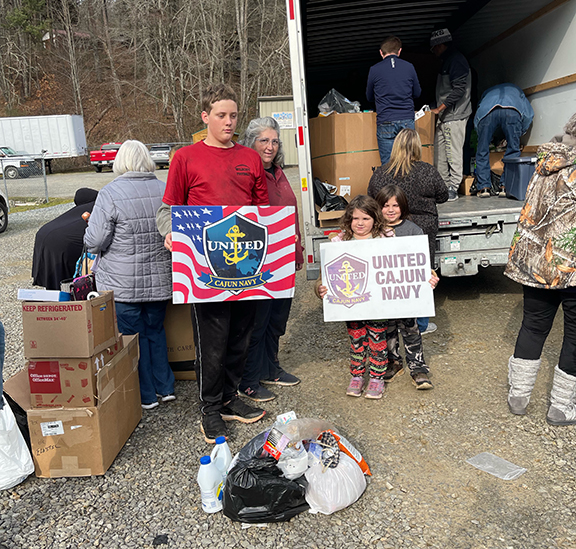
From that point forward, he began increasing his navy volunteers, securing warehouses in the Southeast and filling them with donations he receives both from individuals and stores like Walmart, Costco and Sam’s Club. To date, the Navy enlists 6,000 volunteers, who are prepared to serve local areas in need with targeted supplies.
Terrell said his nonprofit has “created such a good core group of volunteers, people who want to help.”
He added that they have “so much stuff to give out to people, but not enough volunteers to give it out.”
Enter local residents Thomas and Tracy Cook, who own Loving Care Pet Grooming & Boarding in Murphy. The Cooks met Terrell about a month ago through a mutual friend in what Terrell explains as a “there goes God” moment.
Ever the watchman, Terrell knew Cherokee County was in for some severe winter weather. He told Cook, “Hey, man, we got a bunch of supplies for N.C.,” which prompted the Cooks to hire a U-Haul and load up supplies from Terrell’s mother ship headquarters in Baton Rouge, La.
After returning to Cherokee County, they distributed donations throughout Murphy and Andrews, including nearly 10,000 pounds of food to the Hurlburt-Johnson Friendship House homeless shelter, 20,000 to the Andrews Food Bank, plus blankets, coats, heaters and food to Reach. And they plan to deliver more goods throughout North Carolina every six weeks or so.
The United Cajun Navy provides to anyone who asks, with the exception of people involved in criminal enterprises or those with insurance. Terrell added this: “We’ll help with the insured, but we don’t pay people’s deductibles. We try to prioritize the elderly, handicapped, low income or veterans.”
Terrell claims to “need more people like Tommy and his wife” to act as runners, getting the stash of supplies from the warehouses out the communities who have the needs. None of the Cajun Navy volunteers or staff is paid, but he hopes to change that in the future.
“We need a couple of administrative assistants,” Terrell said. “We are great at spontaneous volunteers; they show up and have a boat or a truck, but may deliver the supplies at 90 mph with kids in the back. We need resources to vet our volunteers and log-in and monitor the volunteers.”
Terrell runs his Navy under the code, “Without a stick and a carrot you don’t have much.” The Cooks say they are “in this for long haul,” with Thomas adding, “I have two business, we do pretty well; I can absorb expenses” involved in transporting the food and supplies from the Cajun Navy’s supply centers to home.
When Terrell gathered his 150 noble men during the Katrina crisis, he said, “I never knew it would get this big.” Anyone wishing to donate or volunteer for the United Cajun Navy can find information on their website at www.thecajunnavy.org.