
But in the meantime, I’m living my best life
Andrews Iinherited Huntington’s disease from my mother.
I grew up in a family of strangely diseased people. Reclusive and misunderstood, they were, and as a result always subject to speculations.
But finding out I inherited the gene was when I could do something to address the symptoms.
Problems with memory led to my diagnosis in 2011. It is known far and wide, how and why HD happens. Descriptions abound like the following, summarized from a National Institution of Health article.
Everyone else has it
The Huntingtin (sic) (Htt) protein is a widespread and helpful part of everyone’s brain. The disease is caused by an inherited, autosomal dominant mutation inside the polyglutamine (polyQ) domain in the protein.
 |
When the glutamine mutation expands to more than 36 repeats, Huntington’s disease occurs. Longer expansions of the mutation usually correlate to earlier onset of the disease.
Juvenile Huntington’s disease occurs when there are 50-120 repeats. JHD is wildly variable, and can pack in severe, cruel symptoms like seizures, dystonia and Parkinsonian rigidity.
Adult onset occurs when people have 40-50 repeats. I have 40 repeats.
Right now, my mutant polyQ Htt is misfolding and overwhelming the system needed for cellular homeostasis of protein recycling. It also co-aggregates with other proteins in a way that depletes the number of proteins available to the cell.
When I die, compared to normal brains, mine will have a 21-29% area loss of the cerebral cortex, 29-34% loss of telencephalic white matter, 64% loss in the putamen and 57% loss in the caudate nucleus.
Software and hardware
I used to see a brilliant neuropsychiatrist named Dr. Sandeep Vaishnavi. At the time, he was working at the Duke Cancer center and, since he specialized in disintegrating brains, he took an interest in Huntington’s disease.
Dr. Vaishnavi explained that my brain’s software, its circuitry, would repeatedly rewire itself until there was no path left to use.
I think that is what is happening to me now. My abilities to swallow, keep my balance, not accidentally burn myself, not get stuck on the same idea were ostensibly normal. But my software has worn itself out and can’t help me figure these things out anymore.
The only remaining tool is the gray matter itself. Whether it’s a byproduct or cause of my change is beyond my present ability to ponder, my brain matter is being destroyed.
I can still mix metaphors
Instead of challenges and victories on rinse and repeat, it is now spin and drain, the finality of abilities, as they lose whatever centrifugal force held them in place.
Couple this with being 59 years old, and it’s a drag sometimes. It’s hard to accept not being able to predict what door is closing when.
Will today be the day that I lose awareness of my symptoms (called anosognosia) and, like most people with Huntington’s disease, do not think anything is wrong with me?
Is this the year I will become unable to speak, and communicate only with our walls lined with dry erase boards?
Will I wake up tomorrow with a fever that signifies aspiration pneumonia, because my esophagus failed or simply given up?
My dying brain is expressing itself through me, with widely variable emotional and cognitive abilities. I wake up each day into an unplanned boot camp where I fight to sustain healthy thought patterns and I monitor myself and banish unhealthy ones. I apply grounding exercises, planned cries and other things I learned during years of grief therapy.
All of this goes on in real time while I run behind it. I used to look forward to the end of the day for the respite of sleep.
Instead, each night is a fever dream of muscle pain and cramping, sleep disturbances so powerful they make me cry out sometimes.
Where’s the joy in any of that?
Since you asked, I reach out to people I care about and count my blessings. I have many.
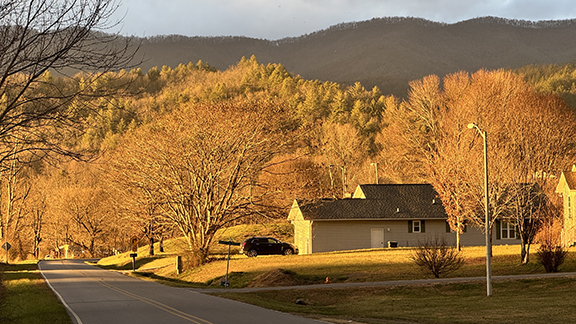
I am grateful to have a warm home, an adjustable bed, a mammal collection and the mountains. A view that follows me everywhere. The sunshine. The outline of the mountains and how they somehow seem pointier after a snow.
Being bedridden is not on my agenda.
Knowing that I have to get the most out of my abilities as they decrease, I recently began sessions at Erlanger Fit Plus Outpatient Rehabilitation Center in Peachtree. The therapists are trained to help people with neurological issues.
It’s a telling example of the growing awkwardness I feel around others, that I found it weird experience walking in there and having people make eye contact and smile at me. They are all devoted to their professions, and already have taught me a great deal to help me live safely and happily.
In speech therapy, we focus on the cognitive parts that keep me from generating speech, like focus and memory. I’m starting to take pen on paper, old-timey notes during every day conversations to harness the visual memory strength.
The occupational therapist helps me address anything that can improve daily living. For example, I’m using putty to strengthen my fingers and pulleys on the door to reintroduce my shoulders and arms to limberness.
The physical therapists pinpoint exact situations where I tend to lose balance, then break it down into parts they teach, while helping me strengthen my large muscle groups that support everything.
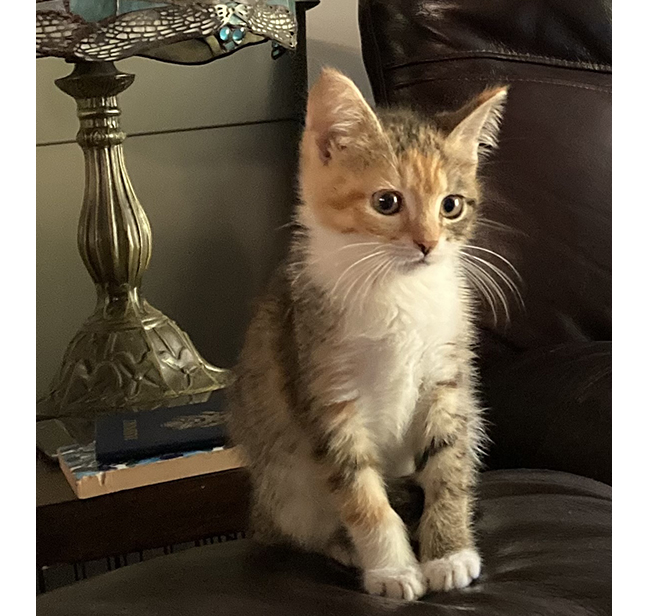
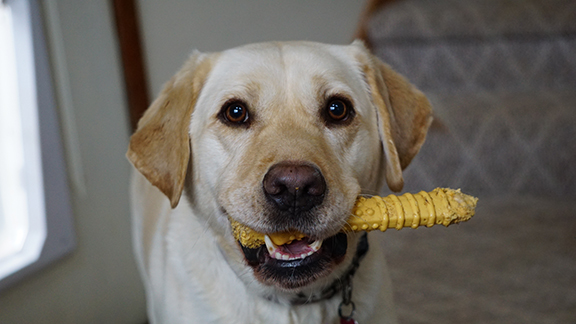
It’s an extraordinary blessing that I am able to live at home. We have kind and supportive neighbors. We have symbiotic relationships with our fine group of mammals with tails.
When I am still and notice where I am, in the beautiful and the quiet.
I am content.
Sarah Foster is a resident of Andrews, staff correspondent for the Cherokee Scout and wife of Editor Randy Foster.