
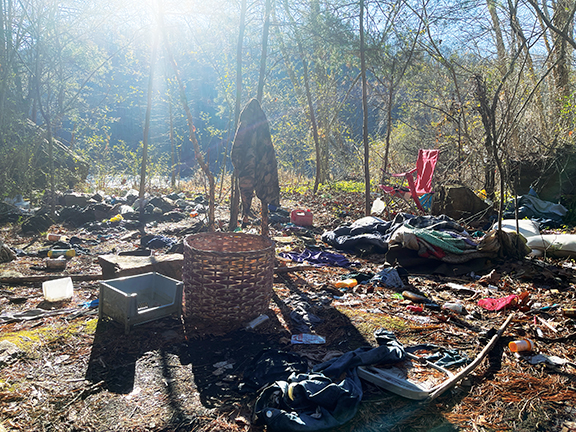
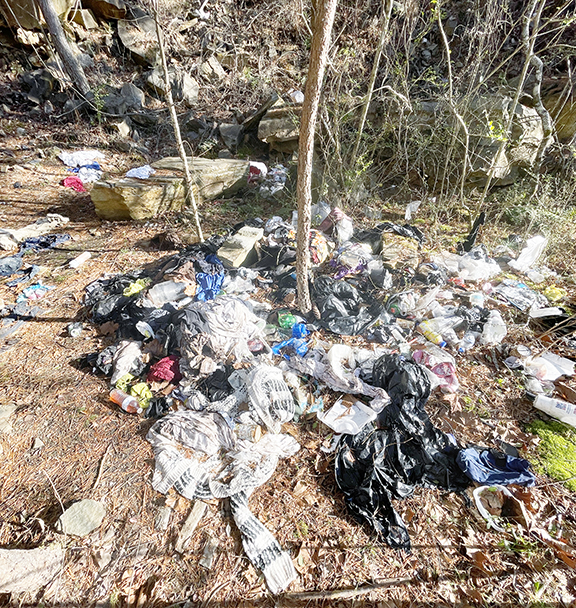
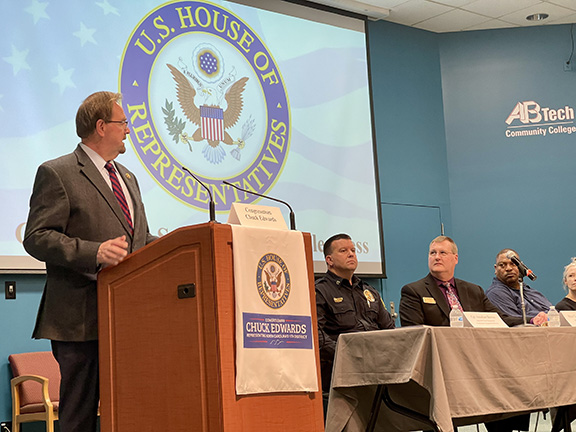
Asheville – Murphy Mayor Tim Radford participated in a “community summit on homelessness” moderated by U.S. Rep. Chuck Edwards at Asheville Buncombe Technical Community College on Jan. 26.
A six-person panel included Radford speaking about Murphy’s homeless situation, along with five others who deal with homelessness.
Edwards (R-N.C., District 11, which includes Cherokee and surrounding counties) said he is learning more about the homeless situation in western North Carolina and seeking information from experts in the area, including local officials at the city and county levels. He was shocked to learn that Murphy is experiencing a problem with homelessness.
Summit participants included Radford, Capt. Jonathan Brown of the Asheville Police Department Community Engagement Division, Michael Woods of Western Carolina Rescue Mission, Emily Ball of Asheville Homeless Strategy Division, the Rev. Scott Rogers of Asheville Buncombe Christian Community Ministry and Lindsey Simpson, mayor pro-tem of Hendersonville.
“We are definitely experiencing increasing homelessness,” Radford said.
‘Point in time’
Cherokee County, along with counties throughout the state, participated in a census of homeless people called a “point in time,” or PIT count. Results of the census is used to determine federal funding to assist communities deal with homelessness.
The PIT count is conducted in mid-winter. Volunteers are told to focus on unsheltered people who don’t have temporary housing, such as staying with a friend or relative, incarcerated in a jail or prison, or housed at a school or hospital.
Cherokee County conducted its PIT count following directions, but also kept track of others who don’t fit the PIT criteria in order to have a more complete picture of the county’s homeless situation. The data is still being processed and not immediately available.
“We hope collecting good data will help draw a better picture of the overall situation regarding homelessness in Cherokee County,” Radford said.
Housing factor
The summit was just one hour long and, with five panelists, time was short and Radford was unable to deliver his entire presentation. He provided a copy to the Cherokee Scout.
Factors playing into Cherokee County’s homeless situation include the lack of affordable housing as the primary issue.
“We are working hard to increase workforce housing stock, with some success, including Valley River Apartments,” Radford said, referring to an apartment complex being built behind the Murphy Walmart.
The town has waived water/sewer capacity fees for market-rate housing to promote economic development. It has partnered with Dogwood Health Trust for a feasibility study on workforce housing options on 18 acres of town-owned land.
“Having the only homeless shelter in the area, we attract a homeless population from all over the region,” Radford said.
“While the shelter does a great job with the resources they have, they simply don’t have enough resources to meet the demand, especially being an overnight-only shelter. If every community had resources to support their own local homeless population, the migration of individuals would slow down. But shelters are only temporary solutions.”
Murphy Police Chief Tim Lominac is developing good relationships with local homeless shelter leaders to foster cooperation, Radford said. “Our police chief says that over 50 percent of police department calls for service now involve a homeless individual, so it’s putting a strain on our resources.”
New strategies
The town is exploring successful law enforcement strategies in other regions, like Sylva’s Community Care Pilot Program with Western Carolina University, placing a social worker on staff. Murphy is planning to develop a similar program.
“By having a social worker as part of the staff, the police department can offer better responses to situations that may not necessarily require traditional law enforcement but rather social services intervention,” Radford said. “This could include cases involving mental health issues, homelessness, substance abuse and family disputes, among others.”
He said the town is building relationships with organizations like Four Square Community Action to manage local homeless residents. Four Square Community Action provides essential services in western North Carolina, including child-care subsidies, Section 8 housing, Head Start, home repair and weatherization, and information referrals for community support.
The Great Recession
The Great Recession and COVID-19 had significant impacts on the housing market in western North Carolina. The recession (2007-09) led to a sharp decline in home construction. Builders faced financial constraints, and many construction projects were halted or canceled, leading to a long-term shortage of new housing stock in the region.
Many homeowners in western North Carolina, like elsewhere, struggled with job losses and defaulted on their mortgages, leading to increased foreclosures and a depressed real estate market. As a result of the economic downturn and increased foreclosures, property values in many areas of western North Carolina decreased, impacting homeowners’ equity and wealth.
Banks tightened lending standards, making it more difficult for buyers to qualify for mortgages, which further constrained the housing market’s recovery. The COVID-19 pandemic, meanwhile, triggered a surge in demand for housing in western North Carolina, driven by individuals seeking more space and natural beauty, as well as the rise of remote work allowing people to move away from urban centers, Radford said.
The already limited housing stock, partly due to the slowdown from the Great Recession, was further strained as more people looked to buy homes in the area, leading to a significant inventory shortage. With high demand and low supply, home prices in western North Carolina increased rapidly, making affordability a significant issue, particularly for local residents and first-time homebuyers.
Housing market pressure also spilled over into the rental market, with increased demand leading to higher prices and decreased availability, affecting lower-income residents and contributing to housing insecurity.
“Overall, the Great Recession led to a long-term slowdown in housing construction, while COVID-19 dramatically increased demand for housing in western North Carolina, compounding affordability and availability issues in the region’s housing market,” Radford said.
Primary causes
Homeless in the region, meanwhile, can be attributed to a variety of factors that interact, creating a complex web of causes. Here are some of the main causes that officials are seeing today:
- Job scarcity: Rural areas often have fewer job opportunities, especially in well-paying or stable industries. The decline of industries like coal mining in the Appalachians has significantly impacted employment.
- Low wages: Jobs that are available may not pay enough to afford housing.
- High poverty rates: Rural areas can have higher rates of poverty, limiting resources for housing.
- Limited access to services.
- Health care: Lack of access to adequate healthcare, including mental health and addiction services, contribute to homelessness.
- Social services: There may be fewer shelters, food banks and other services in rural areas compared to urban centers.
- Housing affordability: Even if housing is available, it may not be affordable for low-income individuals.
- Substandard housing: Some available housing may be in poor condition, leading to safety and health issues.
- Lack of public housing or rental assistance: There might be limited public housing options or long waiting lists for assistance. We have a very long waiting list for the public housing in Murphy.
- Substance abuse and mental health: The lack of mental health and substance abuse treatment services in rural areas can exacerbate these issues, which are often linked to homelessness.
- Education: Limited educational opportunities can hinder the ability of individuals to secure better-paying jobs, trapping them in a cycle of poverty.
- Social and family issues: Factors like domestic violence, family breakdown, and social isolation can lead to homelessness, especially when support networks are weak.
- Geographic isolation: In more isolated rural areas, transportation can be a significant barrier, impacting the ability to access jobs, services and support.
Understanding and addressing these factors requires a multi-faceted approach, tailored to the unique challenges of rural homelessness, Radford said.
Potential solutions
Addressing homelessness in a rural town in the Appalachian Mountains requires a multifaceted and community-centered approach. The unique challenges of rural homelessness, such as geographic isolation, limited resources and fewer employment opportunities, necessitate tailored strategies:
- Economic development and job creation: Encourage and support local businesses and industries that can provide stable employment opportunities.
- Develop job training programs tailored to local industry needs: Promote local entrepreneurship and small business development.
- Affordable and adequate housing: Increase the availability of affordable housing through grants, subsidies or low-interest loans for construction. Rehabilitate existing substandard housing to make it safe and livable. Implement rent control measures to keep housing affordable.
- Enhanced access to healthcare and social services: Expand mental health and substance abuse services in the community. Increase the availability of mobile clinics and telemedicine services to overcome transportation barriers. Strengthen social service networks to provide comprehensive support, which includes food, clothing and crisis intervention.
- Education and training opportunities: Provide educational programs and scholarships for higher education and vocational training. Partner with local schools and colleges to create educational programs that align with job market demands.
- Transportation: Improve public transportation systems to connect people with jobs, health care and other essential services. Establish community ride-sharing programs or transportation assistance for those in need.
- Community engagement and support networks: Foster a sense of community involvement through volunteer programs and local initiatives. Create support networks for individuals at risk of homelessness, including those escaping domestic violence or facing family breakdown.
- Partnerships with local and regional entities: Collaborate with government agencies, non-profits, and private sector partners to pool resources and expertise. Seek funding and assistance from state and federal programs targeted at rural development and homelessness.
- Customized programs for specific needs: Recognize and address the unique needs of different groups, such as veterans, the elderly, and families with children.
- Preventive measures: Implement early intervention programs to identify and support individuals and families at risk of becoming homeless.
- Data collection and analysis: Conduct regular assessments to understand the scope of homelessness in the area and evaluate the effectiveness of implemented strategies.