
Help available behind the scenes
I pulled the trash bag out of the bathroom can and used it for a blanket,” said John Land, a homeless man living in town.
He sometimes sleeps in the park. However, because the weather has shifted to less friendly, he moved inside the park’s bathroom.
“It’s really clean in there and safe. They’ve got cameras.” Land said while the bathroom isn’t heated, it’s still an improvement to rough sleeping outside.
Land, 36, worked for Door Dash making what he considered “a good amount of money.” But his car registration was overdue, and his car was impounded. “I lost my car, my job and the place I was sleeping all in one day,” he said.
To top it off, his girlfriend left him, but he’s more retrospect about that loss. “She wasn’t that good for me,” he said.
According to the U.S. Interagency Council on Homelessness, Land is one of North Carolina’s 9,280 total homeless citizens on any given day.
Cherokee County attempts to lower that figure through a multitude of programs, food assistance and job training, but the homeless are a difficult population to serve. Tim Huff, pastor of Murphy Free Methodist Church and president of the board for the Hulbert Johnson Friendship House, the tri-state area’s only homeless shelter, knows quite a bit about those without homes.
Helping the homeless
“Nobody is homeless based solely on economic factors,” Huff said. He believes addiction, mental health issues, social issues and even physical ailments can find a person knocking on the door of the Friendship House.
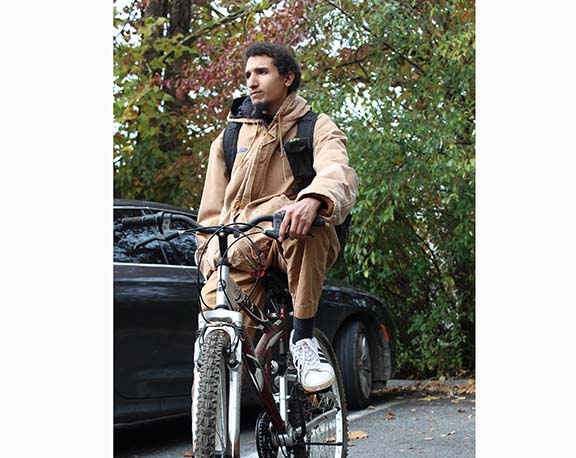
Mikyle Colbert, 20, and his mother were among those seeking shelter from Huff’s organization. He and his mother were living in a trailer and “doing just fine,” but his mother fell ill and was unable to keep up with her shifts at Walmart.
Colbert worked for a local real estate agency, which paid him $20 for each house he cleaned. It would take him more than four hours to clean each house, earning him about $40.
“We got evicted when my mom couldn’t work, so we ended up at the shelter,” he said. He doesn’t mind it there and, although he knows people judge him for staying there, “I keep my thoughts to myself.”
Colbert said he has made friends in the shelter, and while he loves sleeping in a warm, safe place each night, he is excited to move into a new place of his own.
“My mom got better and is back to work at Walmart now,” he said cheerfully.
Shelter guidelines
The Friendship House operates under strict guidelines, including all residents must be out of the house by 8 a.m. and cannot return until 5 p.m. This was challenging for Colbert, as he had no transportation to look for work.
Eventually, he was able to get a job at Wright Brothers Construction. He pulled a warm-looking coat tightly to his chest and explained, “The guy there is really nice. He gave me this coat and this bike.”
Before he secured employment, Colbert hated walking around Murphy all day with no money and no job, waiting for the Friendship House to reopen for dinner. “It’s great there but I’m hungry during the day,” he said. “I’m always cold, and when I do get to come home there is no privacy.”
The house itself is restricted by federal guidelines, which is why the residents are not permitted to stay there during daylight hours. This suits Huff just fine.
“We want our residents to look for something useful to do with their time,” he said. “They need to find ways to be an encouragement to
others.”
Huff believes residents need to volunteer or take a class, “learn how to knit, it doesn’t matter,” he said with a laugh. “Just improve yourself.”
‘Hard on him’
This philosophy worked for Joelle Kennedy, who lived in the shelter a few years ago with her husband and 13-year-old son.
“He was embarrassed to live there; he was in middle school, and I think that was hard on him,” she said of her son, but Kennedy loved her time in the shelter.
Her family moved to the area from southern California, where she was nationally certified as billing coder for insurance claims. However, she couldn’t find a job.
“When we moved here, I thought it was like a Hallmark Christmas movie. A beautiful small town,” she said. But she learned that “with the small town comes the feeling of being an outsider. It was tough.”
Her husband got a job at Lowe’s, but the pay wasn’t high enough to cover Murphy’s average monthly rental cost of about $1 per square foot. So Kennedy took Huff’s advice and spent her days volunteering at a local thrift shop, then eventually took a training class through H.R. Block.
They hired her once she completed training. Later, she attended Tri-County Community College and earned a certification in phlebotomy. But she hasn’t forgotten the fragility of life that landed her family in a shelter.
“One illness, one problem, can wipe you out,” she said.
Providing a service
For those volunteering to help the homeless – and there are hundreds of people representing dozens of organizations in Cherokee County – they understand that their role is one of
service.
Pat Meeks, who has volunteered at the Free Methodist Church Soup Kitchen every Tuesday for 13 years, said, “We’re not just feeding them; we are offering them fellowship.”
Out of the two services provided, she names “fellowship” as the most important.
“People are just so lonely,” Meeks added.
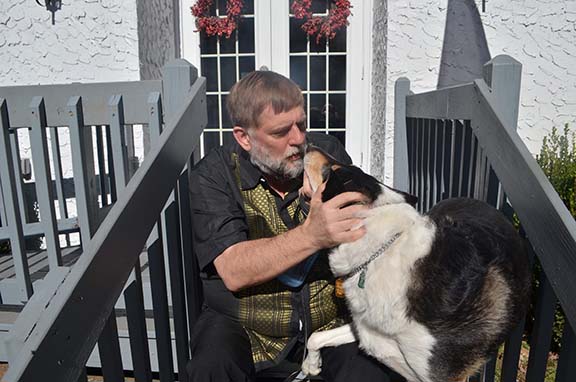
Jimmy Murphy, along with his dog, Smiley, volunteer for personal reasons.
“When I’ve been hungry and somebody fed me a warm meal, I was extremely grateful,” he said.
Murphy laughed as Smiley jumped up for attention.
Sharing the love
John Land was introduced to the soup kitchen while warming up on a bench outside his sleeping quarters in the park bathroom.
“I was trying to warm up, and this couple walked over and asked if I was thirsty,” he said, and he was. The couple handed him a Dr Pepper.
“They told me about the shelter and the lunch offered at the church,” Land said.
Shortly after they left, a man pulled up in a pickup with a trailer and asked him if he was hungry, and he was. His last meal was pulled from a garbage can outside of Bojangles.
“I found some chicken and got worried about salmonella, but there was a plastic bag in there with a whole serving of vegetables. They were still warm,” he said, smiling at the find.
Land walked cautiously toward the man, who held out a cardboard box.
“There were two of those mini boxes of cereal and two milks; you know, the kind they serve in schools. One was even chocolate!” he exclaimed.
Land believes his luck is turning. He plans to move to the shelter until he can find work. While he is trained as a mechanic, his dream job is much loftier.
“When I was kid, all I ever wanted to do was to be a pilot,” he said with a laugh. When he does show up at the Friendship House, Huff will be happy to have him.
“We don’t do this to improve their lives,” he said, “we do this to share love, to let people know that somebody loves them.”