
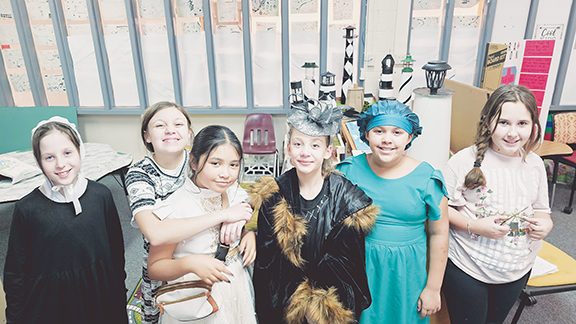
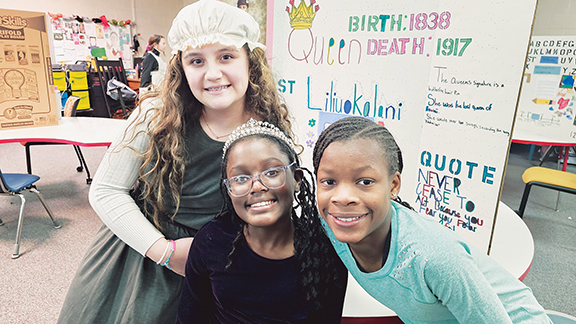
Andrews – History came alive on Feb. 18 at Andrews Elementary School, as fifth-grade classes held a “Living Museum” dressed as famous American historical figures and celebrated their achievements for, impacts upon and legacies across U.S. history.
Conceived as a way to connect students to history beyond just the printed page, while also meeting U.S. history curriculum requirements, the event was planned by school librarian Samantha Cross and fifth-grade English and social studies teacher Melinda Woods in September.
“We wanted a way to do more than just written papers, but still incorporate research and collaboration to engage the students,” Cross said.
“We came up with the Living Museum idea and format to showcase ‘American Heroes’ and hopefully teach the students important life lessons by embodying historical figures for a day. To help them understand and contrast what living in the past means and how it correlates to today,” Cross said.
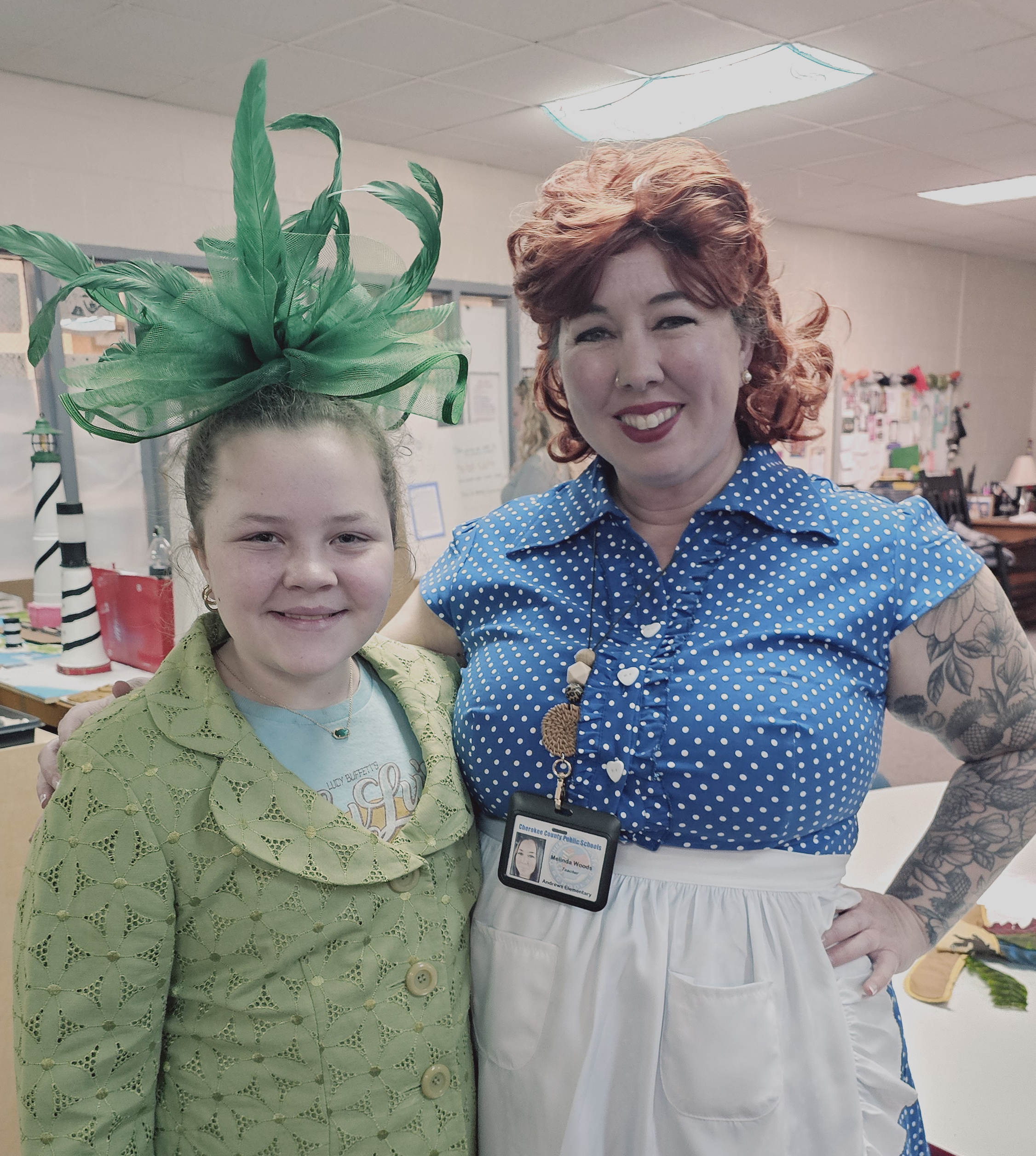
Woods, who also put in a turn as famed comedienne Lucille Ball, echoed the idea of finding ways to bridge the past to the present.
“This was a way to let students connect with figures of the past, of understanding how yesterday impacts today,” she said.
Some of those impacts were realized by students who dressed up as nurse Clara Barton and civil rights icon Rosa Parks, with Cross pointing out the many touchstones evident today by the actions of Barton in the case of the American Red Cross, which benefits millions through offering blood and other immediate needs in emergency situations; and Parks, without whose actions there might still be segregation in public transit.
Along with dressing as their respective icons, students designed their own accompanying poster boards and recited facts about each figure. The interactive and interpretive display for each member along the tour included both parents at the end of the school day and U.S. history classes from Andrews High School earlier in the day.
Principal Kim Davis said “there was a collective gasp” as the elementary kids “found out the high schoolers were going to tour their ‘museum exhibits.’ ” They were “thrilled to get to interact with their older neighbors from across the street.”
Assistant principal Diane Kinne was also on hand to help guide parents into the library to experience the exhibit.
“What a fun-filled and education day it was for everyone,” she said.
Other noteworthy American figures from realms ranging from literary and visual arts to scientific fields to the last queen of the last territory granted statehood were on hand including author Louisa May Alcott, artist Mary Cassatt, last regent of Hawaii Queen Lili’uokalani, oft-forgotten colonial first postmistress and publisher Mary Goddard, and abolitionist Lucretia Mott, who was also an African-American poet
Phyllis Wheatley and pioneer author Laura Ingalls Wilder.
The figures were both chosen and assigned and when asked about why they chose a certain figure or what they learned about their assigned one, the answers were surprisingly astute.
Gray Woods, daughter as well as student of teacher Melinda, said she was interested in Barton because her “mother used to be a nurse and I want to be one as well. Learning about Clara Barton helped me understand the importance of nursing both then and now as well as the future.”
When asked about more obscure figures like Lucretia Mott, Callie Ledford said “When I first read about her, it sounded like fun. She was one of the first advocates for gender equality in education, and I liked that.”
Along those lines the equally overlooked founder of the first school of higher education for females, Emma Willard was portrayed by two young ladies. AJ Jones and Sofia Morales respectively were glad to embody this forgotten icon of “equal education opportunity for women,” as Morales put it.
Morales added, “She was also the first to say that women were as smart as men,” to which all the young ladies’ heads eagerly nodded in agreement.
In another nod to women’s educational rights advocates, Sofia Gallagher dressed as Mary Lyon, also known as the founder of Wheaton Female Seminary, which later became Wheaton College. Gallagher, while wearing her period headpiece, said she was glad to learn about “how far women had come in education.”
Appearing alongside such notable female figures were also male students dressed as individuals noted for shaping our nation from the American Revolution as well as the West, including Red Cloud, Benjamin Franklin, Tecumseh and former president Andrew Jackson.
The 20th century was also well represented with notable American personalities Dolly Parton and former first lady Eleanor Roosevelt making appearances.
Davis and staff said the day was meant to celebrate facets of Black History Month in February, which also served as a segue into Women’s History Month in March. This event also serves as the first of several more for the spring semester showcasing student works.
Details: Visit aes.cherokee.k12.nc.us.