

“The bustle in the house, the morning after death, is the curious of industries enacted upon earth. The sweeping up the heart, and putting love away, we shall not want to use again, until eternity.”
– Emily Dickenson
Here’s how it happens. A person is living, breathing and participating in life in one moment – and in the next is dead.
The interstitial space between the two is just a blink, a gossamer secret. But once the body, now called a decedent, no longer resides on this side of the living, a thousand steps must be taken to respectfully usher the former beloved out of the known and into the less known.
This is when one of Cherokee County’s three funeral homes steps in. With soothing professionalism, the highly trained personnel will walk the family from the shock of the last gasp all the way through to disposition.
“Disposition” is one of many euphemisms used in the industry, like “late, departed, slumber and resting place.” Despite the fact that birth starts the countdown to death, humans have a difficult time accepting the finality of life. One euphemism, perhaps, captures the full meaning of a finite life: expired.
Advance planning
However, an expiration date often arrives with no provisions or planning. John Ivie of Ivie Funeral home offers a way to avoid the tensions and distress surrounding a death and burial.
“The first thing is to make amends while you are still alive,” he said. “You need to clear the air with your family; there are so many families with estranged sons and daughters.”
If the familial issues remain unresolved, Ivie believes it will increase the anguish felt after death.
“There is there is so much guilt involved,” he said, adding, “that guilt come to life and increases the grief.”
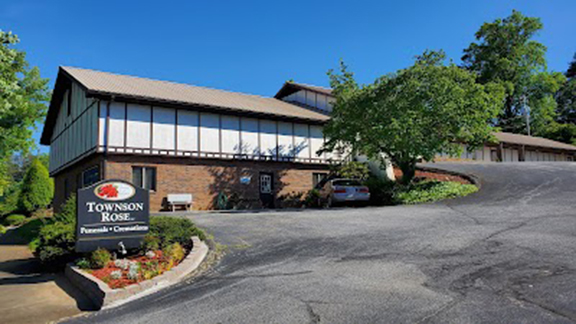
Teresa Rose-Jefferies of Townson-Rose Funeral Home agrees with Ivie.
“In this day and age, so many families are estranged,” she said. At Townson-Rose, the family of the decedent meets in their arrangement room.
“Usually, there is a spokesperson,” Rose-Jefferies said, “and the family tries to come together at this time.”
Before the families gather at the funeral home to arrange services, a few things must happen. If the loved one dies in a hospital or hospice care, a staff member will call the funeral home to collect the decedent. If the family has not yet been informed, the funeral home staff will call the family.
“We let them know that we are there for them,” Rose-Jeffries said. Sometimes that’s as simple as bringing extra chairs and a church-size coffee urn to the house.
Arrangement room
But, eventually, all roads lead the arrangement room. If the loved one has not planned ahead, this can be a stressful place.
“If the decedent didn’t pre-arrange, the family may be in conflict; the children may not make the right decisions,” Ivie said.
The type of service, or the color of the casket pillow, aren’t where most people stumble.
“There are three questions on the death certificate,” Rose-Jefferies said, “full legal name, highest level of education and the place they were born.”
This last question baffles many families.
“They have no clue where their person was born,” Ivie said.
The death certificate is not the only legal paperwork required.
“If the deceased was in the military, the family needs their DD214 form,” Rose-Jefferies said. “These forms are given at the time of enrollment so they may need help finding them.”
There are other pragmatic issues that need tending to as well. Typically, the family must bring in the clothing and jewelry they want their loved-one to wear if the service is open-casket.
“A lot of people don’t know that you can have a service with cremation or burial,” Ivie said.
More than 2 options
A lot of people don’t know that cremation and burial are only two options for disposition.
“You can donate your body to science or to a forensic body farm,” Ivie said.
In older times, if you died in county custody and your body was not claimed, the county would pay a minimal fee for cremation.
“The remains are put in a plastic box with the deceased’s name on the outside and held at social services for 15 years,” Ivie said.
If the county doesn’t want to pay, they can donate the body to the Forensic Osteology Research Station at Western Carolina University, better known as the Body Farm.
If the family chooses burial, they will be escorted into the merchandise room, where they will choose a casket costing between $1,000-$4,000 and a vault between $900-$2,000. Ivie does sell a top-of-the-line solid bronze casket for $9,000 for those feeling extravagant, but for the most part an average funeral costs $7,000-10,000.
Preparation to state
While the family makes emotional decisions to usher their dearly departed from life to death in the arrangement room, the body is going through its own transformation in the preparation room.
These rooms typically contain coolers and a metal table to embalm, dress and cosmeticize the body for service in the state room. Sometimes families bring more than clothing or jewelry to the preparation room.
“People sometimes want to place memorabilia inside the casket,” Ivie said. He has seen everything from pictures to mementos to saddles and even guns. Rose-Jefferies remembered a trend when crocheted kitchen towels were placed inside.
After the service, the funeral home drives the casket to the burial site, where there may be an additional service for family and close friends.
“Usually, the pastor says, ‘We’ve come as far as we can go,’ ” Ivie said. At this point, military considerations or family traditions, like dropping dirt on the casket, occur.
“Death is the worst day in a person’s life,” Ivie said.
Rose-Jefferies added, “We try to treat the family as our own” to ease the pain.
“Death just occurred, and there is an overwhelming feeling of loss,” Ivie added. “It’s hard to accept.”