
Andrews – Contrary to popular belief, dogs always have a reason for biting someone.
According to the American Veterinary Medical Association, dogs bite as a reaction to something, regardless of whether humans recognize the reason. Dogs may bite because they feel scared or threatened. A dog may also bite to defend its territory or protect something valuable to them.
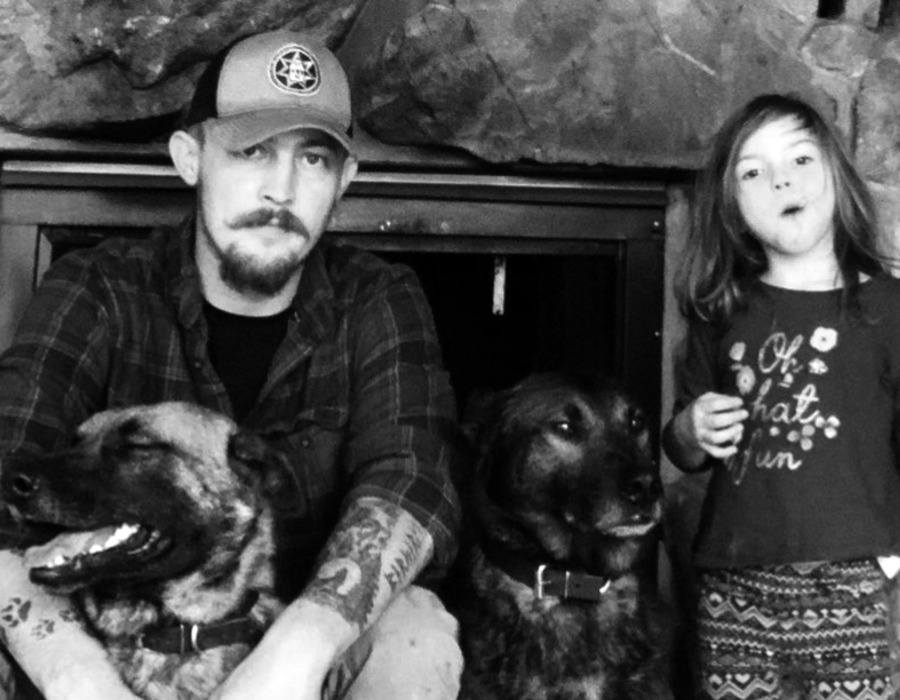
While many dog owners struggle to understand their pet’s aggressive attitude, one local resident has spent his life mastering the art of interpreting canine behavior.
“Most of the time, when someone says a dog is untrainable, that person just doesn't have patience for them,” local dog trainer Zach Shivers said. “It's not the dog. A dog will do anything as long as you have patience and spend time with them.”
Shivers, who serves as a Cherokee Indian police officer and may soon join Andrews police department as a part-time officer, has transformed some of the most aggressive dogs. As a law enforcement K-9 handler, he often encounters dogs that were raised overseas in places without animal welfare laws.
“The dogs are usually beaten so badly that they want to bite everything,” Shivers said. “We ended up starving my dog for 14 days because he wouldn't let us into the kennel to feed him, and now he's just a big chocolate. He just melts on you. And it’s because me and my lieutenant gave him so much patience, time and love that we made him into something truly amazing.”
Shivers, who trains canines on the farm his family has owned for decades as a service to the community, said most local residents who seek his services want help in preventing annoying behavior.
“Overtime, us humans have stopped treating dogs like dogs and more like humans and that's where the bad behavior comes from,” Shivers said. He stressed that dog owners can love their pets without treating them like a person, adding that humans should never forget that canines are tools.
Canines can be trained to guard homes, find missing persons or detect medical conditions such as low blood sugar in diabetics, seizures and heart attacks. Additionally, trained dogs are less likely to drag and injure an elderly owner, Shivers said.
Shivers, whose ancestors also were dog handlers, typically spends a week learning what motivates each animal before teaching them various commands aimed at improving the life of its owner. A dog can be motivated by anything from affection and games to toys and food.
“Once I figure out what makes them run, I use that thing against them to accomplish the task at hand,” Shivers said.
Shivers has been training dogs since he was 11 years old and has never met an “untrainable” canine. His training course typically includes 40 sessions that span a two-month period.
“I don't give up on them,” he said. "Patience is love.”
Shivers is training five dogs that belong to local families. After training each dog, he also trains the family that owns it.
“A dog needs at least 30 minutes of training by the owner each day to keep them sharp,” Shivers said. “Make them do tricks before you give them a reward. Just like with a child, if you reward bad behavior, they'll just end up doing bad things.”