
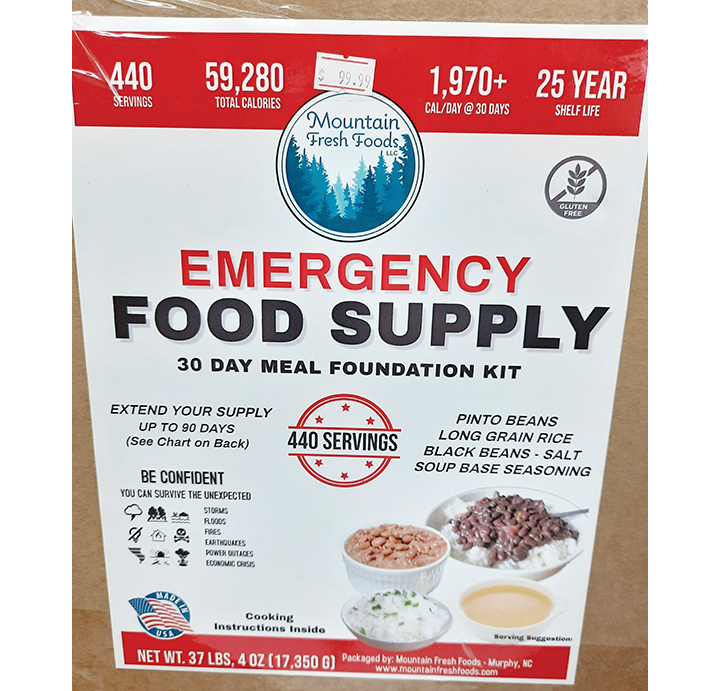
Cherokee County In today’s ever-changing world, anything can happen – and it’s when we least expect it that it does.
Being prepared begins with having a mindset that realizes dependency on others can sometimes be dangerous. What one person takes to heart, another may take for granted. There are those who plan ahead for difficult situations, and those who think it will never happen – at least not to them.
With the rolling blackouts in December that forced local residents to be without power for a brief period of time, one may be left wondering, “What if it had been longer?”
A lot of folks can manage a short period of time without luxuries and necessities like heat, lighting and air conditioning. However, there’s a stark difference between 15 minutes and several weeks or longer, which is not out of the realm of possibility.
According to information at the website theprepared.com and Dr. Chris Ellis, who researches extreme disaster preparedness, in 2019-20 an estimated 7 percent of U.S. households are actively working on self-reliance. Men outnumber women in preparedness, and rural households are more likely to prep than those in cities.
In 2020, the average age of “preppers” was 52.6 years old. However, the number of younger folks prepping continues to grow.
COVID-19 has increased the number of those preparing for disaster. The number of people who can manage more than 31 days of self-reliance grew 50 percent from 2017-20.
A resilient citizen is one who can manage 31 days or longer at home without the use of publicly provided power, water or transportation. Citizens who can manage 90 days or more are considered highly resilient citizens, while those able to manage 97 or more days are considered ultra highly resilient citizens.
A regular citizen is prepared for up to 30 days.
Many serious preppers do not want to be fully identified, nor have their locations and plans known by others, for their own safety and security. One Murphy resident, Butch, is serious about being prepared. He believes storing several items are a must and includes them in his own survival kit.
When asked what those items were, he said, “A water filtration kit or system, food, alcohol and honey.”
Food and clean drinking water may be obvious, but honey and alcohol?
“Honey will never go bad, bacteria can’t grow in honey,” Butch said.
He chose honey as a must-have item on hand to cleanse a wound, as it’s a natural antibacterial. Other items in Butch’s survival kit include sanitary napkins.
“I keep a ton of them in my first-aid kit because they are super absorbent, they’ll stick and stay where you put them,” he said.
“If you get a direct puncture, you need something heavy so you can make a pressure bandage out of it to stop the bleeding and something to absorb what’s coming out. You can pack it with honey, put it on and go.” he added with all seriousness.
Larry Sanders of Murphy and his family are also prepared. They grow their own food and have had nearby water streams tested for various chemicals and bacteria.
They know which streams are safe to drink from and which ones are not. Sanders also knows which plants are edible and medicinal.
“Food, food, food,” he said. “You need food.”
One will either stay at home or “bug out” in a disaster. Being prepared at home is vital, but in cases where a person leaves their dwelling, a “prepper” will have a “go-bag” ready stocked with essential items like food, water filters, waterproof matches, clothing and tools as well as medicines, a first-aid kit and items for self defense.
However, these are just some of the many important items that may be needed. Each person’s plans and needed items may differ according to their own needs.
Being prepared offers some peace of mind in a disaster. But not all.
When asked what he would do in a nuclear blast, Butch simply said, “Get a lounge chair, a cold beer, sit down and watch the light show because that’s how it’s gonna end. Ain’t nothing you can do.”