
Murphy – Traumatic brain injury is caused by external force to the head or body and is considered to be a risk factor associated with dementia, according to the Alzheimer’s Association.
Further evidence suggests that some forms of fine particle air pollution, poor sleep quality, excessive alcohol use and depression are also contributing risk factors. Alzheimer’s disease may develop over extended periods of time without being detected or diagnosed.
Tina Brill of Hiwassee Dam was the caregiver to her husband, Greg, for six years.
“Greg was a Vietnam combat veteran who had sustained several trauma concussions while serving in the military,” Tina said. He served in special operations during two tours of duty.
He was later diagnosed with three forms of dementia triggered by a stroke. Greg’s brain scan in 2012 revealed several blunt trauma events appearing to have occurred years earlier.
Following his passing, Tina felt lost. With most – if not all – of her energy focused on her husband, she forgot that she had been ignoring her own personal care. Alone and feeling overwhelmed, she knew she needed a change – if nothing other than just to have someone to talk with.
Tina began to look for help and found the Caregivers Group in Hiawassee, Ga. It was there that she began to understand that caregivers need care, too.
A friend asked Tina where to find information and help dealing with caregiving for Alzheimer’s. She knew from her own experience that too many caregivers live lives of quiet desperation.
She wanted to share what she had learned about respite car with as many individuals as possible after her own experience. As a result, the Caregivers Coffee Group was established.
The group started out small but is growing as people hear of its availability and the numbers of in-home caregivers grows. The Caregivers Coffee Group meets at 10:30 a.m. on the third Thursday of every month at Rare Bird Emporium in Murphy. Call 828-557-4162 for details.
Meetings focus on education and awareness, as well as providing information about available resources, in a relaxed and comfortable environment. The meetings are open to anyone.
Attending the meeting on March 17 were speakers Jeanne Mathews, aging program coordinator for the Southwestern Commission’s family caregiver support program; Denise Cross, director of senior centers in Cherokee County; and Anna Rogers, the area’s designated/certified regional long-term care ombudsman, or advocate, for residents of adult care and nursing homes. These programs were designed to provide information, education and assistance to caregivers in order to navigate available programs and associated benefits, which due to the amount of information can be confusing.
More often than not, it is the spouse providing care giving in the home. Funding for these programs is shared at the state and federal levels. There is a wide range of assistance from in home help to long-term care and even elder abuse. Information sharing and guidance is provided free of charge by the programs listed and through people like the Caregivers Coffee Group.
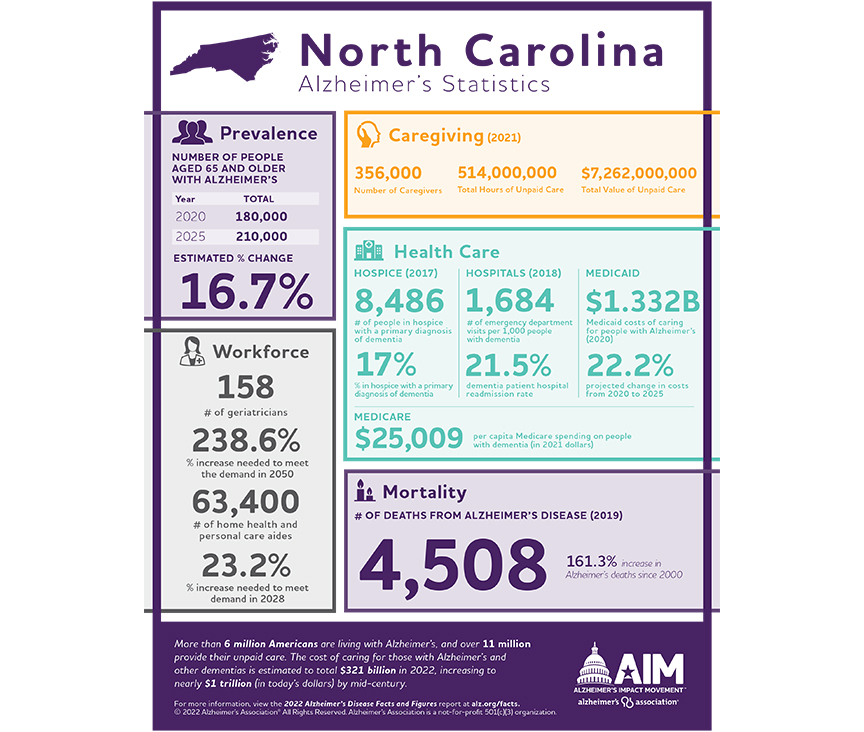
There are 6.5 million Americans ages 65 and older living with Alzheimer’s disease. That number is expected to grow to 13 million by 2050 as our population ages.
The Alzheimer’s Association, a nonprofit volunteer health organization founded in 1980, reports that 83 percent of the help provided for older adults in the United States comes from family members or other unpaid caregivers, with nearly half of those caregivers providing older adult care for someone with Alzheimer’s. The total hours of unpaid care in 2021 was $16 billion, while the total contribution in dollars by unpaid caregivers amounted to $271.6 billion.
Caregivers endure physical, psychological and emotional stress, followed by grief of loss for the caregiving provider. A private home care agency, Independence-4-Seniors Home Care, reports that 63 percent of caregivers on average die two years before the individual they cared for.
There are no easy answers to Alzheimer’s. Staying active and stimulating brain activity is recommended as people age.