
Misconceptions about
treatment stirs concern
Murphy – People who struggle with opioid dependence often experience a life-threatening condition while battling withdrawal.
Nausea, diarrhea, insomnia, rapid heart rate, muscle and bone pain, chills, excessive sweat and high blood pressure are just some of the symptoms of opioid withdrawal syndrome.
Opioid withdrawal occurs when a person who is dependent on opioids suddenly reduces or stops taking the drugs. Due to the dangerous and life-threatening nature of opioid withdrawal syndrome, medical professionals suggest a managed, gradual detoxification that varies in length depending on what type of opioid was used, how long it was used and any other drugs that were used.
Medically managed detox, often called medication-assisted treatment, involves the use of other drugs, such as buprenorphine and methadone. A mix of buprenorphine and naloxone is sold under the commonly known brand name Suboxone, which is used to treat opioid dependency and decreases withdrawal symptoms for about 24 hours.
“They cannot get high from Suboxone,” said Rebecca Ritz, owner of a Suboxone clinic and counseling center on U.S. 64 West. “It just keeps them out of withdrawal from the other drugs. There’s no euphoria from
Suboxone.”
Outgrown facility
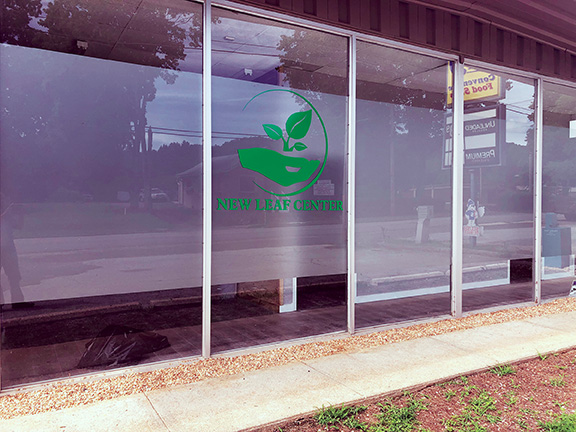
Ritz is in the process of moving New Leaf Center from a building along the four-lane highway into a property on Hill Street because they’ve “outgrown [their] current space” since opening in August 2019. As word of the move spread through town, she started noticing comments on social media parroting “misconceptions” about Suboxone treatment.
“I’ve received six or eight calls asking what I’m going to do about this [Suboxone clinic moving into town],” Mayor Rick Ramsey said while explaining that he and council members have no authority to prevent medical facilities from setting up within town limits.
Ritz said the uproar stems from a lack of knowledge about opioid addiction and medication-assisted treatment.
“Unfortunately, they have misinformation about what it is and what it entails. Murphy has a drug problem, and I don’t know that anybody can deny it,” Ritz said, adding that drugs and crime go hand in hand. “I understand people’s concerns, but there’s plenty of data that shows [medication-assisted treatment] actually reduces crime rates.”
Counseling important
According to the National Institutes of Health, 65 percent of all incarcerated individuals meet the criteria for having a substance use disorder. Moreover, the use of opioids – which includes prescription pain relievers, heroin and synthetic opioids such as fentanyl – is linked with a higher rate of recidivism.
Government health officials consider medications such as buprenorphine, methadone and extended-release naltrexone to be “first-line treatments” for opioid addiction because they decrease opioid use, opioid-related overdose deaths, criminal activity and infectious disease transmission. However, officials note that medications should be combined with behavioral counseling for a “whole patient” approach to combating opioid dependency.
“The counseling aspect is very important, and I think that’s where we differentiate ourselves from a lot of the Suboxone clinics out there that may not put forth the effort to make it a holistic treatment,” Ritz said. “Our goal is to normalize the patient to where they feel like you and I do every day; to where they can sleep, get up, not battle cravings and function normally.”
Ritz employs a doctor, a nurse practitioner and two licensed substance and abuse counselors, who treat about 50 patients. To receive Suboxone treatment, New Leaf Center patients must undergo mandatory counseling every two weeks.
“Patients can choose to have individual sessions, but most of them choose group counseling sessions so they can form a network to rely on each other,” she said.
According to data from the N.C. Department of Health & Human Services, the rate of unintentional medication and drug overdose deaths in Cherokee County was 17.3 per 100,000 residents from 2014-18. That figure was higher than the statewide rate of 16.7 deaths per 100,000 residents. State data shows that nearly five North Carolinians died each day from an unintentional opioid overdose in 2018.
‘A normal life’
“Opioid dependence is an issue that has impacted our nation, state and locally in many ways, shapes and forms,” Cherokee County Health Director David Badger said. He added that the health department focused a lot of time and energy on general substance abuse before COVID-19 spread across the nation.
“We need to focus on substance abuse, combined with an overall need for the mental health system and primary care to be working together to address those concerns,” Badger said. “We certainly have opioid abuse within our community, but we see more methamphetamine and other substances that have much more prevalence.”
Ritz echoed those comments.
“I don’t think there is a community out there that [opioid addiction] does not touch,” Ritz said. “A lot of my patients became addicted under a doctor’s care. A lot of this came about through misinformation regarding the addiction potential for the pain drugs being prescribed legally by doctors.”
She also reminds patients that it is not their fault if they struggle to kick the habit of opioid use.
“It’s really important to understand that the only time you can really blame them for it is the very first time they use it, or the first time that it takes them to the point where it chemically alters their brain,” Ritz said. “Opioids change the chemical pathways in the brain to where the body thinks it needs them.
“If they got addicted recreationally, the only time they should feel guilty for that is right when they began using the drug that formed the addiction. We try to help patients regain a normal life. Unfortunately, that requires another drug [like Suboxone] to help them do that.”