
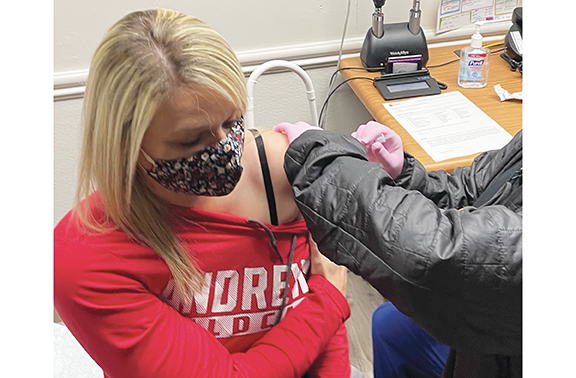
County enters Phase 1b today
Murphy – Cherokee County ended the year with its highest one-day total of new cases, then topped it two days into the new year.
On Thursday, the Cherokee County Health Department reported that 33 people had tested positive, then announced Saturday that 37 more tested positive. The previous one-day high was 25, which was set Aug. 20 and matched on Christmas Eve.
“It really didn’t surprise me,” Health Director David Badger said. “I didn’t want to see the numbers come this fast and big.”
He said a majority of the new cases were spread through family members at Christmas gatherings.
The county wasn’t alone in reporting high numbers as the year changed. The state saw its highest one-day total with 9,527 new cases on New Year’s Day.
December doubles
The numbers seen as the year changed were a continuation of the increase in cases seen throughout the month. December’s 368 confirmed positive cases more than doubled November’s total of 167. It was also highest number of cases in a month so far for the county, with September having the previous high of 207.
The month also saw the most people tested for the virus, with 2,215 getting tested and 2,110 receiving results. Of those results, 17.4 percent were positive. The first half of the month saw more people getting good news, with 14.7 percent learning they were positive versus 20.2 percent in the second half of the month.
Badger said the warnings about the potential for the increase in cases during the holiday season came true. Unfortunately, he knew a higher percentage would come back positive as he witnessed the symptoms of those getting tested, adding that some people who were showing symptoms were not positive for COVID and a handful have tested positive for the flu.
His concern was about the vast majority of people who were showing symptoms and continuing to attend gatherings or go to work.
“I don’t think it’s intentional,” Badger said. “I think really people want to disagree that symptoms mean COVID. Unless you know, there’s no point taking a risk. … If you are symptomatic, stay at home.”
Of the 368 people who tested positive, 336 were experiencing symptoms and 12 were hospitalized at the time the health department reported their results. One person in their mid-80s passed away, becoming the county’s 22nd person to die after testing positive for the coronavirus.
September’s count included 57 nursing home residents and staff who tested positive, while December’s had four nursing home staff members.
Vaccine changes
As more people in Phase 1a received vaccinations, the state made changes to its vaccination plan, prioritizing older residents.
When Phase 1b begins today in Cherokee County, anyone ages 75 or older
will be able to get the vaccine, followed two other groups in 1b – health-care workers and frontline
essential workers ages 50 or older, then health-care workers and frontline essential workers of any age. Frontline essential workers are firefighters, police officers, corrections officers, food and agricultural workers, postal workers, manufacturing workers, grocery store workers, public transit workers, educators and child-care workers.
Badger added that moving into the next phase and group does not stop the prior phase’s vaccination availability.
In the initial plan released Dec. 17, Phase 1b prioritized adults with two or more chronic conditions that put them more at risk and work as essential frontline workers. The updated plan aligns with federal recommendations issued the week prior.
Dr. Terry Fokakis, a physician at Erlanger Primary Care, was happy to hear that the state prioritized those ages 75 and older in the updated vaccination plan, considering the large number of retirees in the area at risk for more severe illness.
“It’s great,” he said. “My feeling is the sooner we can get more people vaccinated, the better.”
Badger said the health department has been vaccinating people every day it’s been open, in addition to private vaccination clinics at Erlanger Western Carolina Hospital and local nursing homes. He was encouraged by the interest in vaccines by the public, especially by those in the older age groups, last week – call volume increased dramatically when vaccine information calls added on to calls about testing and other regular health department calls.
“It’s a great thing, it’s awesome,” Badger said.
Even though the vaccine takes two weeks for antibodies to build in the body, Fokakis thought results could be seen quickly, if vaccines are widely available and people get them. He thinks it could “flatten” the uptick in numbers the county has seen from the holidays.
“I think as more people end up getting the vaccine, we’ll be able to see those numbers drop over the few weeks,” he said.