
.
May is National Mental Health Awareness Month, the annual awareness month began in 1949 by Mental Health America, according to mhanational.org.
Mental Health America says the COVID-19 pandemic has had a profound impact on the mental health of people of all ages. It’s critical to reduce the stigma around mental health struggles because it prevents people from seeking help.
About 1 in 5 adults in the United States experience mental illness each year according to the National Council for Mental Wellbeing. According to thenationalcoucil.org, 50 percent of all lifetime mental illness begins by age 14 and 75 percent by age 24.
The National Institute on Drug Abuse reports that about half of all individuals who experience mental illness during their lives will also experience a substance use disorder.
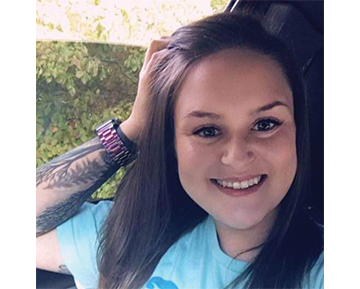
Nikita Derreberry, 32, of Andrews, passed away from an overdose on March 16 after a long battle with mental illness and drug abuse. Her family hopes by sharing her story, they can save another family the heartache and loss that the family has felt from her addiction and passing.
One resident’s tragic story
In 2018, Nikita shared her testimony of suffering from mental illness and drug addiction for eight years before becoming clean. She was known for her outspoken personality and kind heart, always with a smile on her face.
Nikita grew up in Murphy living with her father, Rodney Derreberry. She graduated from Murphy High
School in 2007 and was on the homecoming court the same year, sporting a large tulle ball gown with logging boots underneath.
“She loved drag racing, muscle cars and she was an arts and crafts fanatic,” Derreberry said. “She was always a free-hearted person and she would give you her last penny. She really cared about people and would put her whole heart into relationships.”
Nikita’s sister, Hope Powell of Cleveland, Tenn., said her sister was diagnosed with bipolar disorder and chronic depression as a teenager and started misusing pills in high school.
“That more or less started her addiction,” Powell said. “She was a closet pill-popper at first and it got worse.
“Nikita wasn’t the type to sit down and talk about her feelings, but I think she had a lot of hurt from what happened in her life. She would go searching for affection, trying to find the love she never felt.”
Shortly after high school, Nikita began using drugs to cope with anxiety and depression. In testimony she posted on her Facebook page in June 2018, Nikita detailed what life was like being addicted to drugs and losing everything.
“I was on 10 medications a day, I didn’t do nothing with my life and it got so bad I tried to commit suicide, overdosed twice and tried to hang myself once,” she wrote. “Depression – feeling like a nobody, feeling like I’m lost in this world, I looked at everyone else and thought, ‘Why can’t I be like them?’ ”
Meth drug of choice
Nikita went on to tell that she had been arrested and in jail in three different states. When she got really deep into drugs, she started to use methamphetamine.
“Meth was my drug of choice, I liked it a lot,” she wrote in the testimony. “Then a friend introduced me to a needle, it went downhill fast. During this time I lost friends, like true friends, who would and had tried to help me but I didn’t want their help – just like the four rehabs I went into – I didn’t want the help.”
Nikita said she was in a deep, dark time in her life, and she was tired of living that way. She said she was sitting in her drug dealers house and she thought about her life; she had lost two vehicles she worked hard to pay for, she had no one to talk to and a bad reputation.
“No one wanted to be around me and I didn’t blame them; sometimes I even made the devil look good,” she wrote in her Facebook post. “I called my daddy, and he wasn’t going to come get me at first, but he came and got me. I hit my knees at the house and prayed, and I cried and I prayed and I cried.”
This was the moment she started to get sober. She spent a month living with her father in Andrews, going through withdrawals and telling herself to be strong.
Nikita went back to college and worked while she got sober. She started volunteering with the nonprofit Rez HOPE, speaking at different events, and she was baptized while away for a week with the organization.
Help needed in area
She said she asked her family and friends for forgiveness. She kept her mind busy to help keep the anxiety and depression away and stay sober.
“I tell myself there are kids and adults out there dying, wishing they had the life we have, so don’t waste it on drugs,” she said in the testimony. “I would say to myself, ‘chase this like you chased the high in your addiction’ – so that’s what I do. I put in the work. Recovery does happen, it’s not easy.”
Powell said a few months after the testimony, Nikita relapsed and started using meth again.
“It was worse than before,” Powell said. “Before her testimony, she had never done heroin. I didn’t have anything to do with her and didn’t want her around that last time she relapsed. I’m ate up with guilt; she knew I loved her; and that was the only way to deal with her choice of lifestyle.”
Powell and Derreberry agreed that a long-term care facility for people battling addiction is desperately needed in the area.
“I believe if there was a place where they could talk to people and get help, there would be a lot less (drug addiction),” Derreberry said. “The bad thing is, a lot of people who suffer from these situations get pushed away by their family, it’s not that they don’t love them, they just kind of push them to the side and that causes it’s own struggles.”