

Rebecca and Tom Lash
By Katie Myers
Blue Ridge Public Radio
Editor's note: This coverage is made possible through a partnership between BPR and Grist, a nonprofit environmental media organization.
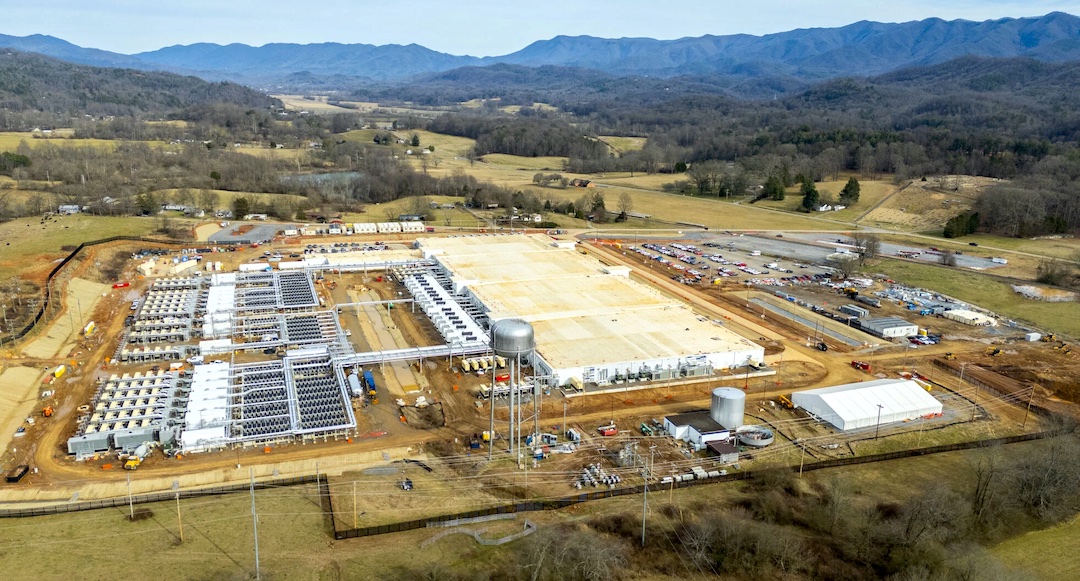
Marble – In this western North Carolina community, a steady electric hum cuts through the calm. That hum comes from a cryptocurrency mine, and it's been intruding into Rebecca and Tom Lash's lives since the mine was built in 2021.
"There was nothing in this little pasture but these electric lines," Rebecca Lash said, as she and Tom stood on the hill overlooking the mine. "And it was just nice and quiet."
Today, the landscape is shifting and one of the three crypto mines in Cherokee County is being expanded into a data center.
Crypto declines, AI on the rise
Since 2021, cryptocurrency miners have struggled to turn the same profit they once did, and many are making a pivot to artificial intelligence.
Views on data centers vary across North Carolina: Many communities are fighting them off, worried about issues like energy, water and noise. Others see the projects as economic development opportunities.
The Lashes came to Cherokee County eight years ago, looking for a place to settle and enjoy their older age in view of the Blue Ridge Mountains. They grew more and more incensed as one of three cryptocurrency mines showed up near their home in Marble within the past five years.
Two other smaller mines also stirred controversy, one in Ranger and one off Harshaw Road near Peachtree.
In the community and its online discussion boards, fear has spread. People are worried about further noise, presence of heavy equipment, and water use.
"The big AI centers and the big data centers, there's some horror stories about people that live near those," said Tom Lash, who has tried to get answers from local officials.
"I went to the commissioner's meeting and, you know, I asked, 'What is that?' And they were like, 'We don't know,'" Rebecca Lash said. She went to her local utility, Murphy Power Board, and asked about the potential impact to her bills, but never received a response (nor did Blue Ridge Public Radio).
A hungry new neighbor
AI demands a lot of energy. The Tennessee Valley Authority, where Murphy buys its power from, is planning to build out transmission to meet increased data center demand, which in theory could drive bills up for everyone in the region.
Rural communities like Cherokee County are ideal for data centers, even if they might lack some infrastructure. The county is water rich, moderate in climate, and needs tax revenue. Outside Cherokee's two incorporated municipalities (Murphy and Andrews), there's no restriction on land use – that is, no zoning. Anyone can set up anywhere in the county outside its towns as long as they apply for a permit.
That made it easy for the Marble crypto mine, run by a company called Core Scientific, to become an AI data center instead. Late last year, Core Scientific planned a merger with artificial intelligence data storage company CoreWeave. The merger fell through in October 2025, but Core Scientific is, according to public statements, still converting facilities like the one in Marble to handle artificial intelligence workloads.
That facility, which uses enough electricity to be known as a "hyperscaler," gobbles up as much power as a medium-sized town.
Core Scientific did not respond to a BPR request for comment. CoreWeave, the company Core Scientific was initially planning to merge with, declined to interview.
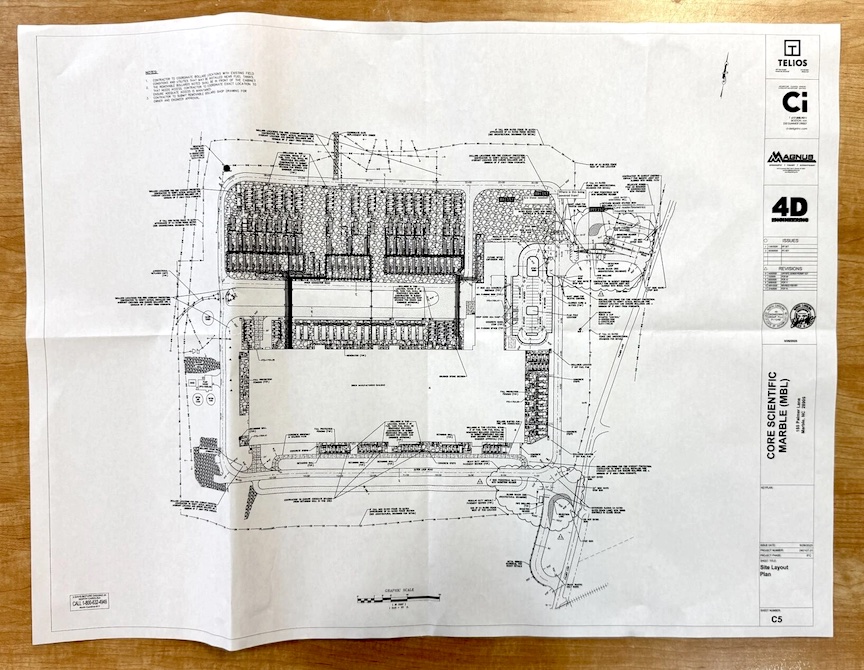
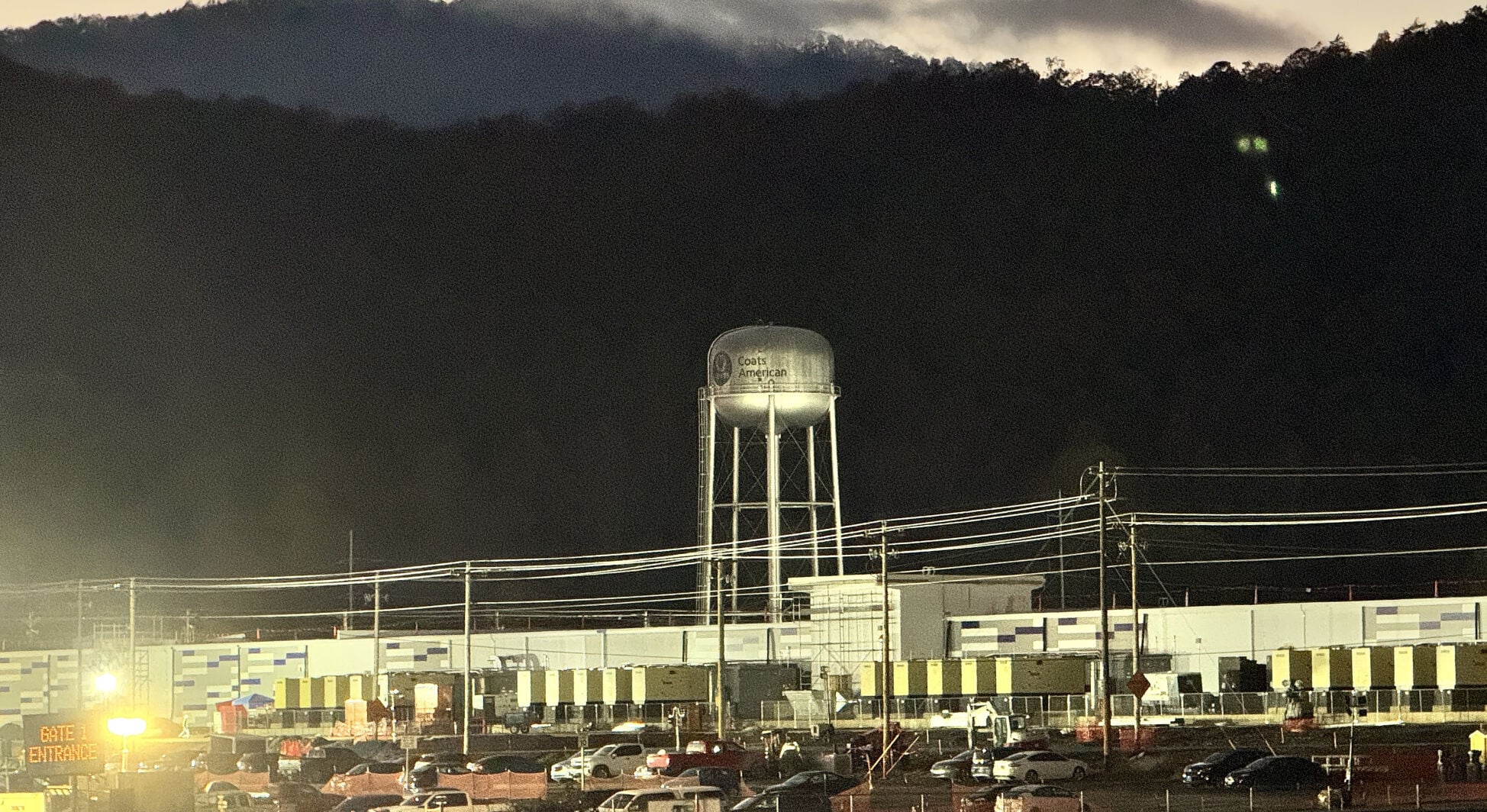
According to a FOIA request submitted by Cherokee County Commissioner Ben Adams, the company submitted a site plan last year that included more than 170 diesel generators. The site, which spreads across 250,000 feet, or 7 acres, was once a factory that produced thread for the garment industry. The facility closed in 2015, leaving the community bereft of hundreds of jobs and hundreds of thousands in annual taxes.
The company is working with neighboring utilities for their additional water and sewer needs. According to C.B. McKinnon, president of the Marble Community Water System board, they are getting a small amount of water from that rural, residential water utility, with the rest coming from three wells onsite that are suppling a majority of their water usage.
McKinnon told BPR that the state limit is to pump the well for 12 hours per day.
The data center had been working on a contract with Town of Andrews for wastewater, but Andrews Mayor James Reid told BPR that the town denied the hookup due to the company's lack of an environmental plan. Reed said the company will need to put in its own septic tanks.
He's not happy that any potential benefits to the community – including a soccer complex they had initially promised the town – haven't materialized. Moreover, he thinks the facility is an eyesore.
"I wouldn't wish this on any county or entity, ever," Reid said. "It's absolutely destroyed Marble."
Taxes, at least, are back. The county received $268,000 in 2024 from the Marble facility's last full year of the crypto operation, with a steep drop in revenue last year, mostly because of the data center construction.
In an email, county tax assessor Teresa Ricks said that they're working with a contractor to appraise the value of data centers and their equipment.
But Adams doesn't think the revenue is worth it. He ran on an anti-crypto campaign in 2022.
He wants to keep the county open for business, but also loves his rural life and doesn't want to see the place change. He worries AI data centers could bring the kind of change he doesn't want – more noise and pollution.
Adams tried to tackle AI at a January county commission meeting.
"Any place that provides for cryptocurrency and block chains, I think we also need to add to that AI," Adams said. "I think we need to because we were kind of snookered into this AI."
Adams begged commissioners to renew a moratorium on crypto mining that had been expired for a year – and add AI data centers to the list of restricted businesses.
"If we don't do something our little peaceful town's going to turn into something else and people are going to come here looking to put stuff in our town," Adams said.
Another member of the county board countered him quickly, concerned that Trump's executive order, aimed at discouraging state and local governments from regulating AI, would hamstring the county, too.
"Is the juice worth the squeeze?" one commissioner asked. "It would require a tremendous amount of resources, money to fight that back."
In the end, nothing happened that evening.
Bargaining with big tech
Even without an outright ban, experts say there are still ways for communities to deal with an incoming data center. Nicol Turner Lee, director of the Center for Technology Innovation within the Brookings Institute, said it's really important for communities to get promises in writing.
"Communities have to go in with eyes wide open, right? And it's not just the environmental concerns," Turner Lee said. "It's the promise of jobs. It's the investment in people."
She points to a tool called Community Benefit Agreements. CBAs are legally binding documents that commit companies to being a respectful neighbor. Lancaster, Pa., negotiated one late last year with CoreWeave that committed the company to clean energy and sustainability, and control of noise and air emissions.
"Unfortunately, there may be a disadvantage among communities who said yes first," Turner Lee said.
Virginia, the country's data center capital, has been grappling with this question. In some parts like Loudoun County, officials have passed strict rules on data center proposals. But they're good only for future projects, not existing ones.
"Once it's already there the pressure point is that you have the potential for community activism because people begin to have challenges with this asset that they weren't really pulled into in the beginning, right?" Lee said.
County kickstarts a movement
After the January county meeting, in an empty, echoing courthouse hallway, Adams admitted his exhaustion. He didn't run for re-election.
During his last year in office, he is reconvening the planning board he chairs to figure out how to limit data centers in the county.
He wants to see the county pass an ordinance against it – one he hopes he can get passed without adding zoning laws to the county. It's still, he said, a process of reconciling his pro-business beliefs with what he sees as a need to manage the county's growth.
"I do believe, one, that we are stewards of our property," Adams said. "Two, I think we can't possibly keep out all these bad elements coming in. Three, growth is inevitable, but I hope that we can maintain it and keep it more of a peaceful community."
The concern is spreading. Moratoriums have now been passed in a handful of communities across western North Carolina, including the town of Canton, Jackson County, the town of Brevard, the town of Boone, Madison County and Clay County. Swain County is considering one and commissioners say it's likely to pass.
Even Murphy has worked on protections. It initiated a ban on crypto mines in 2025 and is expanding the ban to include high-intensity data centers, with a public hearing planned in May, Murphy Mayor Tim Radford said.
Cherokee County may have become an example across the region – both of what can happen to a community before they know it, and what might still be possible.